
 EN
EN  English
 Português




A brake chamber air line is the reinforced hose or nylon tube that carries compressed air from the brake control valve to the brake chamber, where the air pushes a diaphragm and extends the push rod to apply the brakes. When that line leaks, kinks, or comes loose, the chamber receives no air and the wheel loses braking force, which is why air line condition is one of the first things to check when a brake application feels soft, slow, or uneven.
Content
- How a Brake Chamber Air Line Works
- Common Brake Chamber Air Line Problems
- How to Test a Brake Chamber Air Line for Leaks
- Replacing a Brake Chamber Air Line
- Brake Chamber Air Line Maintenance Tips
- Frequently Asked Questions
- What size air line is used on brake chambers?
- How often should brake chamber air lines be replaced?
- Can a leaking brake chamber air line be repaired temporarily?
- Why does my brake chamber air line keep freezing?
- How can I tell whether the problem is the line or the chamber?
- Brake chamber air line fault identification at a glance
How a Brake Chamber Air Line Works
The brake chamber air line is the direct pneumatic link between the brake pedal and the foundation brake. Pressing the pedal opens the foot valve, and compressed air flows from the air reservoirs through the line into the chamber's service port. The incoming air pushes the diaphragm, moving the push rod, which rotates the slack adjuster and turns the S-cam to force the brake shoes against the drum. The line must therefore be sized, routed, and connected correctly: any restriction changes how fast the chamber receives air and how quickly the brakes respond.
Air Line Types in a Typical Air Brake System
Air brake systems use color-coded lines so that each port on the valve and chamber receives the correct pressure signal. The table below summarizes the three line categories you will find on a standard tractor or trailer.
| Line type | Typical color | Primary function |
|---|---|---|
| Service line | Blue | Carries air from the foot valve to the service brake chamber during normal braking. |
| Supply line | Red | Carries reservoir air to the spring brake chamber and keeps the parking brake released while pressure is present. |
| Control line | Yellow | Carries pilot air to relay or quick-release valves that feed the chambers. |
At the chamber end, the line enters a threaded port. A single S-cam service brake chamber has one service port, while a double-diaphragm spring chamber adds a second port for the parking and emergency supply. When you order a replacement chamber, confirm that the port configuration and thread size match your existing air line routing.
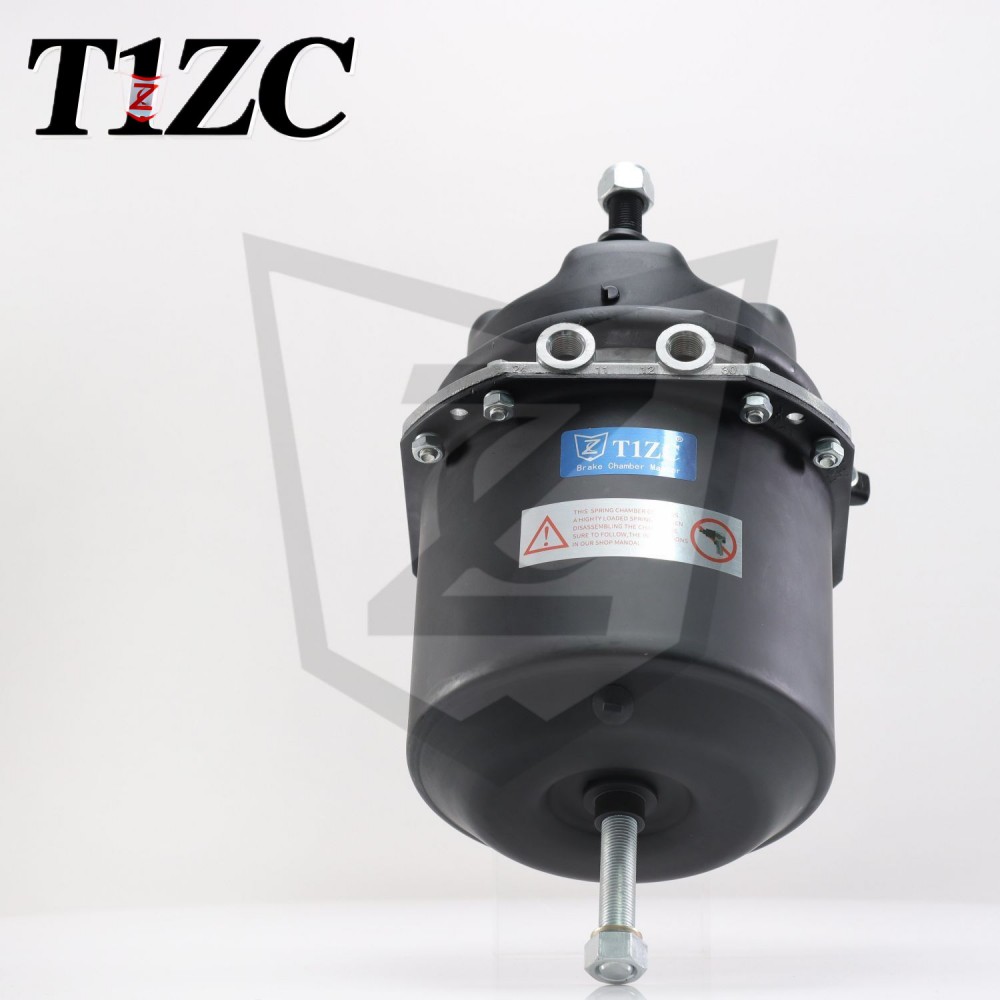
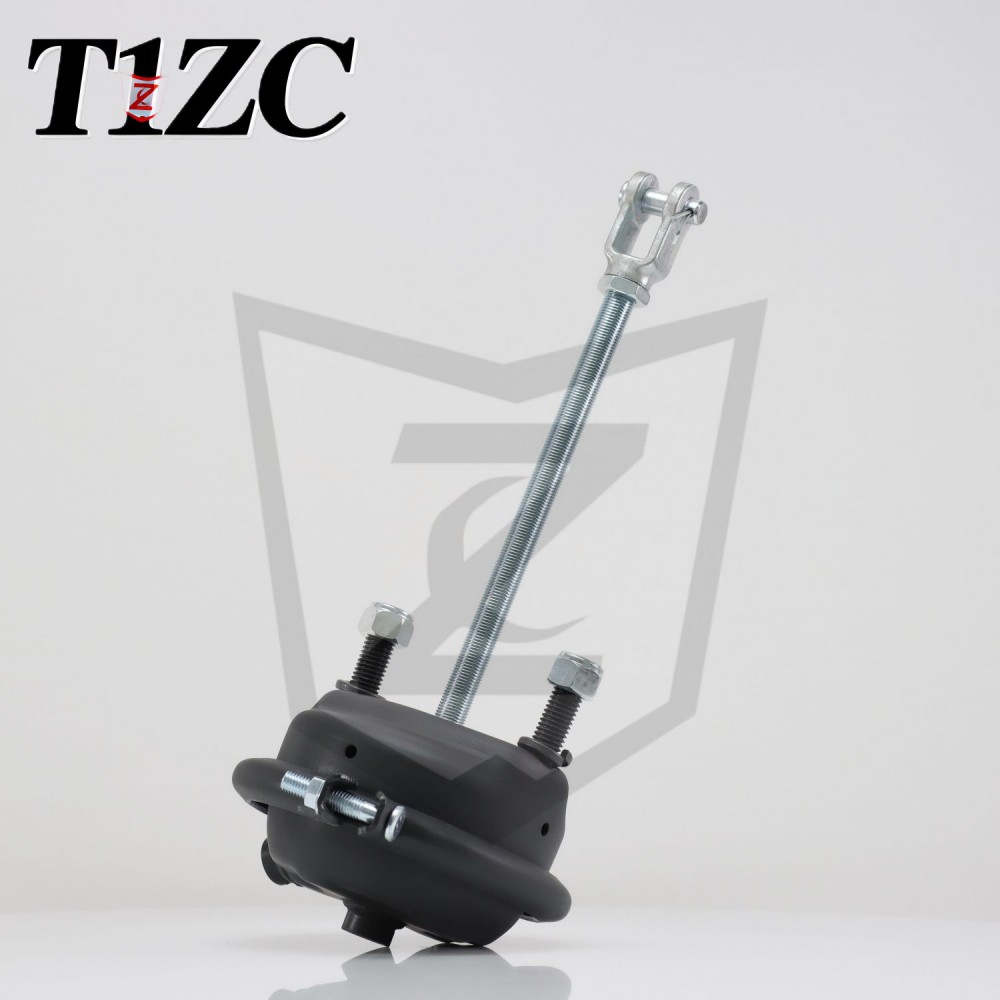 Standard S-Cam Service Brake Chamber for Direct ReplacementThis standard service brake chamber is a straightforward replacement for an existing S-cam unit, offering reliable braking for heavy-duty trucks and buses. Verify port configuration and thread size to match your air line routing before installation.View Product →
If you are replacing a chamber on a service axle, a standard S-cam service brake chamber with the correct stroke rating is the most direct choice.
Common Brake Chamber Air Line Problems
Most brake chamber air line failures fall into four categories: leaks, kinking, contamination, and fitting damage. Each produces a different symptom, and knowing the difference saves diagnostic time.
- Air leaks. A leaking line causes a hissing sound, a gradual drop in system pressure, and rapid compressor cycling. Leaks usually appear at the fitting threads or where the hose has chafed against the frame.
- Kinked or crushed lines. A bent or flattened line restricts airflow, so the brake chamber applies slowly and releases slowly, and the brake may drag and overheat.
- Moisture and freezing. Water inside the line freezes in cold weather and blocks the passage completely; the symptom is a brake that works when warm but fails when cold.
- Fitting and port damage. A cross-threaded fitting, cracked flare, or damaged chamber port leaks immediately and can strip the housing of a newly installed chamber.
How to Test a Brake Chamber Air Line for Leaks
A soapy-water test is the fastest and most reliable way to find a leak in a brake chamber air line because even a pinhole leak produces bubbles on contact. Follow this procedure on any wheel that shows pressure loss.
- Park on level ground, chock the wheels, and drain the air system completely.
- Build the system back to normal governed pressure, typically around 120 psi (8.3 bar), with the engine running.
- Brush a soapy-water solution over the entire line, both fittings, and the chamber port.
- Watch for bubbles and mark every spot that foams.
- Release the parking brake with the engine running, then repeat the test on the spring brake supply line.
Pay special attention to the point where the line enters the chamber port, because a broken or corroded port can be mistaken for a leaking hose. If the port itself is damaged, the chamber must be replaced rather than the line. On a double-diaphragm chamber, test the spring supply port with the parking brake released, because that circuit is pressurized whenever the brake is off.
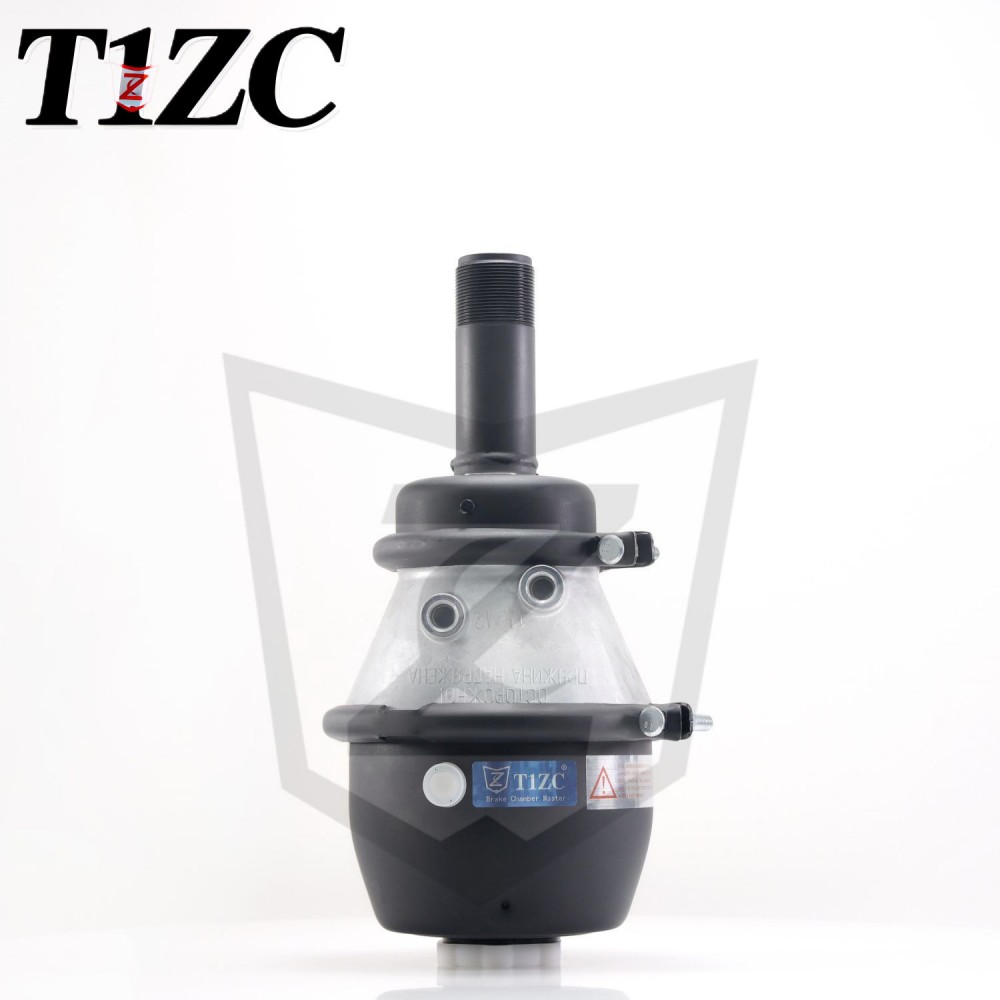
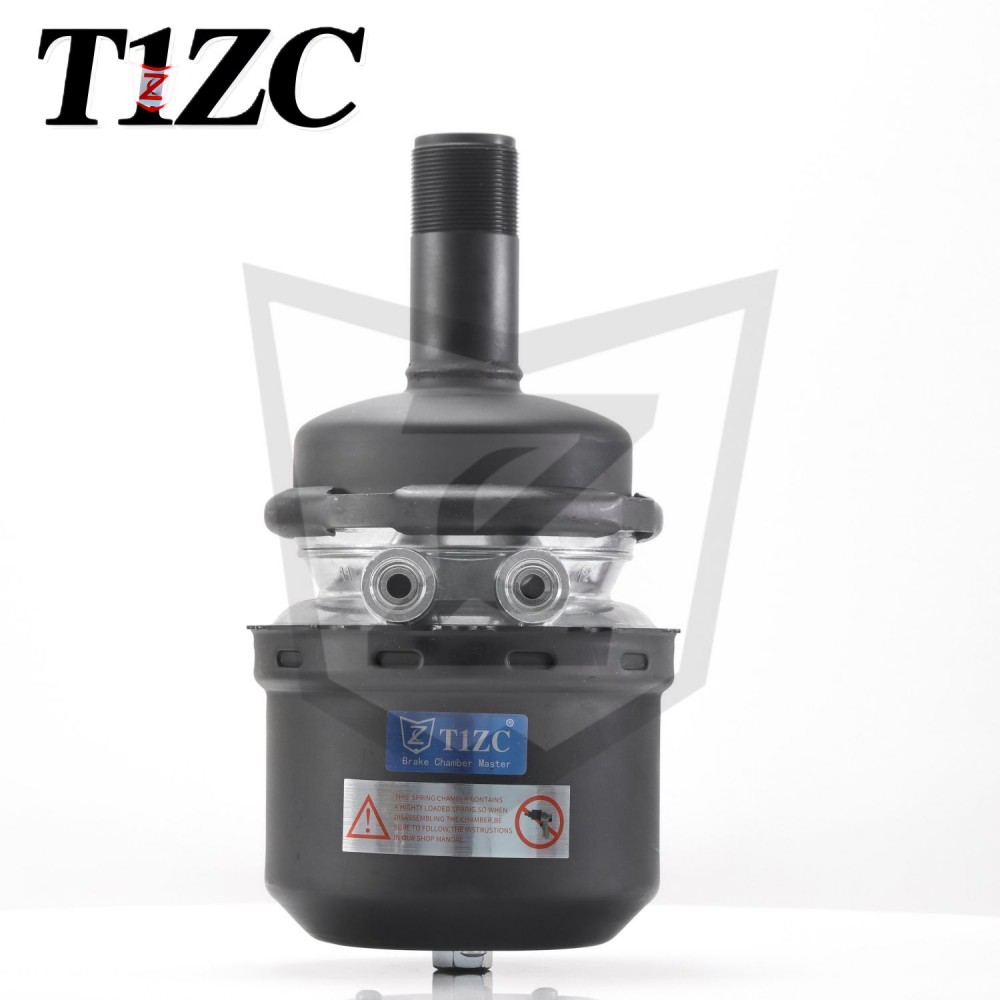
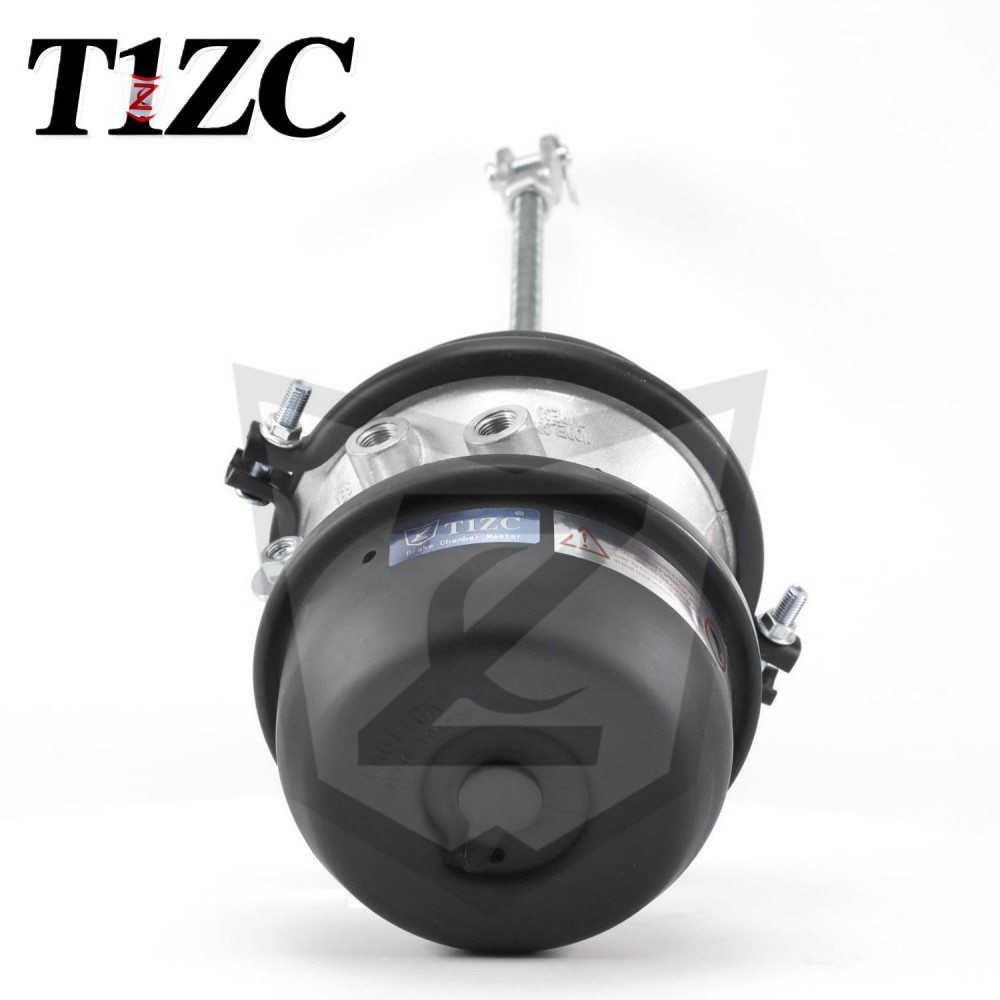 S-Cam Double Diaphragm Brake Chamber with Spring Parking BrakeThis double-diaphragm S-cam brake chamber provides both service and spring parking brake functions, suitable for vehicles requiring a parking brake circuit. Its durable design supports efficient braking in demanding commercial applications.View Product →
Detailed step-by-step guidance on checking the whole air system is available in this guide to routine brake chamber air leak checks.
Replacing a Brake Chamber Air Line
Replacing a brake chamber air line is a straightforward job, but it must be done with the correct hose, clean cuts, and proper torque, or the new line will fail as fast as the old one. Start by marking the routing so you can reinstall the new line exactly where the old one ran.
- Drain the air system and disconnect the line at both ends using two wrenches so you do not twist the chamber port.
- Match the replacement to the old line: same outer diameter, same wall thickness, and the same fitting thread, which is usually 1/4-in. or 3/8-in. NPT on service chambers.
- Cut the new line square using a sharp hose cutter; a tapered or ragged cut will leak inside the fitting.
- Push the line into the push-to-connect or compression fitting until it bottoms out, then pull back gently to confirm it is locked.
- Tighten metal fittings to the manufacturer's torque value rather than by feel; typical values are 12 to 20 ft-lb (16 to 27 Nm) for 1/4-in. and 3/8-in. NPT ports.
- Pressurize the system and run the soapy-water test again before returning the vehicle to service.
While the line is disconnected, inspect the chamber port face, the diaphragm area, and the push rod for wear or corrosion. A worn port or stretched diaphragm will make a brand-new line leak within days. If the chamber shows signs of age, replace it in the same job; for a rear axle with spring parking brakes, choose a DP chamber with a regular-release design so the service and spring functions stay independent and predictable.
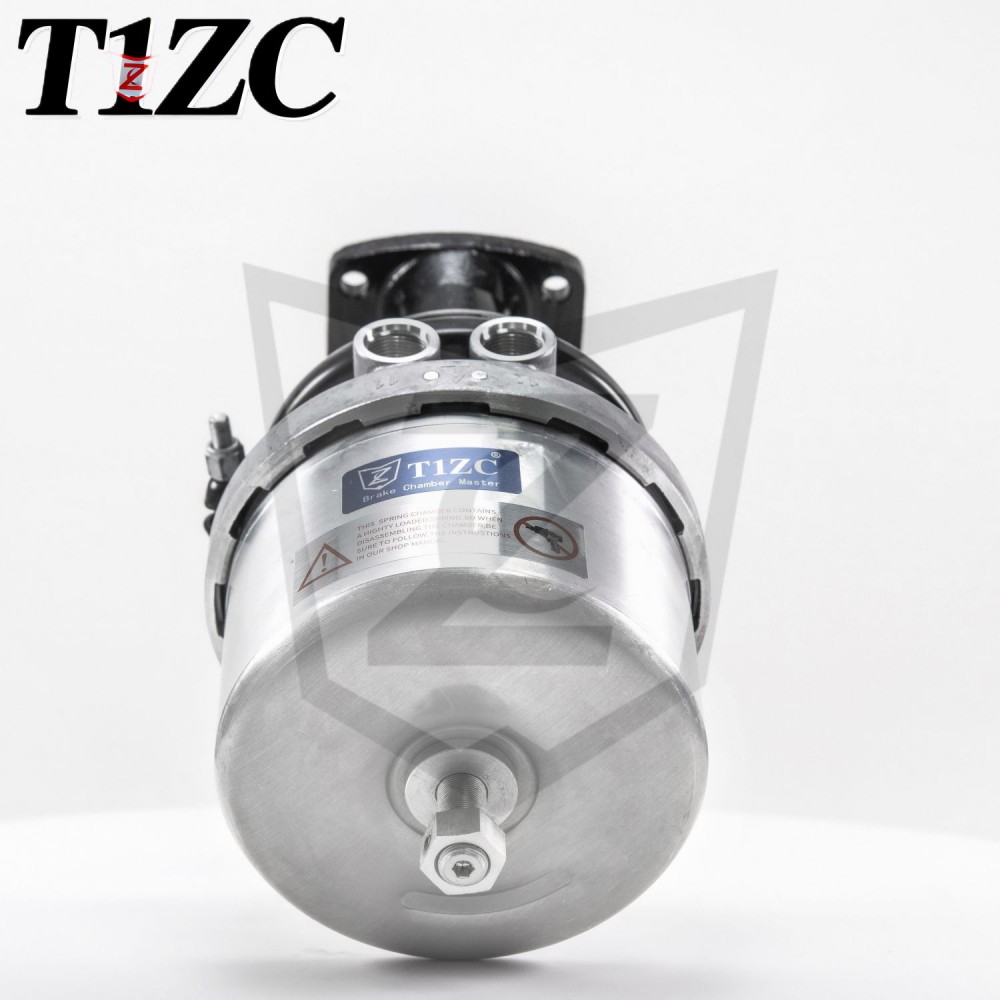
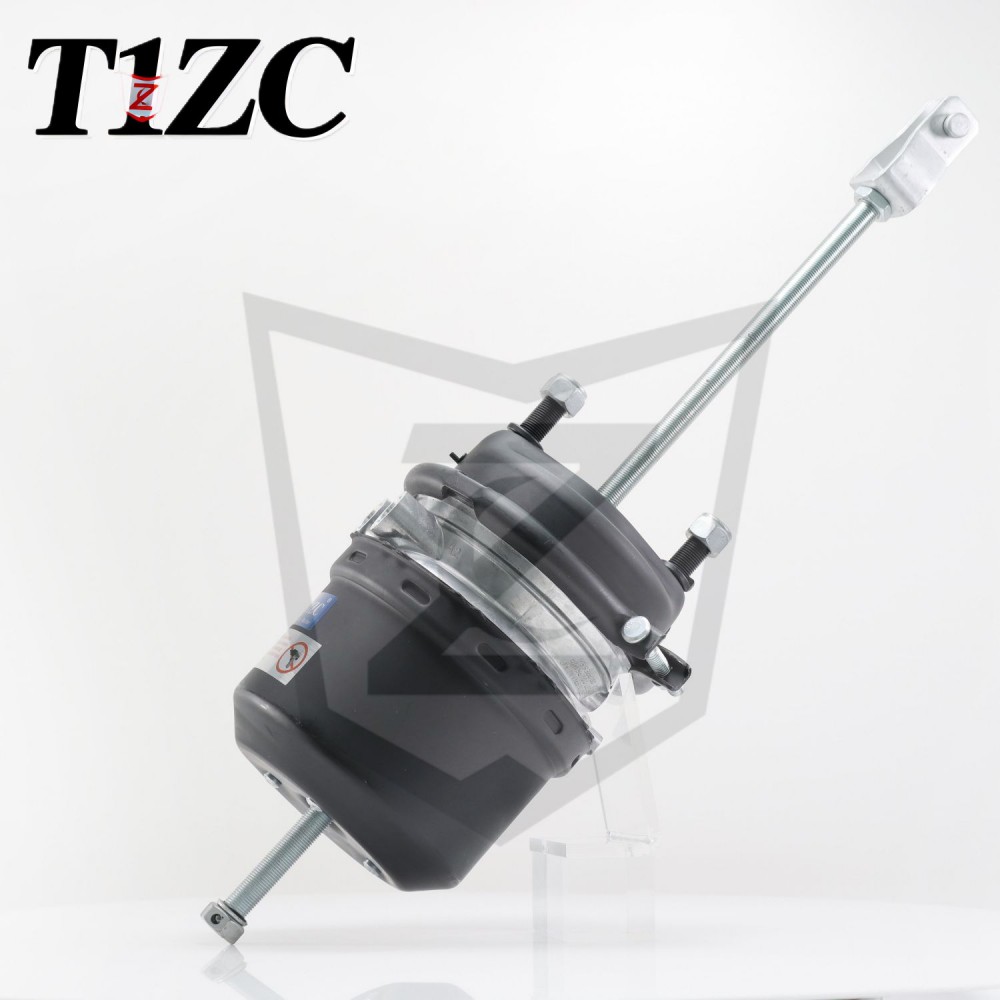 Heavy-Duty T24 Rear Brake Chamber with Regular ReleaseThis rear brake chamber features a regular release design and higher working pressure for heavy trucks and tractors, ensuring independent service and spring functions. It is built for high-load applications and reliable emergency brake release.View Product →
Using parts that actually match the vehicle matters as much as installation technique: a chamber with the wrong port angle or push rod length puts lateral stress on the air line and causes early failure at the fitting.
Brake Chamber Air Line Maintenance Tips
A few minutes of daily inspection prevents most brake chamber air line failures, and it requires no tools beyond a flashlight. Look for chafing where the line crosses the frame rail, spring hanger, or suspension, and replace any line whose outer cover is worn down to the reinforcement.
- Check fitting tightness by hand and look for rust or salt buildup around the connections.
- Drain the air tanks every day so moisture never reaches the line and freezes overnight.
- Support the line with nylon clamps or spiral wrap anywhere it can vibrate against metal.
- Replace any line that feels hard, swollen, or cracked, because heat and oil degrade nylon over time.
- After any brake repair, pressurize the system and listen for leaks before handing the truck back to the driver.
Fleet-proven notes on line routing, moisture control, and chamber response are collected in the product technology sharing section, and checking it before a complicated repair can save hours of diagnosis.
Frequently Asked Questions
Here are the direct answers to the most common questions about brake chamber air lines.
What size air line is used on brake chambers?
Most tractor, trailer, and truck brake chamber service ports use 3/8-in. outer diameter nylon air line, while some lighter-duty and control lines use 1/4-in. OD. Always measure the actual fitting before buying a replacement.
How often should brake chamber air lines be replaced?
There is no fixed interval. Replace a line at the first sign of cracking, chafing down to the reinforcement, or leaking, and many fleets replace them preventively during major brake work or at five-year intervals.
Can a leaking brake chamber air line be repaired temporarily?
A push-to-connect union splice can get the vehicle to a shop, but a spliced line should be replaced completely as soon as possible because every union is a potential future leak point.
Why does my brake chamber air line keep freezing?
Freezing usually means water is collecting in the air tanks, not that the line is defective. Drain the tanks daily and have the air dryer serviced.
How can I tell whether the problem is the line or the chamber?
Run a soapy-water test on the line first. If the line stays tight but the push rod does not move when air is applied, the fault is inside the chamber, usually a torn diaphragm or broken spring.
Brake chamber air line fault identification at a glance
Use the table below to match the symptom with the most likely cause before you start disassembly.
| Symptom | Most likely cause |
|---|---|
| Hissing at the fitting under pressure | Loose, cross-threaded, or cracked fitting |
| Slow brake application and release | Kinked, crushed, or partially blocked line |
| Brake fails only in cold weather | Frozen moisture inside the line |
| Push rod does not move although line pressure is normal | Torn diaphragm or failed spring inside the chamber |