
 EN
EN  English
 Português





Short answer: a brake chamber diaphragm is the fabric-reinforced rubber disc clamped between the two halves of an air brake chamber. Air pressure flexes it, the pushrod moves, and the brake applies. It is the only part inside the chamber designed to move, and it decides whether a truck stops straight or drags a hot drum down the road.
Because that disc is both a pressure boundary and a moving seal, it has to stay flexible at -40 °C, resist compressor oil and water, and repeat the same stroke for hundreds of thousands of applications. This guide covers how single and double diaphragm chambers differ, where low-cost diaphragms fail, and what to confirm before you order.
Content
- What a Brake Chamber Diaphragm Actually Does
- Single vs Double Diaphragm: Matching the Design to the Axle
- Materials and Construction: Where Low-Cost Diaphragms Fail
- Failure Signs: What a Worn Diaphragm Looks Like
- Specifying and Sourcing: The Checklist Before You Order
- Installation and Maintenance Practices That Extend Diaphragm Life
- FAQ
What a Brake Chamber Diaphragm Actually Does
A diaphragm converts air pressure into pushrod force, and the chamber type number tells you roughly how much force is available. A Type 30 chamber has about 30 square inches of effective diaphragm area; a Type 24 has about 24. At 100 psi that gap is worth several hundred pounds at the pushrod, which is why mixing chamber types on one axle is a real handling risk.
Inside a service chamber, the diaphragm is clamped between a flange case and a non-pressure plate. Air enters the service port, pushes the diaphragm outward, and the pushrod strokes. When the air exhausts, a return spring pushes everything back.
Three duties define a good diaphragm:
- Seal: hold pressure at the clamp bead without weeping.
- Stroke: deliver repeatable travel across the full pushrod range.
- Recover: return to its seat immediately so brakes release without dragging.
Single vs Double Diaphragm: Matching the Design to the Axle
A single-diaphragm chamber handles service braking only. A double-diaphragm chamber stacks a service section and a spring brake section in one housing, so the same unit can apply service brakes and hold the vehicle parked, or stop it if air pressure is lost.
| Feature | Single diaphragm | Double diaphragm |
|---|---|---|
| Function | Service brake only | Service plus spring (parking and emergency) brake |
| Air connections | One service port | Service port plus a port for the spring section |
| Typical position | Steer axles, light trailer axles | Drive axles and trailer axles with parking brakes |
| If it fails | Loss of service braking at that wheel | Loss of service braking, plus a parking brake that may not release or hold |
| Service work | Lighter, faster to change | Heavier; the spring must be caged before removal |
Many tractors run single-diaphragm chambers on the steer axle and double-diaphragm units on the drive and trailer axles, but specifications vary. Confirm from the chamber stamping or the build sheet rather than from the shape of the housing.
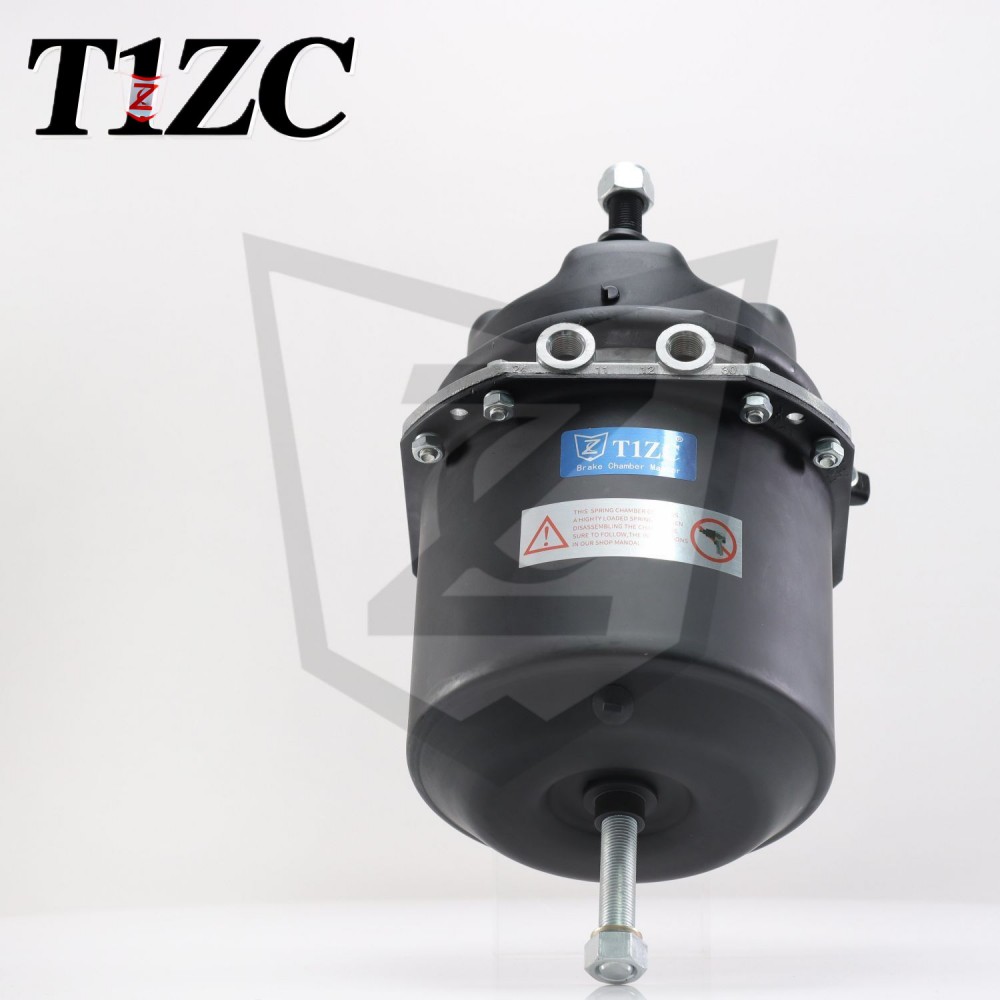
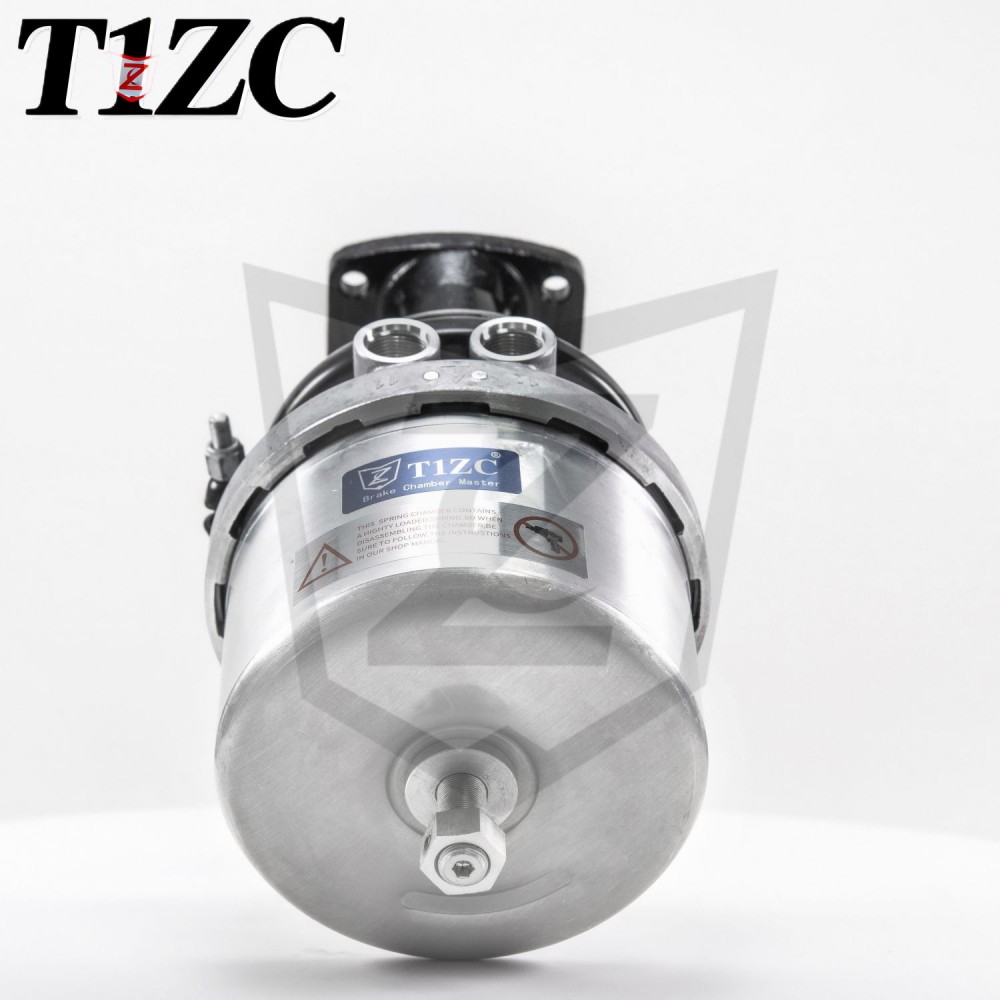
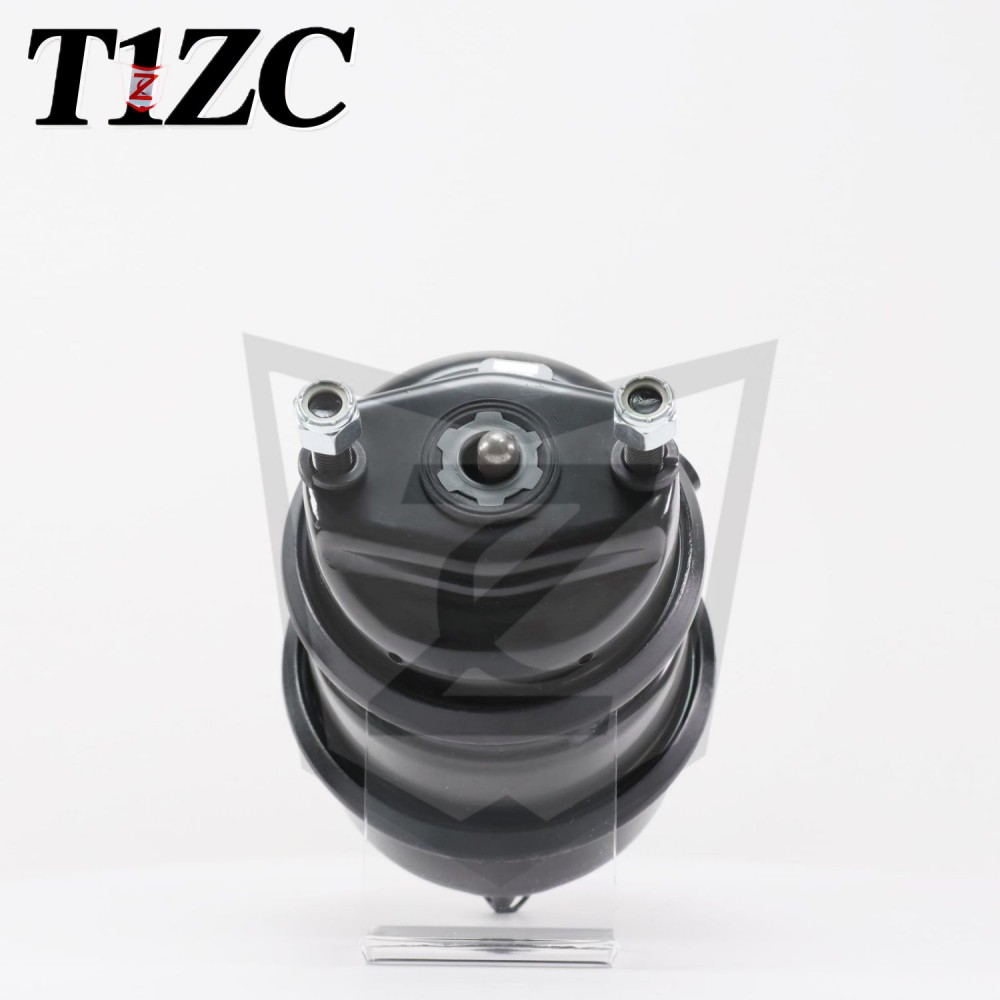 All-Steel Double Diaphragm Brake Chamber DiscHeavy-duty all-steel double diaphragm disc brake chamber with specification table covering stroke, thread, angle, OE references and vehicle fitments for commercial vehicles.View Product →
Materials and Construction: Where Low-Cost Diaphragms Fail
A diaphragm that lasts is a rubber compound bonded to two or more layers of woven fabric. When a cheap part fails early, the cause is usually the compound and the ply count, not the shape.
- Reinforcement: two plies of nylon or polyester carry the load and stop the rubber ballooning. Loose-weave or single-ply material stretches and quietly shortens pushrod stroke.
- Compound: nitrile blends resist compressor oil; EPDM and neoprene blends resist ozone and weathering. A compound that is cheap at one job is usually weak at the other.
- Temperature: standard chambers are commonly rated from about -40 °C to roughly 80 °C continuous. Heat from a dragging brake or a nearby exhaust pushes the rubber past that range and hardens it.
- Bead geometry: the outer bead must seat in the housing groove. Half a millimetre too thick and it will not clamp; too thin and it leaks at the joint.
- Hardness: most service diaphragms sit around 55-70 Shore A. Softer compounds extrude into the port; harder ones stop sealing in cold weather.
Moisture is the quieter killer. Water carried over from the compressor freezes at the bead on a cold morning and tears the fabric on the first brake application. Sealed and half-sealed housing designs reduce how much of that water reaches the rubber.
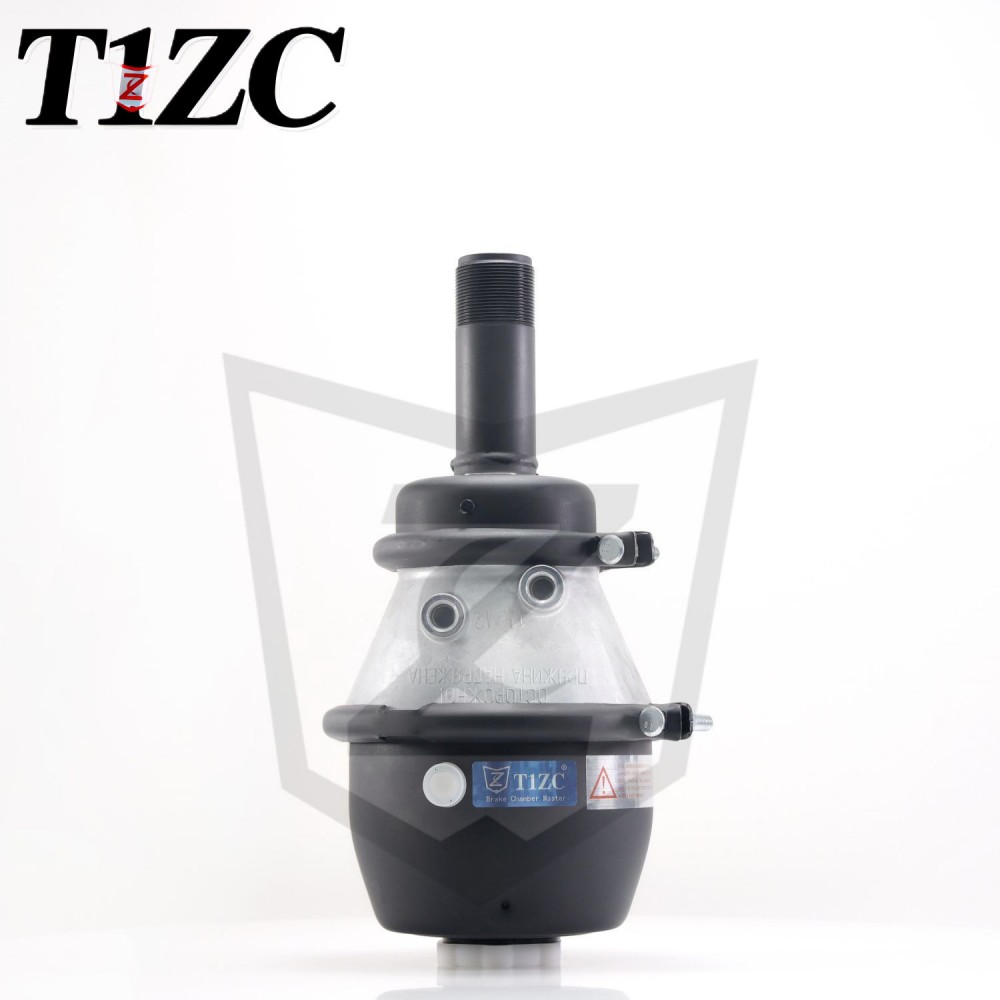
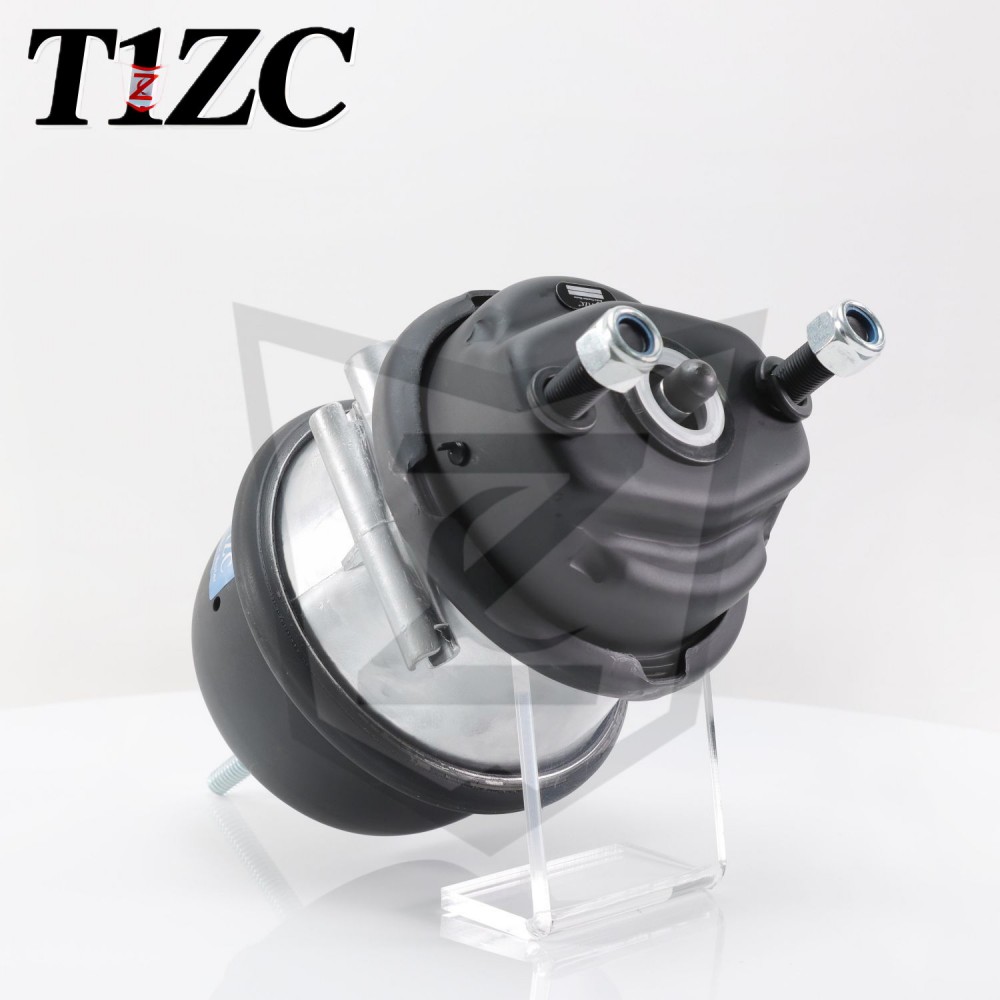 Half Sealed Double Diaphragm Disc Brake ChamberSemi-enclosed double diaphragm disc brake chamber for commercial vehicles, intended to reduce dust and moisture ingress; specification data covers types, OE/part numbers and fitments.View Product →
Failure Signs: What a Worn Diaphragm Looks Like
A diaphragm rarely fails without warning. Hissing, slow release and a pushrod that will not fully return are the early signals, and they appear long before a wheel locks or a spring brake fails to hold.
- A steady leak at the chamber with the parking brake released or applied.
- Brakes that release slowly, or a truck that creeps after the pedal is up.
- Pushrod stroke outside the limit for that chamber type.
- Dark oil or sludge weeping from the service port, meaning compressor oil has reached the rubber.
- Cracked, shiny or hardened rubber around the clamp bead.
- A wheel running hot after a short drive with no heavy braking.
A soap-and-water check around the clamp band, following the same routine as a standard air leak inspection, separates a leaking diaphragm from a loose fitting in a few minutes.
Specifying and Sourcing: The Checklist Before You Order
Order by specification, not by appearance. Two chambers with the same bolt pattern can take different diaphragms, and a part that clamps but strokes short will wear out the slack adjuster along with itself.
| Specification | Why it matters | Typical note |
|---|---|---|
| Chamber type and effective area | Sets pushrod force and stroke limits | Type 16, 20, 24, 30; keep one size per axle |
| Port size and thread | A mismatched fitting is an instant leak | Commonly 1/4 NPT or the metric equivalent |
| Pushrod length and thread | Determines slack adjuster setup and stroke travel | Measure the original before ordering |
| Clamp type | Decides whether the bead seals | Bolt clamp or V-band; bands are not reused |
| Ply count and hardness | Controls service life and cold-weather sealing | Two-ply fabric, 55-70 Shore A |
Cross-referencing goes faster when a supplier organises its range by release behaviour and sealing method instead of a flat model list, as the DD S-cam brake chamber range does.
Installation and Maintenance Practices That Extend Diaphragm Life
Most early diaphragm failures trace back to contamination or installation, not to the rubber. The habits below remove both causes.
- Drain air tanks on schedule and service the air dryer; oil and water cause most swelling and hardening.
- Cage the spring fully before removing any double-diaphragm chamber.
- Fit a new clamp band with every diaphragm; a deformed band leaks no matter how good the rubber is.
- Keep the diaphragm flat and clean before clamping, because grit in the bead groove is a permanent leak path.
- Torque the clamp bolts evenly in a cross pattern, then recheck pushrod free play and stroke.
- Replace chambers in axle pairs when both have the same mileage, so braking stays balanced.
If the housing is pitted, the clamp faces are distorted or the return spring is weak, fit a complete chamber instead of another diaphragm. A new diaphragm inside a corroded housing leaks again within months.
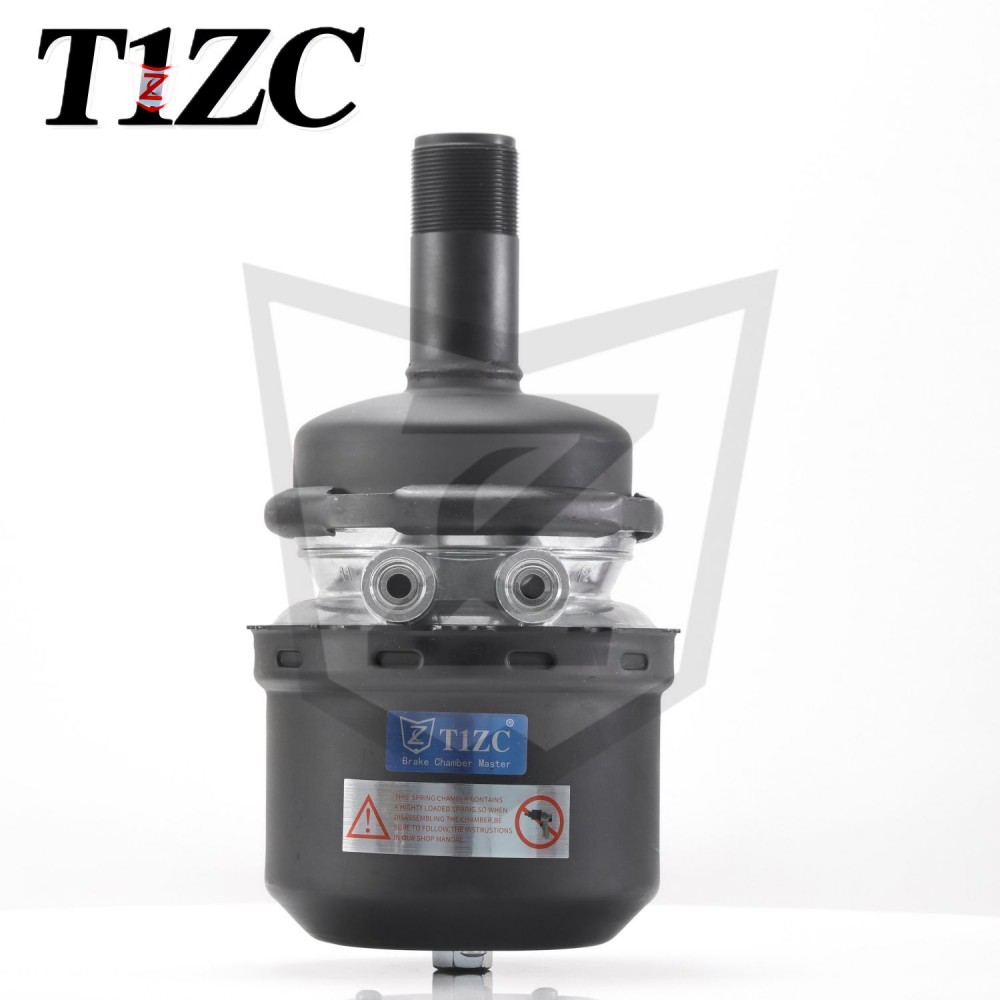
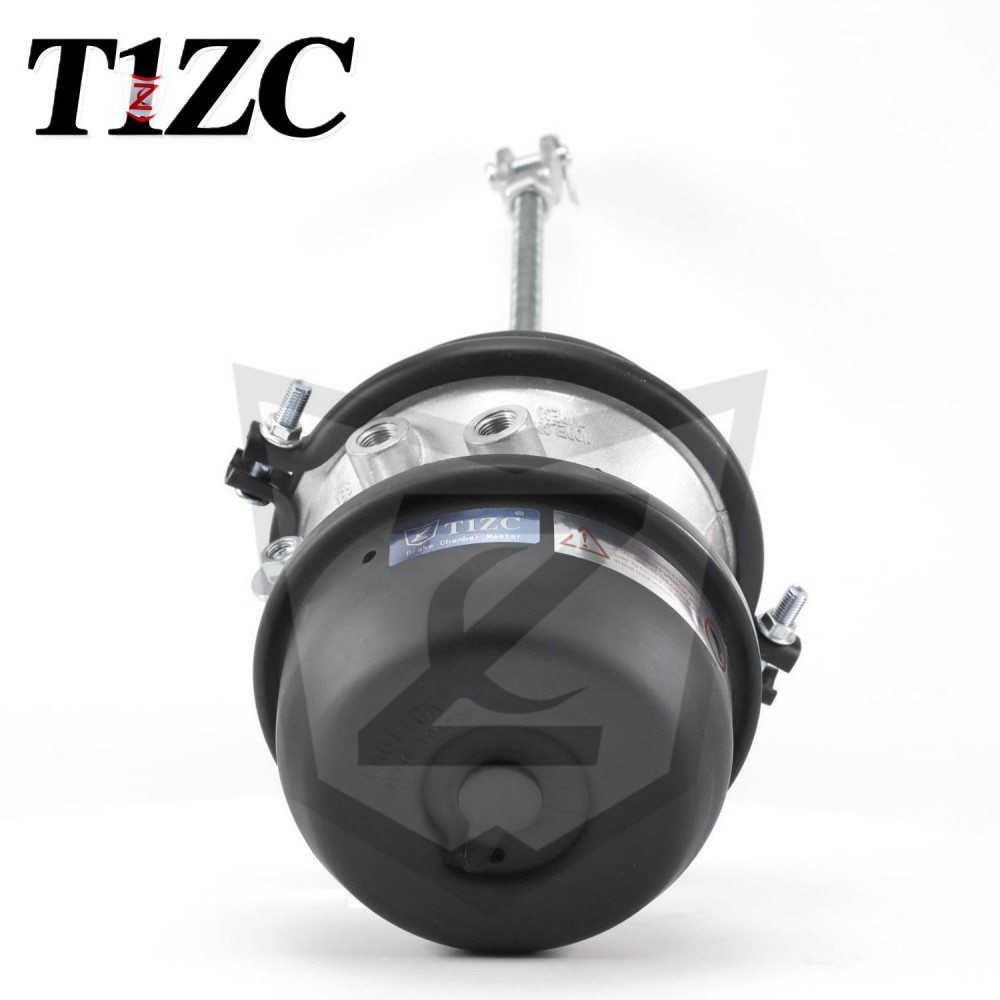 Regular S-Cam Double Diaphragm Brake ChamberComplete S-cam double diaphragm brake chamber for trucks, tractors and buses, with type, OE/KNORR/WABCO and vehicle fitment data for long-distance heavy-load use.View Product →
FAQ
How long does a brake chamber diaphragm last?
Three to five years is typical in a dry, well-serviced air system, and much less where the air dryer is neglected. No calendar interval replaces inspection, because rubber also ages while a truck is parked. Check pushrod stroke and look for leaks at every brake adjustment.
Can I replace only the diaphragm, or do I need a whole chamber?
Replacing the diaphragm alone is fine when the housing, clamp band, pushrod and spring are sound. If the housing is pitted, the clamp faces are distorted or the spring has lost tension, replace the complete chamber. The labour is similar and the result lasts far longer.
What causes a diaphragm to fail early?
Oil carry-over from the compressor, moisture freezing at the bead, over-stroking from a badly adjusted slack adjuster and heat from a dragging brake. Installation faults come second: a bent clamp band, uneven bolt torque or a twisted diaphragm all shorten life.
How do I tell a single from a double diaphragm chamber?
Count the air connections. A single-diaphragm service chamber has one service port; a double-diaphragm chamber has a second port feeding the spring brake section and a noticeably deeper housing. The chamber stamping or the build sheet is the reliable answer.