
 EN
 English
 Português





A brake chamber explosion is almost never a fuel event or a burst air tank. In the cases we examine, it is one of two things: the power spring inside a spring brake chamber releasing without being caged, or a service chamber whose housing or diaphragm has ruptured under ordinary application pressure. Both produce a bang loud enough to carry across a yard, throw fragments and a caging bolt several metres, and put anyone standing beside the axle at real risk of injury.
Here is the conclusion first, because it changes behaviour more than any technical detail: treat every chamber as a compressed-energy device, not as a bolt-on consumable. Vent the air, cage the spring, and chock the wheels in that order before a clamp band is loosened. Nearly every serious injury happens in the few minutes before that sequence is followed, not while the truck is moving.
Content
What a Brake Chamber Explosion Actually Means
An explosion is simply stored energy releasing faster than its containment can absorb, and a brake chamber stores energy in two separate ways: compressed air on the service side and a compressed coil spring on the parking side. Either one can let go, and the consequences differ.
| Event | What releases | Typical signs | Main exposure |
|---|---|---|---|
| Power spring release | Parking spring extending to full stroke | Sharp bang, caging bolt bent or missing, pushrod fully extended | Hands and face of the technician at the clamp band |
| Diaphragm rupture | Compressed air through a torn diaphragm | Loud pop, continuous leak at the breather, weak braking on that wheel | Loss of braking on one axle, band debris |
| Housing burst | Air through a corroded or cracked shell | Scaling, pitting, old welds, a bulging can | High-velocity fragments and sudden air loss |
| Overpressure event | Air above rated pressure from a failed valve or governor | Repeated diaphragm failures on the same wheel position | Repeat failures fleet-wide if the cause is missed |
The distinction matters for diagnosis. A spring release is a procedure and training problem. A rupture is a specification, corrosion and inspection-interval problem. Overpressure is a system fault upstream of the chamber, and replacing the chamber alone will not fix it.
Why Chambers Fail Violently Instead of Just Leaking
Four causes explain most incidents, and every one of them is visible or testable during routine maintenance.
- Corrosion perforation of the shell. Moisture from the air system collects in the lower half of the can and thins the steel from the inside out. A chamber that passes a quick visual check can still be dangerously thin along the seam, which is why old units burst rather than weep.
- Servicing without caging. The power spring stays compressed whenever the parking brake is released and air is applied. Release that air without mechanically caging the spring and the spring becomes the actuator, not the brake.
- Reused clamp bands and fasteners. A band that has been stretched, distorted or re-torqued several times no longer seats evenly. Once it creeps during an application, the housing separates and the diaphragm is ejected.
- Diaphragm and seal degradation. Heat, oil carry-over and age harden the rubber. A hardened diaphragm cracks instead of flexing, and the crack grows until a normal brake application finishes the job.
Notice that none of these requires abuse. A neglected chamber on a ten-year-old trailer can fail at exactly the pressure it has seen thousands of times before.
The Stored Energy Inside a Spring Brake
The spring side is the dangerous side, and the numbers explain why technicians are trained rather than simply warned. A typical power spring is compressed by hand tools during assembly and holds that load for the life of the unit.
| Chamber size | Indicative spring force at full stroke | Practical implication |
|---|---|---|
| T16 | Roughly 700–1,000 lbf (3–4.5 kN) | Enough to bend a caging bolt and drive a release tool out of the housing |
| T20 / T24 | Roughly 1,200–1,800 lbf (5–8 kN) | Enough to shear a cross-threaded caging bolt and eject the pushrod clamp |
| T24 / T30 | Roughly 1,800–2,600 lbf (8–12 kN) | Band separation can throw hardware several metres at head height |
Two habits follow from this. Never point the end of a chamber at yourself while releasing air, and never use a cutting torch to remove a seized chamber — heat removes the only thing standing between the spring and the workshop.
Warning Signs That Come Before a Failure
A chamber rarely fails without giving notice, and the notices are cheap to check.
- Pushrod stroke drifting beyond the adjustment limit on one wheel, or a stroke that changes between checks.
- A persistent hiss at the breather ports after the brake pedal is released.
- Flaking paint, pitting or a damp patch on the lower half of the housing — an early sign of internal corrosion.
- Bleeding or cracked rubber where the diaphragm meets the band.
- Repeated diaphragm failures at the same wheel position, which points to overpressure or oil contamination rather than the chamber itself.
- Chambers that have outlived the vehicle's service intervals and were simply never scheduled for replacement.
How to Release or Replace a Chamber Safely
Sequence is everything, and the order below is not negotiable.
- Park on level ground, chock the wheels and apply the parking brake mechanically if the system still holds air.
- Drain air from the system and confirm zero pressure at the chamber inlet before any fitting is loosened.
- Cage the spring with the correct bolt or tool, fully seated, until the spring load is carried by the cage rather than the housing.
- Mark the band and housing positions, then loosen the band evenly — never one nut at a time.
- Inspect the inside of the shell for pitting and moisture before deciding whether the unit can be rebuilt or must be replaced.
- Fit a new band and fasteners on reassembly, torque to spec, and remove the cage only after the chamber is mounted.
If a chamber is already stuck or partially released, do not improvise: the step-by-step procedure in our guide on releasing a stuck brake chamber manually covers the tooling and the checks that follow.
What Buyers Should Specify to Reduce Burst Risk
Construction, not price, decides how a chamber behaves when it reaches the end of its life — and it decides whether the end of life arrives as a leak or as a burst.
| Construction | Corrosion behaviour | Failure profile | Typical duty |
|---|---|---|---|
| Painted steel, clamped band | Paint damage accelerates external corrosion | Leaks first; burst risk rises sharply with age | Mild climate, moderate annual mileage |
| Welded steel housing | No band joint to distort; coating integrity is decisive | More progressive loss of sealing than sudden separation | High-vibration, heavy-duty routes |
| All-steel double diaphragm | Fewer rubber interfaces exposed to the environment | Predictable wear, easier inspection | Long-haul fleets with fixed service windows |
| Fully sealed unit | Sealed against moisture ingress by design | Little external warning; replace on interval, not on symptoms | Wet, coastal or heavily salted operation |
Welded shells are worth a closer look for fleets that keep chambers in service well beyond the first band replacement, because the joint is where separation failures begin.
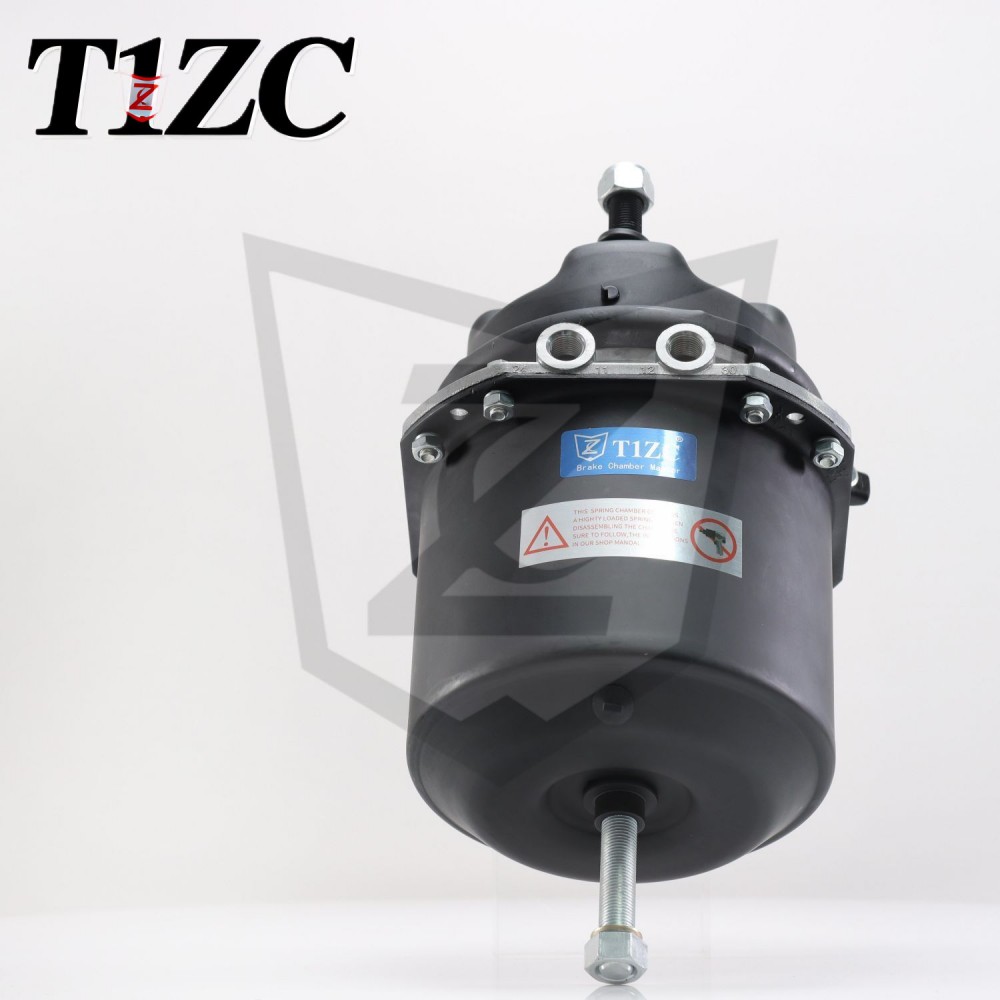
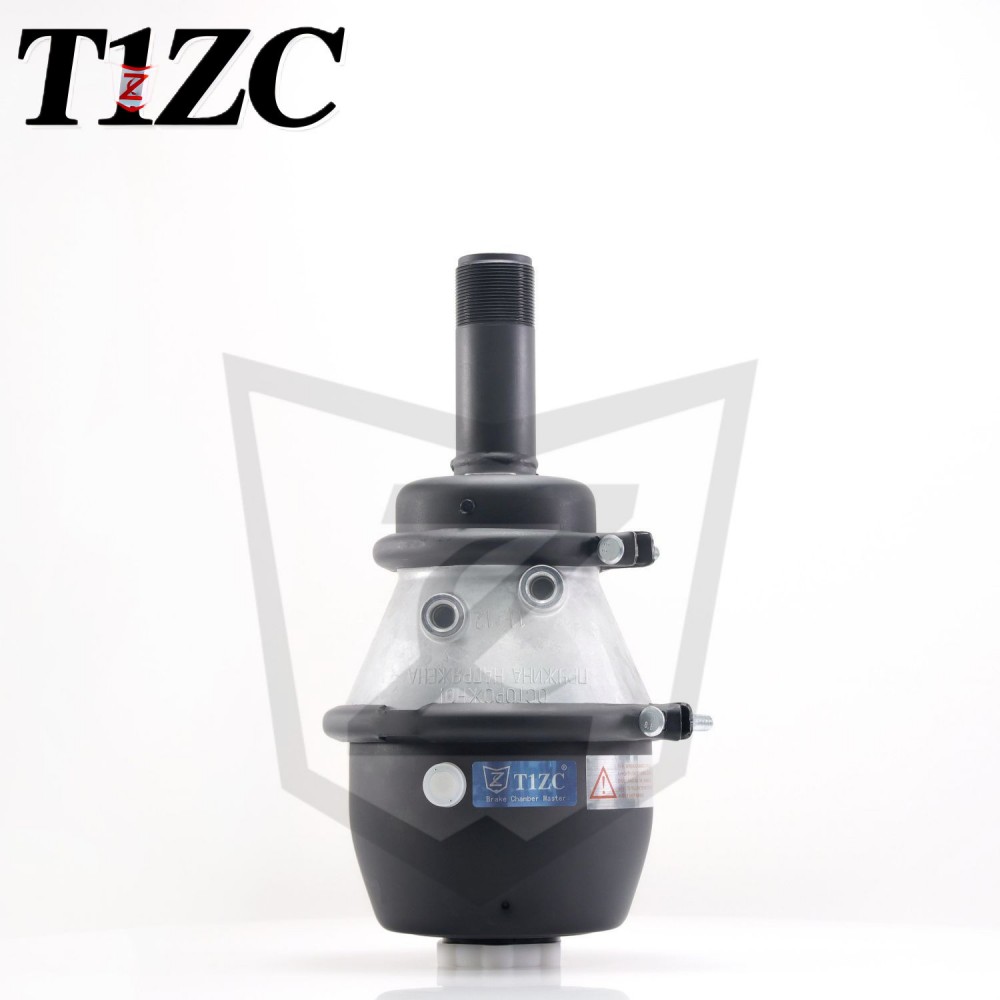
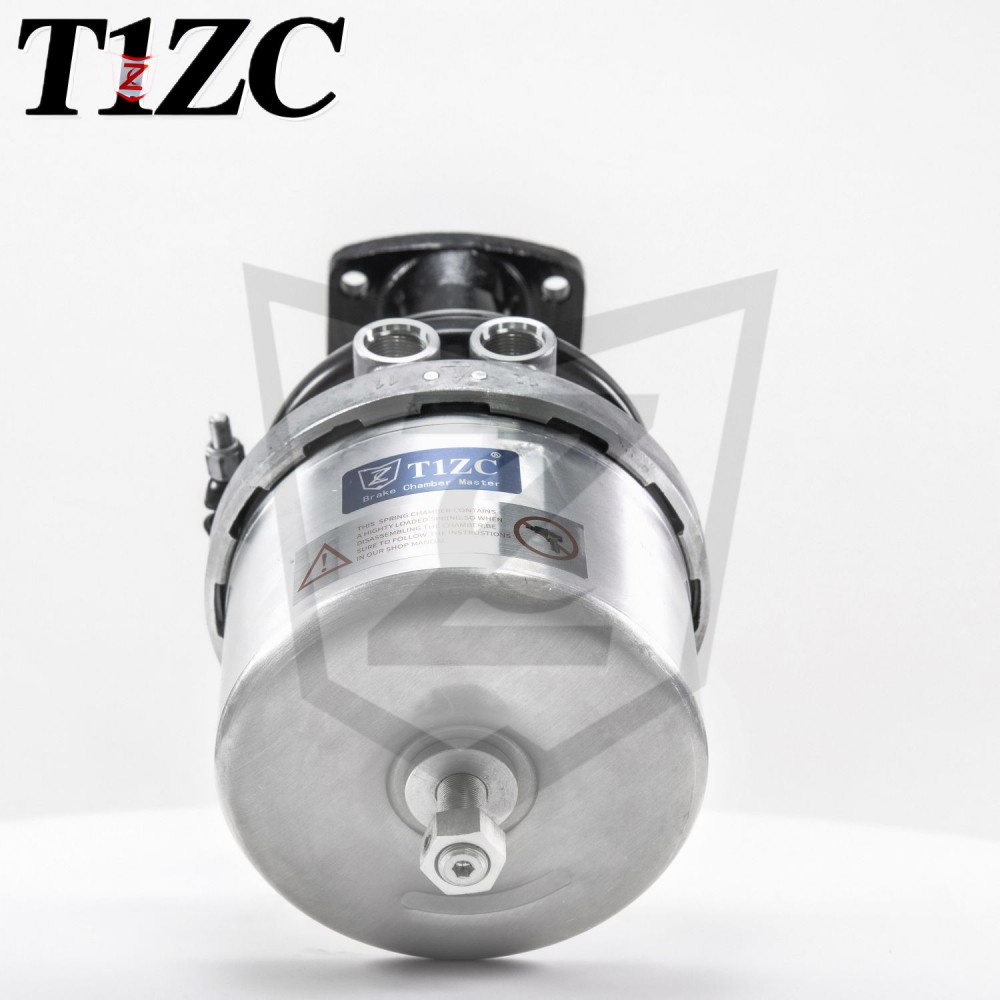
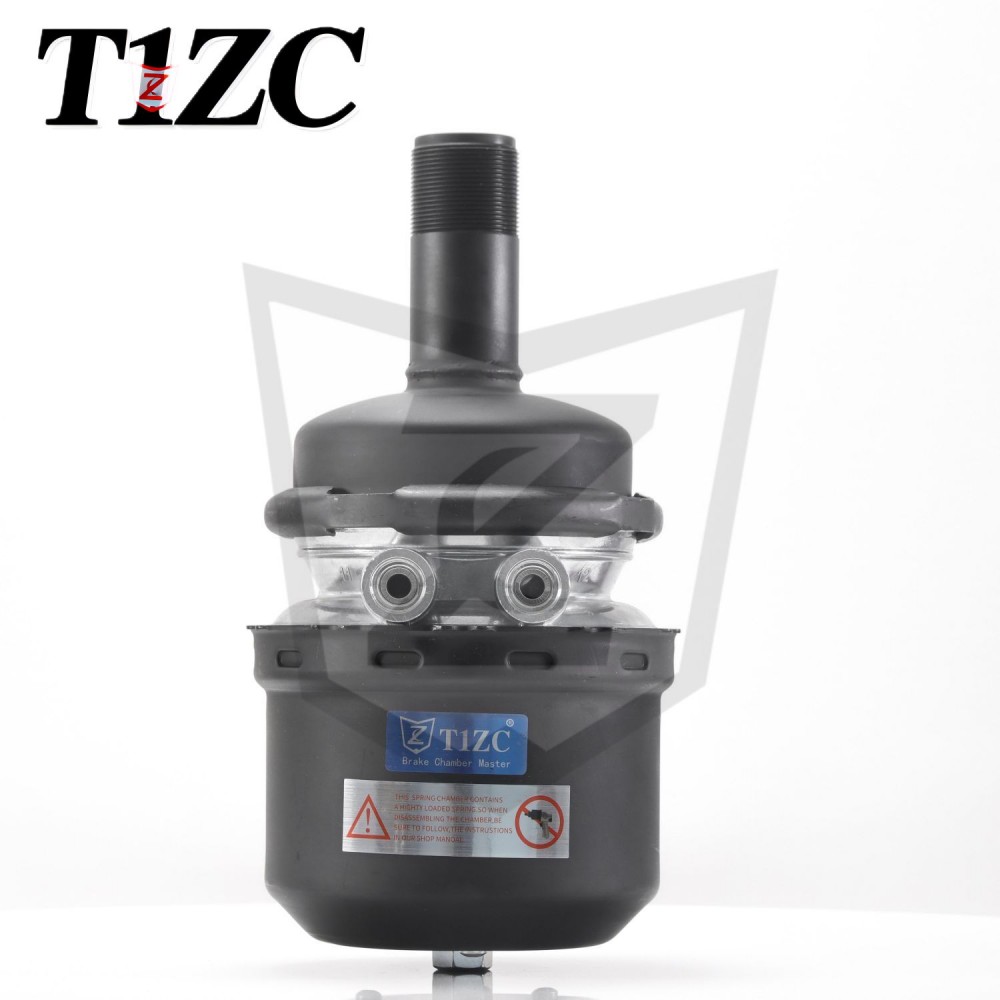
 Welded S-Cam Brake Chamber for Heavy-Duty FleetsWelded DD S-cam chamber with a high-strength shell and sealing, suited to long-service commercial vehicle braking where joint durability matters.View Product →
Where moisture is the dominant threat — coastal depots, winter salt, cold-haul duty — an all-steel double diaphragm design removes much of the internal condensation path that starts the corrosion cycle.
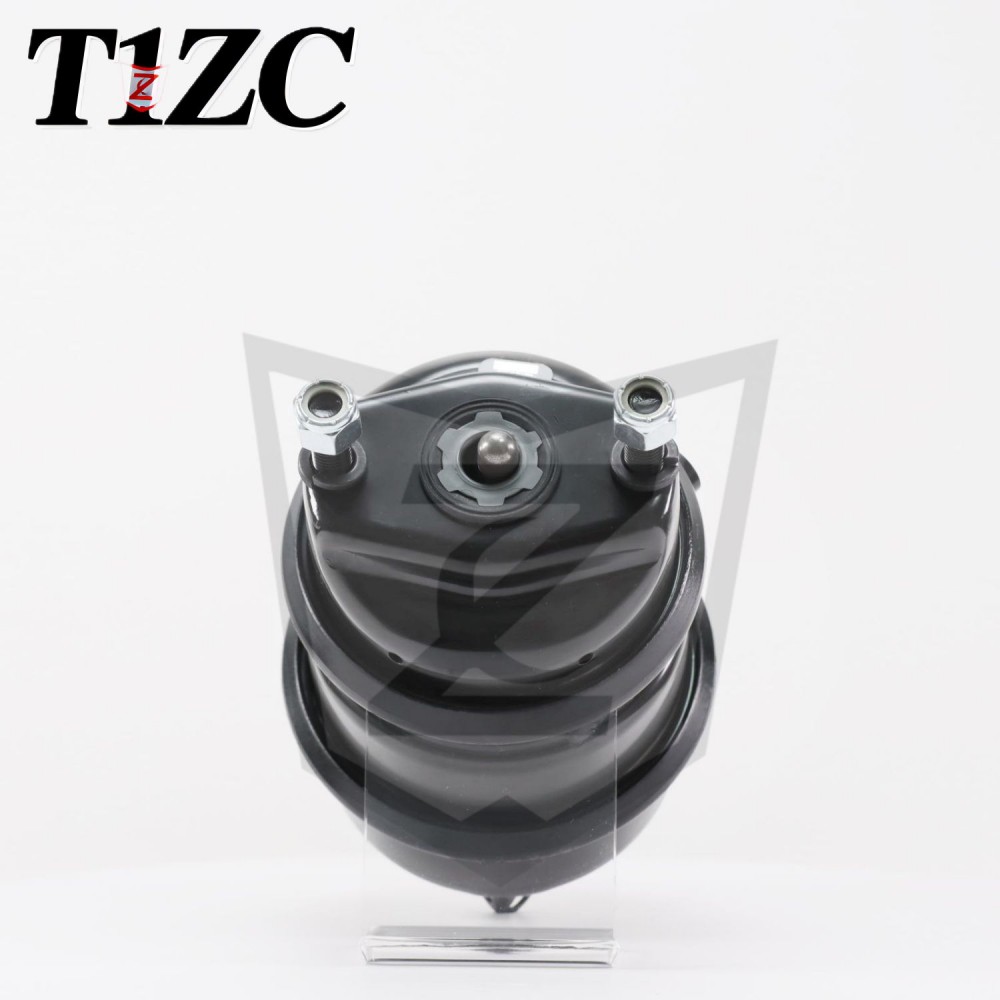 All-Steel Double Diaphragm Disc Brake ChamberAll-steel DD disc chamber built for heavy-duty commercial vehicles, with corrosion-resistant construction and double-diaphragm output for harsh, high-load duty.View Product →
Release behaviour matters too. On combinations where the parking brake is cycled dozens of times a day, a quick-release design shortens the exhaust phase and reduces the repeated pressure spikes that punish diaphragms.
 Quick Release DP S-Cam Brake ChamberDouble-diaphragm S-cam chamber with rapid pressure release, intended for frequent stop-start commercial vehicle duty and faster brake-system response.View Product →
Three practical specifications carry most of the risk reduction: a rated operating pressure that comfortably exceeds the vehicle's governor cut-out, a corrosion protection class matched to the climate rather than to the catalogue photo, and a documented replacement interval written into the maintenance schedule. Buyers who compare only bore size and price are choosing the failure mode by default. Our full brake chamber range is organised by structure type and release method so specifications can be matched to duty rather than to habit.
Frequently Asked Questions
Can a brake chamber explode while the truck is driving?
Yes, though it is far less common than a workshop incident. A corroded shell or a hardened diaphragm can let go during a normal brake application, and the driver will hear a bang followed by a pressure loss and a soft pedal or a dragging wheel. Stop safely and treat the vehicle as unroadworthy until the chamber is checked.
How do I know whether a chamber is a spring brake type?
A spring brake is the larger of the two cans on a drive or trailer axle and carries the parking brake function; it usually sits behind the service chamber on a double-diaphragm unit. If the chamber has a caging bolt port and a release tool provision, treat it as a stored-energy device.
Is a leaking chamber dangerous, or just inefficient?
Both. The leak itself wastes compressor capacity and can delay brake release, but the more serious point is what it signals: a hardened seal, a cracked diaphragm or a corroded shell. Those same conditions are the ones that progress to a burst.
How often should brake chambers be replaced?
Most fleets settle on a condition-based interval with a hard limit, for example inspection at every brake adjustment and replacement at the second band change or after six to eight years, whichever comes first. In salted or coastal service, shorten that interval and prioritise sealed or all-steel constructions.
A brake chamber explosion is a maintenance and handling failure long before it is a mechanical one. Cage the spring, vent the air, chock the wheels, and specify housing construction against the climate the vehicle actually works in. Those four habits remove most of the risk that the word "explosion" implies.