
 EN
EN  English
 Português




The brake chamber spring — more precisely called the power spring inside a spring brake chamber — is a heavy-duty coil spring that stores mechanical energy to apply the parking and emergency brakes on commercial vehicles. It works in reverse of most mechanical intuitions: compressed air holds the spring back during normal driving, and when air pressure drops below a safe threshold, the spring releases to automatically apply the brakes. It is the fail-safe heart of every air brake system on trucks, buses, and trailers worldwide.
On any Class 6, 7, or 8 commercial vehicle equipped with an air brake system, the brake chamber spring is the component that ensures the vehicle stops itself if the air system fails. This is not a passive safety feature — it is the engineered response to one of the most critical failure modes in heavy vehicle operation. According to the Federal Motor Carrier Safety Administration (FMCSA), brake system failures are cited as a contributing factor in approximately 29% of large truck crashes where vehicle factors played a role (FMCSA Large Truck Crash Causation Study). The spring brake chamber is the primary mechanical defense against the most catastrophic category of brake failure: complete loss of air pressure.
This article explains what the brake chamber spring is, how it works within the full spring brake chamber assembly, why its design is critical to vehicle safety, what happens when it fails, how to identify a failing spring, and what the law requires regarding spring brake inspection and maintenance on commercial vehicles.
Whether you are a fleet maintenance manager, a commercial vehicle technician, a trucking company owner-operator, or a student preparing for a CDL examination, this guide provides the complete technical and practical picture.
Content
- What Is the Brake Chamber Spring? Structure and Location
- How the Brake Chamber Spring Works: The Complete Operating Cycle
- Spring Brake Chamber Types and Sizes: Which Applies to Your Vehicle?
- How Does the Brake Chamber Spring Fail? Common Failure Modes
- How to Inspect a Spring Brake Chamber: What to Check and When
- Why Spring Brake Chambers Must Never Be Disassembled in the Field
- Spring Brake Chamber vs. Service Brake Chamber: Key Differences
- Regulatory Requirements for Brake Chamber Springs on Commercial Vehicles
- Frequently Asked Questions About the Brake Chamber Spring
What Is the Brake Chamber Spring? Structure and Location
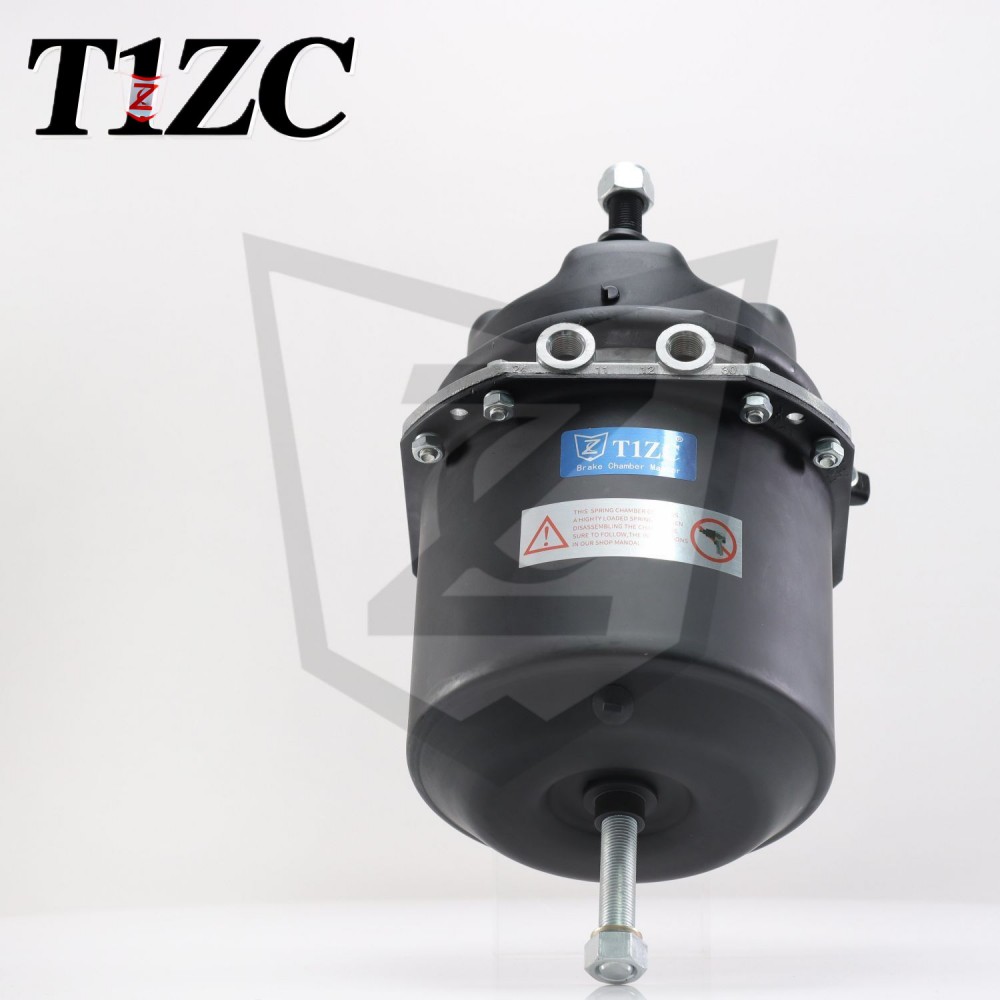
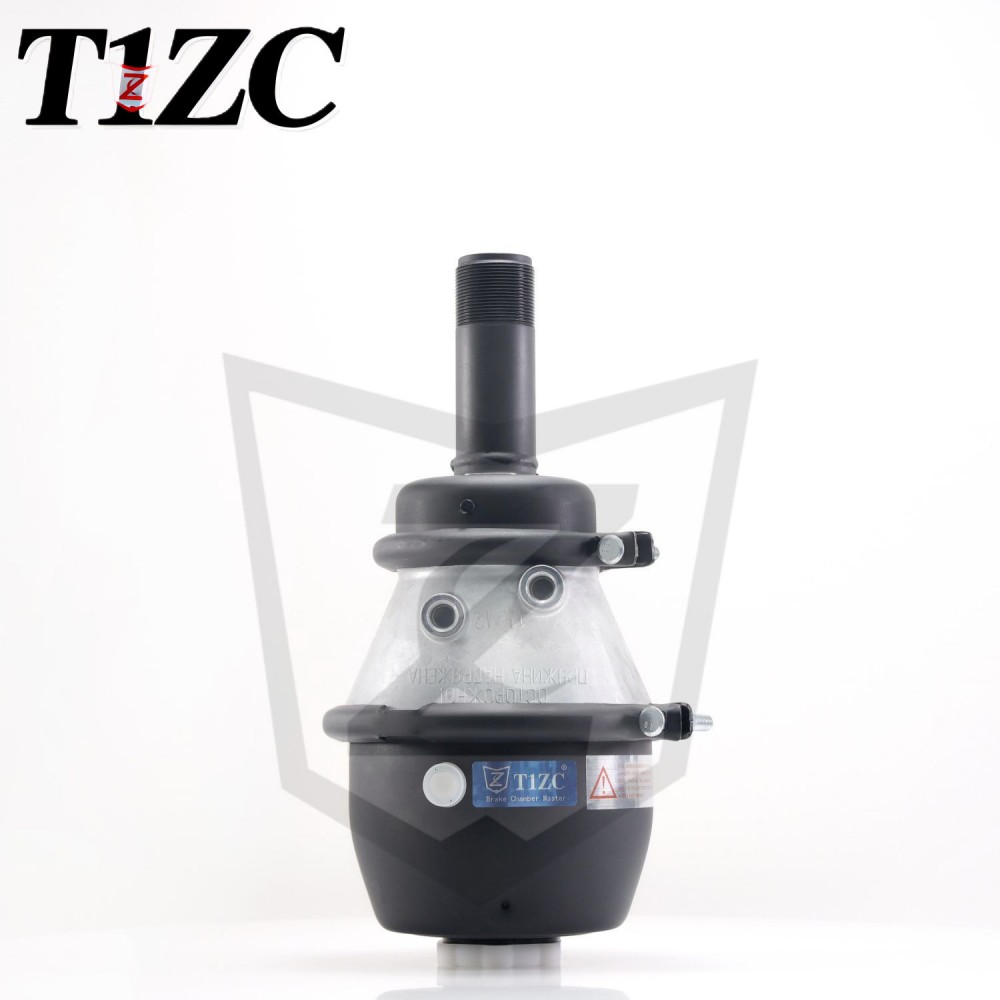
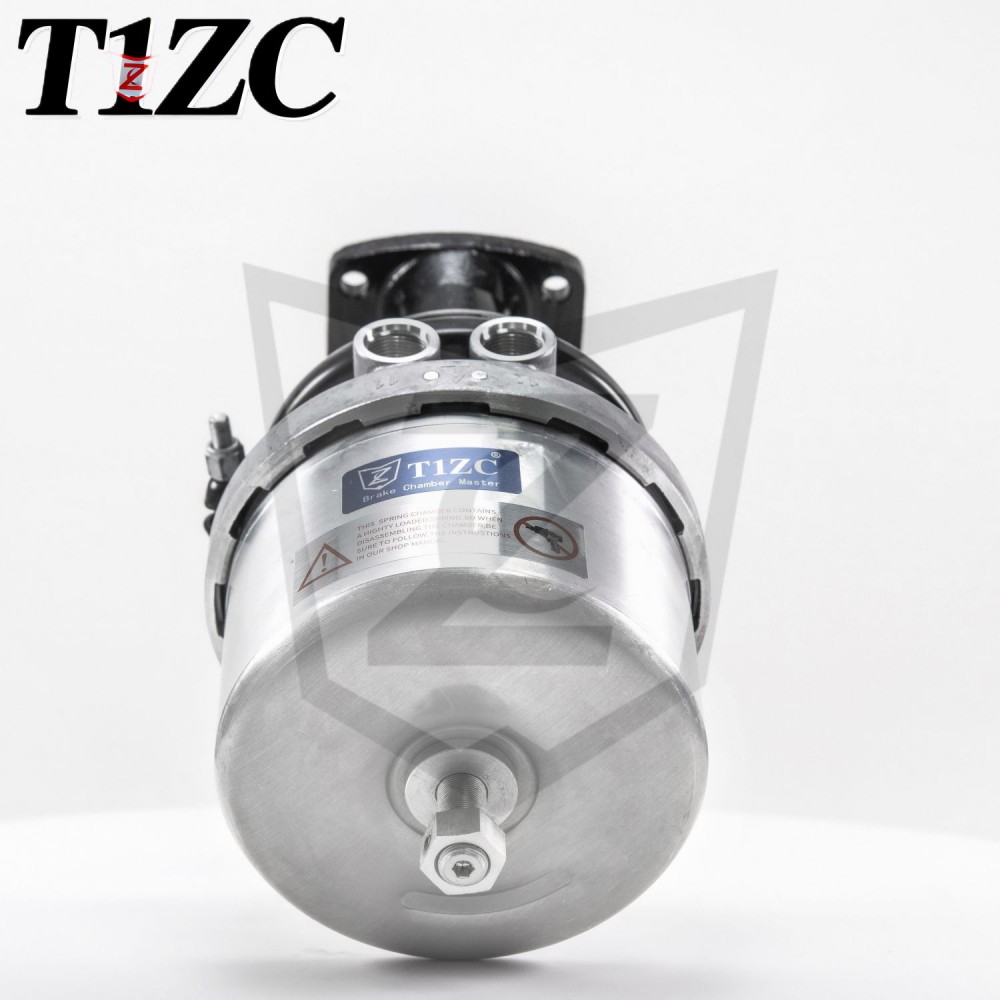
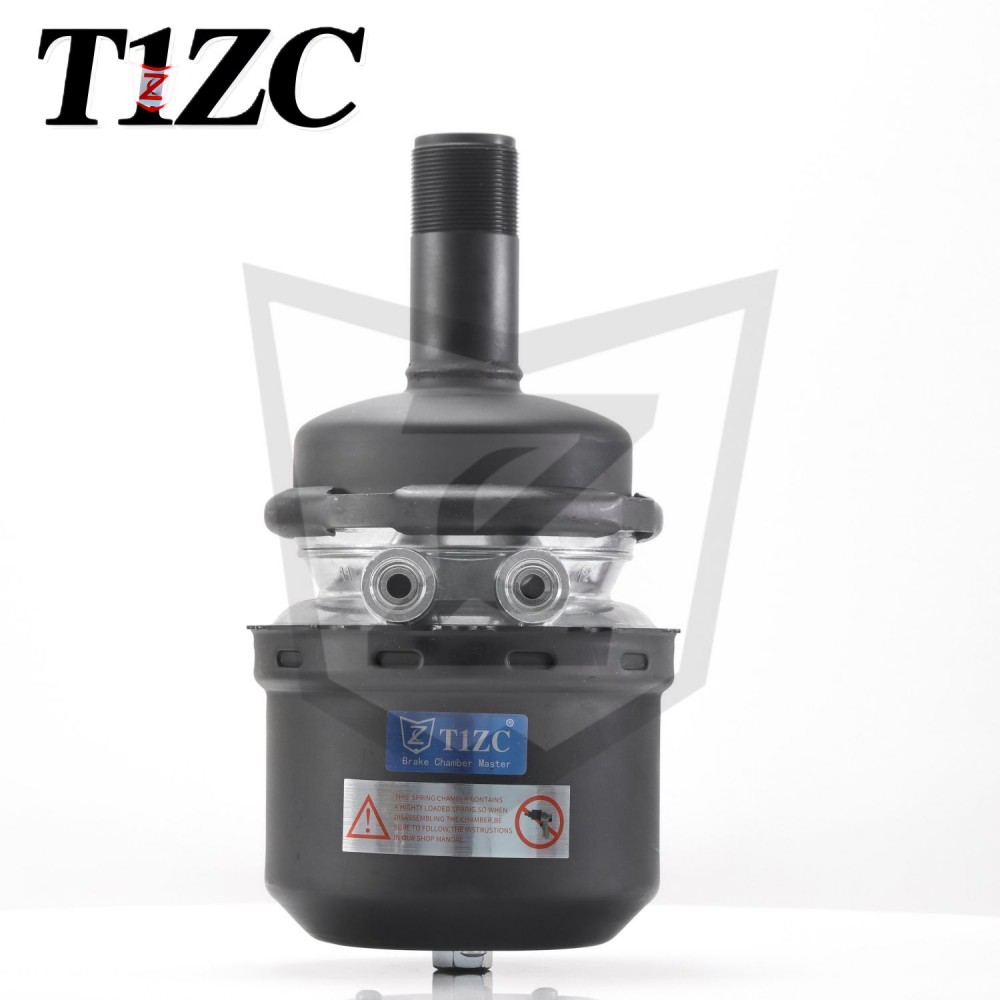
The brake chamber spring is a large, precision-wound coil spring housed in the rear section of a combination spring brake chamber — the "piggyback" assembly mounted at each drive and trailer axle wheel position on air-braked commercial vehicles.
To understand the spring's role, it is necessary to understand the two-section structure of the assembly that contains it. A spring brake chamber consists of two distinct halves bolted together:
- Service brake section (front/smaller chamber): A conventional air-actuated diaphragm chamber that applies the wheel brakes when the driver presses the brake pedal during normal driving. Air pressure pushes the diaphragm, which extends the push rod, which applies the brake through the slack adjuster and S-cam or wedge mechanism. This section operates on positive pressure — air in, brake applied.
- Spring brake section (rear/larger chamber): The section containing the brake chamber power spring. This section operates in reverse — air pressure holds the spring compressed (brakes off), and loss of air pressure releases the spring (brakes applied). The spring acts through a pressure plate onto the common push rod shared with the service brake section.
The power spring itself is a heavy-gauge steel coil spring with the following typical physical characteristics:
- Free length: Approximately 150–200 mm (6–8 inches) in its uncompressed, natural state
- Compressed length in operating position: Approximately 50–75 mm (2–3 inches) — compressed to roughly one-third of its free length when held back by air pressure
- Spring force at full compression: Typically 1,800 to 2,400 lb-ft (2,440 to 3,254 N·m) of stored energy, depending on the chamber size (Type 20, 24, 30, or 36)
- Material: High-carbon or alloy steel wire, heat-treated for fatigue resistance and surface shot-peened to extend service life
This stored energy is what makes the brake chamber spring one of the most dangerous components in a commercial vehicle's brake system — and the source of the rigorous safety protocols that govern any work on spring brake assemblies. The Occupational Safety and Health Administration (OSHA) specifically identifies compressed spring brake chambers as a serious workplace hazard, requiring caging or disassembly only with manufacturer-specified tools.
How the Brake Chamber Spring Works: The Complete Operating Cycle
The brake chamber spring operates through a precise pressure-force relationship — air pressure is the variable that controls whether the spring's stored energy is available to apply the brakes or is held in reserve.
Normal Driving: Spring Held Compressed
When the vehicle's air system is fully charged — typically 100–120 PSI in the spring brake circuit — the air pressure acts on the diaphragm inside the spring brake section with enough force to compress and hold the power spring against its retaining plate. In this state, the spring stores all of its mechanical energy without applying any force to the push rod. The wheel brakes are fully released and the vehicle moves freely.
Parking Brake Applied: Air Released Intentionally
When the driver pulls the yellow diamond-shaped parking brake control knob in the cab, a control valve vents air from the spring brake circuit to atmosphere. As pressure drops, the brake chamber spring extends progressively, pushing the pressure plate forward against the push rod. The push rod extends from the service chamber, rotating the slack adjuster and applying the foundation brakes at each spring-brake-equipped wheel. The parking brake is now held by the full mechanical force of the spring — no air pressure required.
Emergency / Automatic Application: Air Lost Unintentionally
If air pressure in the spring brake circuit drops below approximately 20–45 PSI due to a system failure — a ruptured air line, a failed gladhand seal, or a compressor failure — the brake chamber spring applies the brakes automatically without any driver input. This is the emergency brake function: the spring ensures that a vehicle cannot continue moving when its air system has failed to a dangerous level.
The specific pressure threshold at which the spring applies varies by design and is set by the spring's compression force versus the diaphragm area. Federal Motor Carrier Safety Regulations (49 CFR Part 393.55) require that spring brakes on commercial vehicles apply automatically at or before the air pressure in the system drops to 20 PSI.
Modulated Application: Spring and Service Working Together
Some brake control systems use the spring brake's air circuit for modulated braking — controlling the air supply to the spring brake section at intermediate pressures to allow graduated braking force from the spring in situations where the service brake circuit has failed. This "spring brake modulation" provides a measure of vehicle control during a partial air system failure rather than the immediate full-lock application of a fully released spring.
Spring Brake Chamber Types and Sizes: Which Applies to Your Vehicle?
Spring brake chambers are manufactured in standardized sizes defined by the effective diaphragm area in square inches. Larger chambers produce greater push rod force from the same spring or air pressure, making them suitable for heavier vehicles and larger wheel-end assemblies.
| Chamber Type | Diaphragm Area | Typical Push Rod Stroke | Max Output Force at 100 PSI | Typical Vehicle Application |
| Type 20 | 20 sq in (129 cm²) | 2.5 in (63.5 mm) | 2,000 lbf (8.9 kN) | Medium duty trucks, some transit buses |
| Type 24 | 24 sq in (155 cm²) | 2.5 in (63.5 mm) | 2,400 lbf (10.7 kN) | Class 7–8 trucks, school buses |
| Type 30 | 30 sq in (194 cm²) | 3.0 in (76.2 mm) | 3,000 lbf (13.3 kN) | Heavy Class 8 tractors, tandem drives |
| Type 36 | 36 sq in (232 cm²) | 3.0 in (76.2 mm) | 3,600 lbf (16.0 kN) | Heavy tandem axles, specialized heavy haul |
Table 1: Standard spring brake chamber sizes with diaphragm area, push rod stroke, output force, and typical vehicle applications (Source: TMC Recommended Practice RP-628, Technology and Maintenance Council)
The Type 30/30 combination chamber — with a Type 30 service section and Type 30 spring section — is by far the most common configuration on Class 8 tractor drive axles in North America. Trailers most commonly use Type 24/24 or Type 30/30 combinations depending on axle rating. Using the wrong chamber size on a replacement is a serious safety error — an undersized chamber will not generate sufficient braking force to meet FMCSA stopping distance requirements.
How Does the Brake Chamber Spring Fail? Common Failure Modes
Brake chamber spring failures fall into three categories — mechanical fatigue of the spring itself, diaphragm and seal failures that allow moisture contamination, and corrosion from the external environment. Each has distinct causes, symptoms, and consequences.
| Failure Mode | Root Cause | Observable Symptoms | Safety Consequence |
| Spring fatigue fracture | Metal fatigue from millions of compression/extension cycles | Brakes release spontaneously; vehicle won't hold on a grade | Loss of parking and emergency brake — vehicle rollaway risk |
| Spring corrosion / stress corrosion cracking | Moisture ingress through failed diaphragm or housing seal | Air audible at chamber; rust-colored fluid at drain; weak brake application | Sudden spring fracture under load — unpredictable brake loss |
| Diaphragm rupture | Age, ozone cracking, oil contamination, mechanical damage | Audible air leak at chamber; brakes apply / fail to release normally | Air circuit failure leads to unintended brake application or brake drag |
| Push rod seal failure | Seal wear from push rod side movement over time | Air leak at push rod boot; moisture in spring section | Moisture accelerates spring corrosion; leads to spring fatigue failure |
| External corrosion (housing) | Road salt, water exposure, lack of protective coating | Visible rust on housing exterior; housing wall thinning | Housing structural failure releases spring energy catastrophically |
Table 2: Common spring brake chamber failure modes with root causes, observable symptoms, and safety consequences
Why Spring Fracture Is the Most Dangerous Failure Mode
When a brake chamber power spring fractures due to fatigue or corrosion, the stored energy in the compressed spring does not simply dissipate — it releases suddenly in one of two ways, both of which are hazardous:
- Spring energy loss during parking: If the spring fractures while the vehicle is parked with parking brakes applied, the fractured spring can no longer maintain brake application force. The vehicle may roll away unexpectedly — particularly dangerous on grades. According to the FMCSA, unattended vehicle rollaway incidents involving heavy trucks cause dozens of fatalities annually in the United States.
- Explosive spring release during disassembly: If a technician attempts to remove or disassemble a chamber containing a corroded spring that fractures during the process, the released energy can eject the spring or pressure plate at extremely high velocity. The OSHA fatality database contains documented cases of technicians killed or severely injured by spring brake chamber spring releases during improper disassembly.
How to Inspect a Spring Brake Chamber: What to Check and When
Spring brake chamber inspection is a required element of commercial vehicle pre-trip inspection under FMCSA 49 CFR Part 396.13 and the annual inspection requirements of 49 CFR Part 396.17. The CVSA (Commercial Vehicle Safety Alliance) North American Standard Out-of-Service Criteria specify the exact conditions that place a vehicle out of service for brake chamber defects.
Daily Pre-Trip Inspection Points
- Visual check for cracks, dents, or holes in the chamber housing: The chamber housing must be structurally intact. Any crack or hole in the housing is an immediate out-of-service condition — it compromises the containment of the power spring and the integrity of the air circuit.
- Check push rod stroke: With the parking brake released and service brakes applied to 90–100 PSI, the push rod stroke should be within the marked limits for the chamber type. CVSA limits push rod travel to no more than 1/4 inch beyond the maximum adjustment limit for the chamber size before declaring the vehicle out of service for brakes out of adjustment.
- Listen for air leaks at the chamber: With the system pressurized, listen and feel around the chamber housing, push rod boot, and mounting area for any air escaping. A leak rate exceeding 3 PSI per minute from a single chamber warrants immediate investigation.
- Check the clamp ring: The clamp that holds the two halves of the spring brake chamber together must be fully engaged and show no signs of loosening, cracking, or corrosion through the clamp material. A failed clamp can allow the chamber halves to separate — releasing the spring with catastrophic force.
Annual Inspection and Replacement Criteria
The Technology and Maintenance Council (TMC) Recommended Practice RP-628 provides specific guidance on spring brake chamber replacement intervals and criteria. Key replacement indicators include:
- Any audible air leak from the chamber that cannot be attributed to a replaceable external fitting
- Evidence of moisture or rust-colored fluid at the drain hole or push rod boot — indicating water has entered the spring section
- Chamber age exceeding 7–10 years in service, regardless of apparent condition — spring steel fatigue progression is not always visible externally
- Any history of the chamber being submerged in water (flood event, water crossing) — moisture entry accelerates stress corrosion cracking in the power spring
- Push rod stroke at or beyond maximum adjustment limit after brake adjustment — indicates brake adjustment or chamber stroke issue requiring investigation
Why Spring Brake Chambers Must Never Be Disassembled in the Field
The brake chamber power spring stores enough energy to cause fatal injury if released uncontrollably — and this is the reason that spring brake chambers are designed as sealed, non-serviceable assemblies that must be replaced as a complete unit rather than repaired or disassembled in the field.
OSHA Standard 29 CFR 1910.177 (Servicing Multi-Piece and Single Piece Rim Wheels) and industry safety guidance from the Technology and Maintenance Council both explicitly prohibit disassembly of spring brake chambers outside a controlled shop environment using manufacturer-approved restraining devices. The specific hazards are:
- Clamp ring ejection: If the clamp ring that holds the two chamber sections together is removed while the power spring is still under compression, the spring energy releases through the chamber halves — separating them with force equivalent to a small explosive charge.
- Internal corrosion not visible externally: A chamber that appears intact externally may have a severely corroded spring internally. Attempting to cage or disassemble such a chamber can cause the spring to fracture mid-procedure, releasing energy without warning.
- No field repair is possible or legal: Spring brake chambers are manufactured to precise tolerances and tested to defined pressure and force specifications. Field modification or improvised repair changes these characteristics in ways that cannot be verified without specialized test equipment.
Critical Safety Rule: The only safe procedure for handling a spring brake chamber with a suspected internal fault is to cage the spring using the chamber's built-in caging bolt (with the vehicle safely chocked), remove the complete assembly from the vehicle, and replace it with a new unit. Never cut open, weld, or attempt to remove the clamp ring from a spring brake chamber outside of a manufacturer-approved facility.
Spring Brake Chamber vs. Service Brake Chamber: Key Differences
Not every brake chamber on a commercial vehicle contains a power spring. Understanding the difference between spring brake chambers and service-only chambers is essential for correct replacement and inspection.
| Feature | Spring Brake Chamber (Piggyback) | Service-Only Brake Chamber |
| Contains power spring | Yes — large coil spring in rear section | No — diaphragm and return spring only |
| Parking brake function | Yes — spring applies and holds parking brake | No parking brake capability |
| Emergency brake function | Yes — spring applies automatically on air loss | No — brakes release if air is lost |
| Air circuits required | Two — service circuit and spring brake circuit | One — service circuit only |
| Caging required for removal | Yes — mandatory before removal from vehicle | No — can be removed when air is exhausted |
| Typical location on vehicle | Drive axles and trailer axles | Front steer axle (on most vehicles) |
| Regulatory requirement | Required on all drive and trailer axles per FMCSA 393.55 | Steer axle service braking only |
Table 3: Comparison of spring brake (piggyback) chambers and service-only brake chambers across key functional, safety, and regulatory dimensions
Regulatory Requirements for Brake Chamber Springs on Commercial Vehicles
The spring brake chamber is one of the most heavily regulated components in commercial vehicle law — and for good reason. FMCSA regulations establish minimum standards for spring brake function, adjustment, and condition that apply to every commercial motor vehicle over 10,000 lb GVWR operating on U.S. public roads.
- 49 CFR 393.55(a): Requires that commercial vehicles have a parking brake system capable of holding the vehicle on any grade on which it is operated when loaded. Spring brake chambers are the primary technology used to meet this requirement on air-braked vehicles.
- 49 CFR 393.55(b): Specifies that the emergency brake system (which on air-braked vehicles is the spring brake) must automatically come into operation upon the loss of the primary brake system air pressure.
- CVSA Out-of-Service Criteria — Brake Adjustment: A commercial vehicle is placed out of service during a roadside inspection if the push rod travel on any Type 30 spring brake chamber exceeds 2 inches (50.8 mm) at 90 PSI application pressure. Limits vary by chamber type and are published in the annual CVSA North American Standard Out-of-Service Criteria document.
- 49 CFR 396.17 — Annual Inspection: Requires that all commercial vehicles be inspected at least annually by a qualified inspector, with brake system components including spring brake chambers specifically listed as inspection items.
- 49 CFR 396.3 — Systematic Inspection and Maintenance: Requires that carriers have a systematic inspection, repair, and maintenance program that ensures all parts and accessories are in safe and proper operating condition at all times.
During CVSA International Roadcheck inspections — the annual three-day commercial vehicle inspection blitz conducted across North America — brake system violations including spring brake defects are consistently among the top three out-of-service violations recorded. In the 2023 International Roadcheck, brake system violations accounted for approximately 42.4% of all vehicle out-of-service conditions (CVSA 2023 Roadcheck Report), underscoring the importance of rigorous spring brake maintenance.
Frequently Asked Questions About the Brake Chamber Spring
How long does a brake chamber spring last?
There is no universal mileage or time-based service life specified for brake chamber power springs because their durability depends on operating environment, moisture exposure, and application frequency. However, the Technology and Maintenance Council (TMC) RP-628 recommends that spring brake chambers be considered for replacement after 7 to 10 years of service regardless of apparent external condition, specifically because internal spring corrosion and fatigue progression cannot be reliably assessed without disassembly — which is itself prohibited in the field. Chambers operating in highly corrosive environments (coastal regions, heavy road salt use) should be evaluated on a shorter timeline.
Can a broken brake chamber spring be repaired?
No — a fractured or damaged brake chamber spring cannot be repaired or replaced individually in the field. The spring brake chamber is a sealed, non-serviceable assembly, and attempting to open the housing to access the spring is extraordinarily dangerous due to the stored spring energy. If a spring failure is suspected — evidenced by the parking brake failing to hold or audible changes in brake function — the correct procedure is to cage the spring using the chamber's built-in caging bolt, chock the vehicle wheels, remove the complete chamber assembly from the axle bracket, and replace it with a new, certified unit of the correct type and size.
What causes a spring brake chamber to apply on its own while driving?
Unexpected spring brake application while driving is most commonly caused by one of three conditions: low air pressure in the spring brake circuit (the system is dropping below the ~20 PSI application threshold — check for air leaks), a failed or stuck relay valve in the spring brake control circuit that is inadvertently venting air from the spring section, or a seized or stuck parking brake control valve that is not properly maintaining air to the spring circuit when the parking brake control is in the released position. Any of these conditions requires immediate investigation — unexpected spring brake application at highway speed creates severe vehicle control and rear-end collision hazards.
Why does my spring brake chamber have a drain hole, and what should come out of it?
The small drain hole or plug at the bottom of the spring brake chamber housing is a deliberate design feature that allows moisture that enters the spring section to escape, rather than accumulating and accelerating spring corrosion. Under normal operating conditions, nothing should consistently exit the drain hole. If rust-colored water, oil, or significant moisture drains from the hole, it indicates that the diaphragm or push rod seal has failed and is allowing air system moisture or contaminants to enter the spring section — a condition requiring immediate chamber replacement to prevent spring stress corrosion cracking.
Is it legal to weld or modify a spring brake chamber housing?
No — welding, cutting, drilling, or any structural modification of a spring brake chamber housing is strictly prohibited by OSHA regulations, FMCSA safety standards, and chamber manufacturers' warnings. The housing contains a compressed spring under potentially lethal stored energy, and any structural modification that weakens or penetrates the housing creates an immediate risk of catastrophic failure. The legal and safe procedure is always complete chamber replacement with a certified new or remanufactured unit. Carriers that operate modified brake chambers risk serious regulatory penalties, liability exposure in the event of a crash, and potential criminal liability if personnel are injured as a result.
The brake chamber spring is the unseen enforcer of safety in every air-braked commercial vehicle — working silently under compression during normal driving, and ready to act instantly and automatically if the air system that normally controls it fails. Its role is simple in concept and critical in consequence: when air goes, the spring holds the vehicle in place.
For fleet operators, maintenance managers, and technicians, respecting both the function and the hazard of the brake chamber power spring — maintaining it correctly, replacing it on schedule, and never attempting field repair — is the foundation of a safe and compliant air brake maintenance program. The regulations exist because the consequences of failure are severe; the maintenance procedures exist because prevention is always less costly than the alternative.