 EN
EN  English
 Português
Home / Blogs / Industry News / Which Types of Brake Chambers Do You Need — and How Does Each One Work?


Application Industry
AGV

Automated robots

laser cutting

Logistics sorting

Photovoltaic power-station
Medical devices
Which Types of Brake Chambers Do You Need — and How Does Each One Work?
There are three primary types of brake chambers used in air brake systems: service brake chambers, spring brake chambers (also called piggyback or combination chambers), and long-stroke brake chambers. Each type serves a distinct function in controlling, holding, or emergency-stopping a commercial vehicle, and selecting the wrong type can compromise braking performance, fail federal safety inspections, or cause catastrophic brake failure on the road.
This guide covers every major type of brake chamber, how they differ in design and function, which axle positions they are suited for, how to identify them by size code, and answers to the most commonly asked questions from fleet managers, mechanics, and owner-operators.
Content
- What Is a Brake Chamber and Why Does It Matter?
- The 3 Main Types of Brake Chambers Explained
- Which Type of Brake Chamber Should You Use? Side-by-Side Comparison
- How Brake Chamber Sizes Work — Understanding Type Numbers
- How to Identify the Type of Brake Chamber on Your Vehicle
- Why Long-Stroke Brake Chambers Improve Safety and Reduce Maintenance
- How to Know When to Replace a Brake Chamber
- Frequently Asked Questions About Types of Brake Chambers
- Final Summary: Choosing the Right Brake Chamber Type
What Is a Brake Chamber and Why Does It Matter?
A brake chamber is a pneumatic actuator that converts air pressure into mechanical force to engage the brakes on a commercial vehicle. It is the critical link between the air supply system and the physical brake components — slack adjusters, push rods, and brake shoes or disc calipers.
In a typical Class 8 tractor-trailer, there are 10 or more brake chambers — one per wheel end on each axle. Every time the driver presses the brake pedal, compressed air flows into each chamber, pushing a diaphragm that moves a push rod outward. That push rod rotates the slack adjuster, which turns the S-cam or actuates the disc caliper, pressing the brake shoes or pads against the drum or rotor.
Understanding the types of brake chambers is not optional for anyone responsible for maintaining or specifying a commercial air brake system — it is a federal safety requirement under FMCSA regulations (49 CFR Part 393).
The 3 Main Types of Brake Chambers Explained
The three main types are service brake chambers, spring brake chambers, and long-stroke brake chambers — each designed for a specific braking role and axle location.
1. Service Brake Chambers (Round Chambers)
Service brake chambers are the simplest type — single-diaphragm units used exclusively on steer axles and some trailer axles where spring parking brakes are not required. They apply braking force only when the driver applies air pressure; when air is released, an internal return spring pushes the push rod back to its resting position.
They are called "round chambers" because of their circular, clam-shell housing shape. Standard service chambers do not provide any parking or emergency braking function — they rely entirely on a continuous supply of compressed air to remain effective.
- Common sizes: Type 12, 16, 20, 24, 30
- Typical location: Front steer axle, some trailer axles
- Parking brake: None
- Components: Single diaphragm, push rod, return spring, clamp ring
- Typical air pressure required: 85–125 PSI for full actuation
2. Spring Brake Chambers (Combination / Piggyback Chambers)
Spring brake chambers are dual-section units that combine a service chamber with a spring-loaded parking and emergency brake section — they are the most common type found on drive axles of tractors and trucks.
The front section (service side) works identically to a standard service chamber. The rear section (spring side) contains a powerful coil spring — typically capable of generating 1,500 to 2,500 pounds of force — that applies the brake mechanically when air pressure drops below approximately 60 PSI. This is why air brake systems apply the brakes automatically when air pressure is lost: the spring "sets" the brake by default.
To hold the spring in the released (brakes-off) position during normal driving, air pressure must be continuously maintained in the spring chamber. This air is supplied by a dedicated circuit controlled by the parking brake valve (the yellow diamond-shaped knob in the cab).
- Also called: Piggyback chambers, combination chambers, park/service chambers
- Common configurations: 30/30, 24/24, 20/20, 30/24 (service/spring sizing)
- Typical location: Rear drive axles of tractors, trucks, and some buses
- Parking brake: Yes — spring-applied, air-released (SAAR)
- Emergency braking: Yes — activates automatically if air drops below ~60 PSI
- Manual release: Includes a caging bolt for mechanical spring release when no air is available
Safety Warning: Never attempt to disassemble a spring brake chamber without proper caging tools. The internal spring stores enormous energy and can cause fatal injury if released uncontrolled.
3. Long-Stroke Brake Chambers
Long-stroke brake chambers have an extended push rod travel distance — typically 3 inches instead of the standard 2.5 inches — designed to maintain braking effectiveness as brake linings wear down between adjustments.
Standard chambers lose braking force rapidly as linings wear because the push rod must travel farther to make contact, often exceeding the chamber's effective stroke range. Long-stroke chambers address this by providing an additional ½ inch of usable stroke, which translates to significantly longer intervals between brake adjustments and more consistent braking force throughout the service life of the brake lining.
Long-stroke chambers are identifiable by a square-shaped mounting flange (as opposed to the round flange on standard chambers) and are marked with an "L" suffix in their size designation (e.g., Type 30L). They are not interchangeable with standard chambers even of the same size — the slack adjuster and push rod length must be matched correctly.
- Push rod stroke: 3 inches (vs. 2.5 inches standard)
- Identification: Square mounting flange; "L" suffix in type designation
- Common sizes: Type 20L, 24L, 30L
- Typical location: Drive and trailer axles; mandated in some states for certain vehicle classes
- Available as: Service-only or spring brake (long-stroke piggyback) configuration
Which Type of Brake Chamber Should You Use? Side-by-Side Comparison
Match the chamber type to the axle position, parking brake requirement, and stroke specification — never substitute a smaller or shorter chamber to save cost.
| Feature | Service Chamber | Spring Brake Chamber | Long-Stroke Chamber |
| Sections | Single | Dual (service + spring) | Single or Dual |
| Parking Brake | No | Yes | Optional |
| Emergency Brake | No | Yes (auto spring-set) | Optional |
| Push Rod Stroke | 2.5 in (standard) | 2.5 in (standard) | 3.0 in |
| Mounting Flange | Round | Round | Square |
| Typical Axle Position | Front steer axle | Rear drive axle | Drive / trailer axle |
| Interchangeable with Standard? | Yes (same size) | No (different design) | No (different flange/stroke) |
| Relative Cost | Lowest | Moderate–High | Moderate–High |
Table: A side-by-side comparison of the three main types of brake chambers across key specifications, positions, and functional capabilities.
How Brake Chamber Sizes Work — Understanding Type Numbers
Brake chamber size numbers (Type 9, 12, 16, 20, 24, 30, 36) refer to the effective area of the diaphragm in square inches — a Type 30 chamber has a diaphragm with approximately 30 square inches of effective area.
This area directly determines how much output force the chamber can produce. The formula is straightforward: Output Force = Air Pressure (PSI) × Diaphragm Area (sq in). At 100 PSI, a Type 30 chamber generates roughly 3,000 pounds of push-rod force, while a Type 20 at the same pressure generates only about 2,000 pounds.
For spring brake combination chambers, two numbers are used — for example, "30/30" means both the service section and the spring section have Type 30 diaphragms. A "30/24" means the service side is Type 30 and the spring side is Type 24.
| Chamber Type | Effective Area (sq in) | Force at 100 PSI (approx.) | Typical Application |
| Type 9 | 9 sq in | ~900 lbs | Light-duty, small buses |
| Type 12 | 12 sq in | ~1,200 lbs | Medium steer axles |
| Type 16 | 16 sq in | ~1,600 lbs | Medium trucks, steer axle |
| Type 20 | 20 sq in | ~2,000 lbs | Medium-duty trucks, buses |
| Type 24 | 24 sq in | ~2,400 lbs | Heavy-duty drive axle |
| Type 30 | 30 sq in | ~3,000 lbs | Class 8 tractor drive axle |
| Type 36 | 36 sq in | ~3,600 lbs | Specialty heavy axle, mining |
Table: Standard brake chamber type numbers, diaphragm areas, approximate output force at 100 PSI, and typical vehicle applications.
How to Identify the Type of Brake Chamber on Your Vehicle
You can identify the brake chamber type and size by reading the stamped or embossed label on the chamber housing — it will show the type number, stroke designation, and whether it includes a spring brake section.
Look for a tag or stamping on the clamp band or chamber body. Key identification markers include:
- Type number (e.g., "30" or "24") — indicates diaphragm area in square inches
- "L" suffix (e.g., "30L") — indicates long-stroke design with 3-inch stroke
- Dual numbers (e.g., "30/30") — indicates a spring brake combination chamber; first number is service, second is spring
- Square vs. round mounting flange — square flange confirms long-stroke; round flange is standard
- Caging bolt presence — a bolt and nut on the rear of the chamber confirms it is a spring brake unit
- Overall chamber size — spring brake chambers are physically longer than service-only chambers of the same diaphragm size
If the label is damaged or missing, measure the outside diameter of the diaphragm clamp. A Type 30 chamber clamp measures approximately 9.5 inches in diameter; a Type 24 measures about 8.5 inches; a Type 20 is approximately 7.7 inches.
Why Long-Stroke Brake Chambers Improve Safety and Reduce Maintenance
Long-stroke brake chambers dramatically reduce out-of-adjustment brake violations — one of the leading causes of commercial vehicle brake-related crashes — by tolerating more lining wear before braking effectiveness drops below safe thresholds.
According to data from the Commercial Vehicle Safety Alliance (CVSA), brake adjustment violations are among the top out-of-service defects found during roadside inspections. When a standard chamber's push rod exceeds its adjustment limit — typically 1¾ inches at rest for a Type 30 — the vehicle is placed out of service immediately.
Long-stroke chambers have an out-of-adjustment limit of 2 inches at rest for a Type 30L, providing a meaningful buffer. This is especially valuable on trailer axles, where brake adjustment is often checked less frequently than on the tractor.
Additional benefits of long-stroke chambers include:
- Extended brake adjustment intervals — reduces labor costs on high-mileage fleets
- Consistent braking force as linings wear, improving stopping distance predictability
- Reduced brake fade risk during sustained application on grades
- Better compatibility with automatic slack adjusters (ASAs), which are now federally mandated on all new CMVs
How to Know When to Replace a Brake Chamber
A brake chamber must be replaced immediately if it shows any signs of diaphragm failure, push rod damage, corrosion to the housing, or air leakage — there is no safe way to repair a failed chamber in the field.
Key warning signs across all types of brake chambers:
- Audible air leak at the chamber body or around the clamp ring
- Brake dragging on one wheel — indicates a failed return spring or collapsed diaphragm
- Uneven braking side-to-side — often caused by a diaphragm tear on one side
- Push rod exceeds maximum stroke at full application (measured at the brake application port)
- Visible cracks or dents on the housing — compromised structural integrity
- Spring brake fails to hold on a grade — indicates internal spring failure (extremely dangerous)
- Water or oil contamination inside the chamber — accelerates diaphragm degradation
Most brake chamber diaphragms have a service life of approximately 200,000–400,000 miles under normal operating conditions, though this varies significantly based on climate, air system moisture levels, and duty cycle. Spring brake chambers may need attention sooner in regions with extreme temperature cycling due to stress on the internal coil spring.
Frequently Asked Questions About Types of Brake Chambers
Q: Can I use a spring brake chamber on the front steer axle?
No — steer axles use service-only chambers. Federal regulations (FMCSR 393.43) require that spring brakes not be used on steer axles of trucks. Steer axle brake chambers rely on air pressure alone for service braking; parking is handled by the rear spring brakes and the transmission.
Q: What happens if a brake chamber size is mismatched?
Using a smaller chamber than specified reduces braking force, potentially causing the vehicle to fail minimum stopping distance requirements. Using a larger chamber may mean the push rod and slack adjuster geometry are misaligned, causing uneven wear and erratic brake response. Always replace with the exact type and size specified by the vehicle manufacturer.
Q: What is a "caged" spring brake chamber?
Caging is the process of mechanically compressing and holding the internal power spring using the caging bolt — a threaded rod located at the rear of the spring brake housing. This is done when there is no air pressure available and the brakes need to be released for towing or maintenance. A caged chamber has the spring fully compressed and locked; it provides no parking or emergency brake function until uncaged.
Q: How do I measure push rod stroke to check brake adjustment?
With the vehicle on level ground and brakes fully released, mark the push rod at the brake chamber face. Apply approximately 90 PSI of air pressure (a full brake application) and measure how far the push rod has traveled. For a standard Type 30, the maximum allowable stroke is 1¾ inches at full application. For a Type 30L long-stroke chamber, the limit is 2 inches. Measurements beyond these limits indicate the brakes are out of adjustment.
Q: Are long-stroke and standard chambers interchangeable?
No — they are not interchangeable. Long-stroke chambers have a square mounting flange while standard chambers have a round flange, making physical swapping impossible in most cases. Additionally, the push rod length and slack adjuster geometry must be correctly matched to the stroke length. Installing a long-stroke chamber in a position designed for a standard chamber — or vice versa — will result in incorrect brake geometry and potentially dangerous brake performance.
Q: Do trailers use spring brake chambers?
Yes — most modern semi-trailers are equipped with spring brake combination chambers on all axles to meet FMCSA parking brake requirements. Trailer spring brakes release when the glad hand supply line is connected and pressurized, and automatically apply if the supply line is disconnected or pressure is lost, which is the mechanism behind the trailer "breakaway" brake system.
Q: How does temperature affect brake chamber performance?
Extreme cold can cause the rubber diaphragm to stiffen, slightly reducing responsiveness at first application until the system warms. More critically, moisture in the air lines can freeze inside the chamber, preventing the push rod from returning to the fully released position — causing brake dragging. Using a properly maintained air dryer and alcohol evaporator can prevent moisture-related failures in cold climates.
Final Summary: Choosing the Right Brake Chamber Type
The type of brake chamber you choose must match the axle position, parking brake requirement, and stroke specification — there is no universal solution, and substitutions carry real safety and legal risk.
Use service brake chambers on steer axles where no parking function is needed. Install spring brake combination chambers on all drive and trailer axles that require holding, parking, or emergency braking capability. Specify long-stroke chambers — either service or combination — on high-mileage fleets or in applications where brake adjustment frequency needs to be reduced and safety margins maximized.
Always verify the type number, stroke designation, and flange style before ordering a replacement. When in doubt, consult the vehicle's original brake specification sheet or contact the axle manufacturer directly. Given that a single failed brake chamber at highway speed can have catastrophic consequences, this is one specification that should never be approximated.
For fleet managers, establishing a scheduled chamber inspection at every 50,000-mile service interval — checking for air leaks, push rod stroke, and housing integrity — is the single most cost-effective step you can take to prevent roadside brake failures and CVSA out-of-service violations.
Related products
-
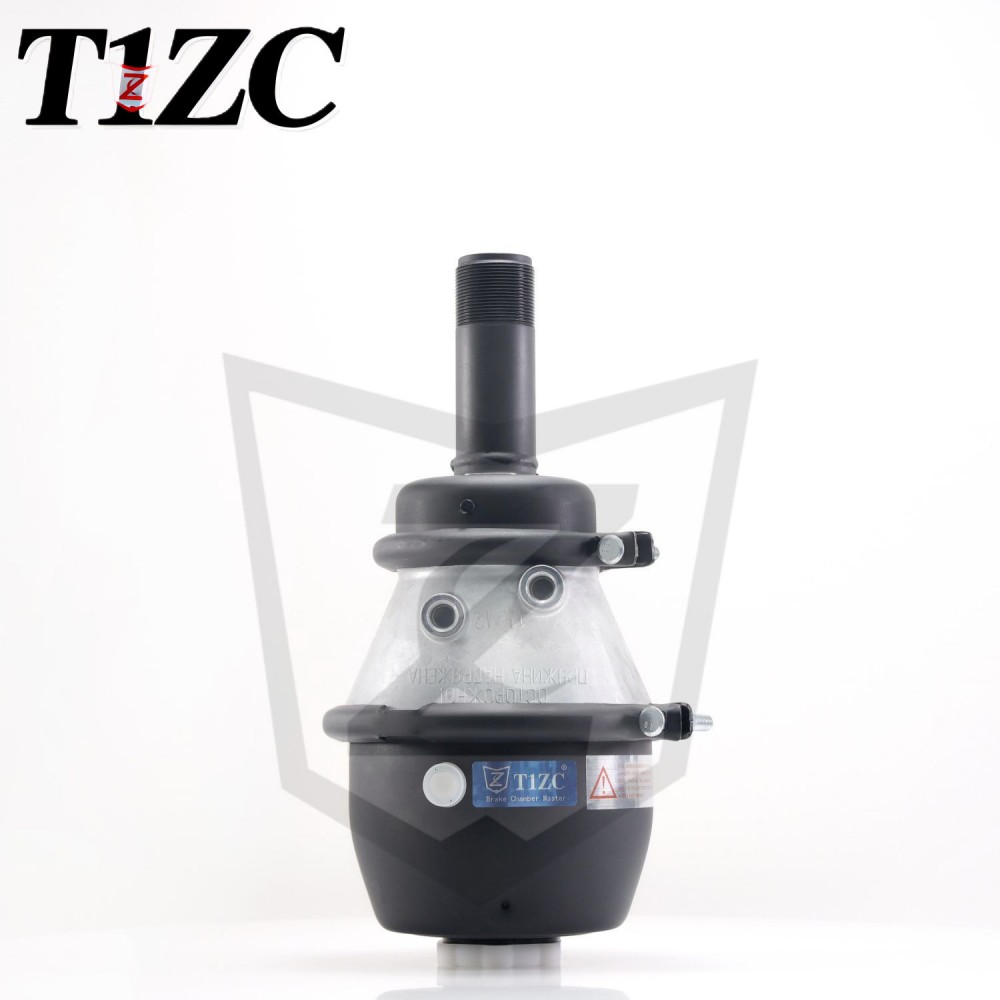
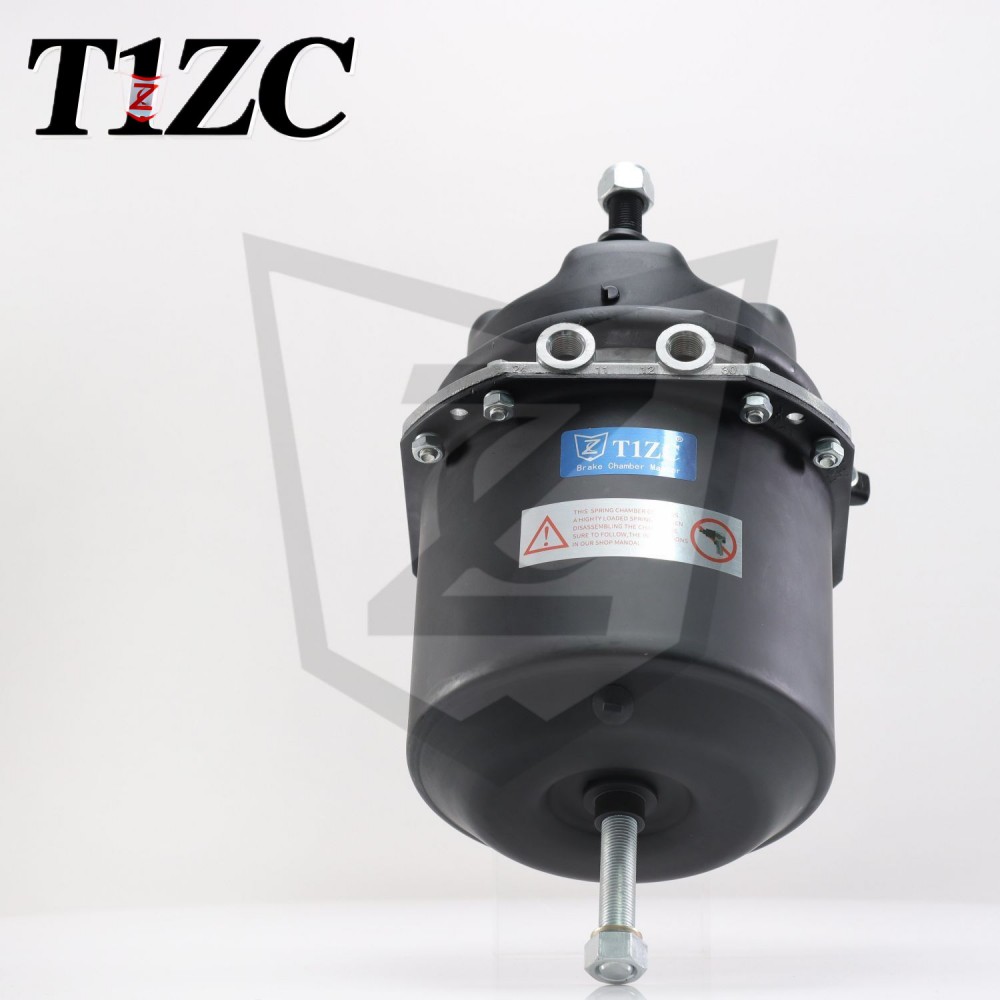
This brake chamber adopts a unique wedge-shaped design, combines advanced braking technology and high-quality materials, and is designed to provide stable, reliable and efficient braking performance t...
See Details -
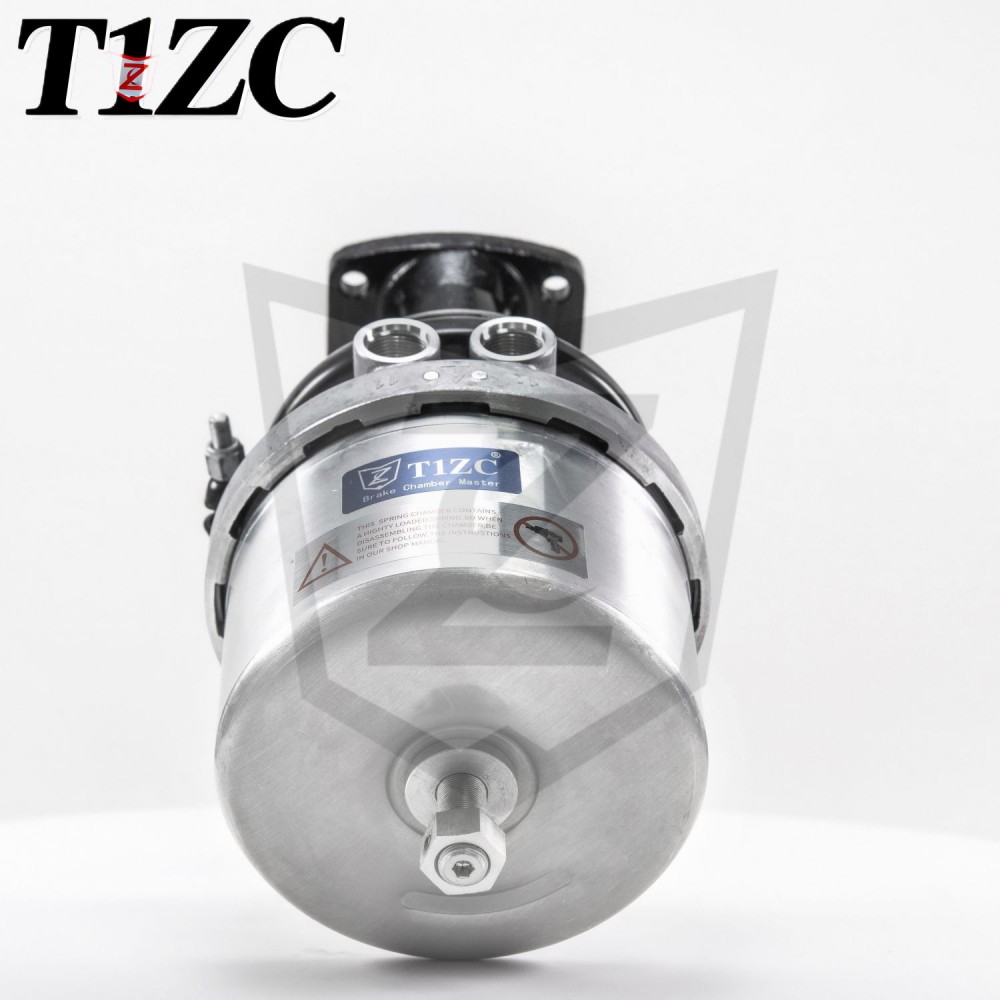
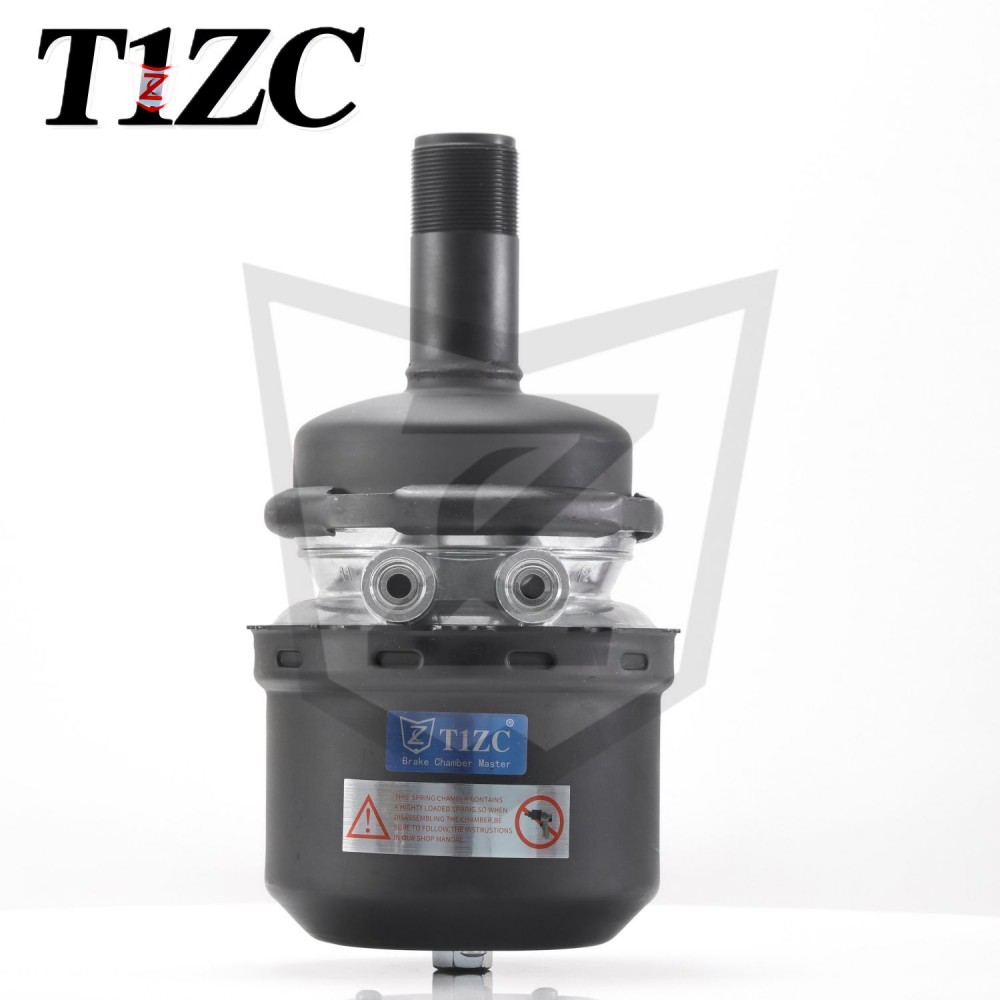
DP WEDGE BRAKE CHAMBER F-Series Regular Release This product is specially designed to meet the market's demand for efficient, stable and reliable braking systems. It uses advanced wedge braking techno...
See Details
CONTACT DETAILS
- Phone: +86-198 1775 0319
- TEL: +86-575 8909 8166
- E-mail: sale@t1zc.cn
- Office Address: 122-2 Busen West Road, Fengqiao Town, Zhuji, Zhejiang, China
If You Are Intrested
In Our Products,
Please Consult Us
Copyright © ZHUJI TEYI IMPORT&EXPORT CO.,LTD. All Rights Reserved.
China Brake Chamber Manufacturers
China Brake Chamber Supplier
