

 EN
EN  English
 Português
Application Industry
AGV

Automated robots

laser cutting

Logistics sorting

Photovoltaic power-station
Medical devices
How Do Air Pressure and Load Affect a Disc Brake Chamber's Function?
A disc brake chamber is the core pneumatic actuator in air-braked heavy vehicles — converting compressed air into the mechanical force that clamps brake pads against a rotor. But its effectiveness is never fixed. Two dynamic variables — air supply pressure and vehicle load — continuously reshape how much braking force is actually delivered, how fast the response is, and how safely the vehicle stops.
Understanding this relationship is critical for fleet managers, brake system engineers, and safety inspectors tasked with keeping trucks, buses, and trailers operating within regulation.
Content
- What Is a Disc Brake Chamber and How Does It Work?
- How Air Pressure Directly Controls Braking Force
- How Vehicle Load Alters Braking Dynamics
- Disc Brake Chamber vs. Drum Brake Chamber: Performance Under Pressure and Load
- Combined Effect: Pressure and Load Working Together
- Maintenance Implications: Keeping Your Disc Brake Chamber Performing
- Frequently Asked Questions About Disc Brake Chambers
- Conclusion
What Is a Disc Brake Chamber and How Does It Work?
A disc brake chamber — often called a brake actuator or air chamber — is a cylindrical housing divided by a flexible diaphragm. When the driver applies the brake pedal, the vehicle's air system routes compressed air into the chamber. This air pushes against the diaphragm, which moves a pushrod outward. The pushrod actuates a caliper mechanism, pressing brake pads firmly onto a rotating disc (rotor) to generate friction and decelerate the vehicle.
Unlike drum brake chambers, disc brake chambers are designed for consistent, high-force clamping with improved heat dissipation, making them preferred for modern heavy-duty applications.
Key Components of a Disc Brake Chamber
- Diaphragm — Flexible rubber membrane that translates air pressure into mechanical movement
- Pushrod — Transfers diaphragm motion to the caliper or actuating mechanism
- Return spring — Retracts the diaphragm and pushrod when air is released
- Chamber housing — Sealed metal enclosure that maintains pressure integrity
- Service and spring sections (in spring brake variants) — Dual-function chambers for both service braking and parking
How Air Pressure Directly Controls Braking Force
The output force of a disc brake chamber is fundamentally a product of air pressure × effective diaphragm area. This relationship is linear: higher inlet pressure generates proportionally greater pushrod force. The formula is:
Force (N) = Pressure (kPa) × Effective Area (cm²) × 0.1
For a standard Type 30 disc brake chamber with ~193 cm² effective area operating at 690 kPa (100 psi), the theoretical output force approaches 13,300 N — sufficient to clamp pads against a rotor with several tonnes of force through mechanical leverage.
Pressure vs. Braking Force: Reference Table
| Air Pressure (psi) | Air Pressure (kPa) | Chamber Output Force (Type 30) | Braking Effectiveness |
| 40 psi | 276 kPa | ~5,300 N | Low — Marginal |
| 60 psi | 414 kPa | ~8,000 N | Moderate |
| 80 psi | 552 kPa | ~10,650 N | Good |
| 100 psi | 690 kPa | ~13,300 N | Optimal / Rated |
| 120 psi | 827 kPa | ~15,950 N | Over-pressure — Risk of damage |
What Happens at Low Air Pressure?
When system pressure drops below the rated operating range — typically due to compressor failure, air leaks, or rapid successive braking — the disc brake chamber cannot generate adequate clamping force. Symptoms include:
- Extended stopping distances
- Uneven braking across axles (brake imbalance)
- Delayed brake application response
- Potential activation of low-pressure warning systems or emergency spring brakes
Regulations such as FMVSS 121 (USA) and ECE R13 (Europe) require that commercial vehicles maintain adequate reservoir pressure for full emergency stop performance.
How Vehicle Load Alters Braking Dynamics
Vehicle load doesn't change what the disc brake chamber outputs — it changes what that output must overcome. A fully loaded 40-tonne semi-truck carries nearly 4× the kinetic energy of the same truck empty at the same speed. The disc brake chambers themselves remain physically unchanged, but the braking system as a whole faces dramatically different demands.
Load vs. Required Braking Force: Comparison
| Vehicle Condition | Typical GVW | Kinetic Energy at 60 mph | Brake System Demand |
| Tractor only (bobtail) | ~15,000 kg | ~1.6 MJ | Low |
| Tractor + empty trailer | ~22,000 kg | ~2.4 MJ | Moderate |
| Tractor + half-loaded trailer | ~32,000 kg | ~3.5 MJ | High |
| Tractor + fully loaded trailer | ~40,000 kg | ~4.3 MJ | Maximum — Full system engagement |
Load Sensing and Automatic Brake Proportioning
Modern air brake systems use load-sensing valves (also called load proportioning valves or LAVs) to automatically adjust the pressure delivered to each disc brake chamber based on axle load. This prevents:
- Wheel lockup on lightly loaded axles — excess pressure relative to load causes premature skidding
- Brake imbalance — front-to-rear or side-to-side force mismatch destabilizes the vehicle
- Rotor and pad overheating — overworked chambers on loaded axles degrade faster
Electronic Braking Systems (EBS) and ABS further refine this, continuously modulating disc brake chamber pressure in real time per wheel.
Disc Brake Chamber vs. Drum Brake Chamber: Performance Under Pressure and Load
Choosing between disc and drum brake actuators involves understanding how each responds to varying pressure and load conditions.
| Factor | Disc Brake Chamber | Drum Brake Chamber |
| Heat Dissipation | Excellent — open rotor design | Poor — heat trapped in drum |
| Brake Fade Under Load | Minimal fade | Moderate to severe fade |
| Response at Low Pressure | Proportional reduction | Similar proportional reduction |
| Wet Weather Performance | Self-cleaning, consistent | Water retention affects grip |
| Adjustment | Automatic, self-adjusting | Manual adjustment required |
| Weight | Heavier | Lighter |
| Cost | Higher upfront | Lower upfront |
| Preferred Application | Steer axles, coaches, EBS systems | Drive/trailer axles, cost-sensitive fleets |
Combined Effect: Pressure and Load Working Together
The critical insight is that air pressure and vehicle load must be matched for optimal disc brake chamber performance. An oversimplified view treats pressure as always being "more is better" — but this ignores load dynamics:
- High pressure + low load = Risk of wheel lockup, tire damage, and loss of directional control
- Low pressure + high load = Inadequate braking force, extended stopping distance, runaway risk on grades
- Matched pressure + appropriate load = Optimal braking efficiency, pad/rotor longevity, regulatory compliance
This is why load-sensing proportioning valves, ABS, and EBS systems exist: they continuously recalibrate the pressure sent to each disc brake chamber so the output force tracks the actual load on each axle.
Maintenance Implications: Keeping Your Disc Brake Chamber Performing
Signs of Pressure-Related Disc Brake Chamber Issues
- Audible air leaks around the chamber body or diaphragm
- Pushrod stroke exceeding maximum limits (CVSA: >57mm for Type 30)
- Slow build-up of system pressure after application
- Chamber not fully releasing after brake is disengaged (dragging)
Signs of Load-Related Brake System Issues
- Uneven wear patterns on brake pads (front vs. rear, left vs. right)
- Brake fade during long descents with heavy loads
- Vehicle pulling to one side during braking
- Excessively hot rotors on specific axles after normal stops
Recommended Inspection Schedule
| Inspection Item | Frequency | Method |
| Pushrod stroke measurement | Every pre-trip / 90 days | Manual measurement at 90 psi application |
| Air leak check | Pre-trip / after brake work | Soapy water or electronic leak detector |
| Diaphragm condition | Annual or 100,000 km | Visual inspection during chamber replacement |
| System pressure verification | Pre-trip | Dash gauge — must reach 100–120 psi |
| Load proportioning valve function | Semi-annual | Brake balance test at various load states |
Frequently Asked Questions About Disc Brake Chambers
Conclusion
The performance of a disc brake chamber is inseparable from the air pressure it receives and the load the vehicle carries. Air pressure defines the mechanical force output of the chamber; vehicle load defines the braking task that force must accomplish. When the two are properly matched — through well-maintained air systems, load-sensing valves, and ABS/EBS technology — disc brake chambers deliver safe, consistent, and fade-resistant stopping power across all operating conditions.
For fleet operators and maintenance engineers, the takeaway is clear: monitor system pressure rigorously, never exceed load ratings, calibrate proportioning systems to actual axle weights, and inspect disc brake chamber pushrod stroke regularly. These practices are the difference between a brake system that merely meets minimum standards and one that performs safely at the limit of its capability.
Related products
-
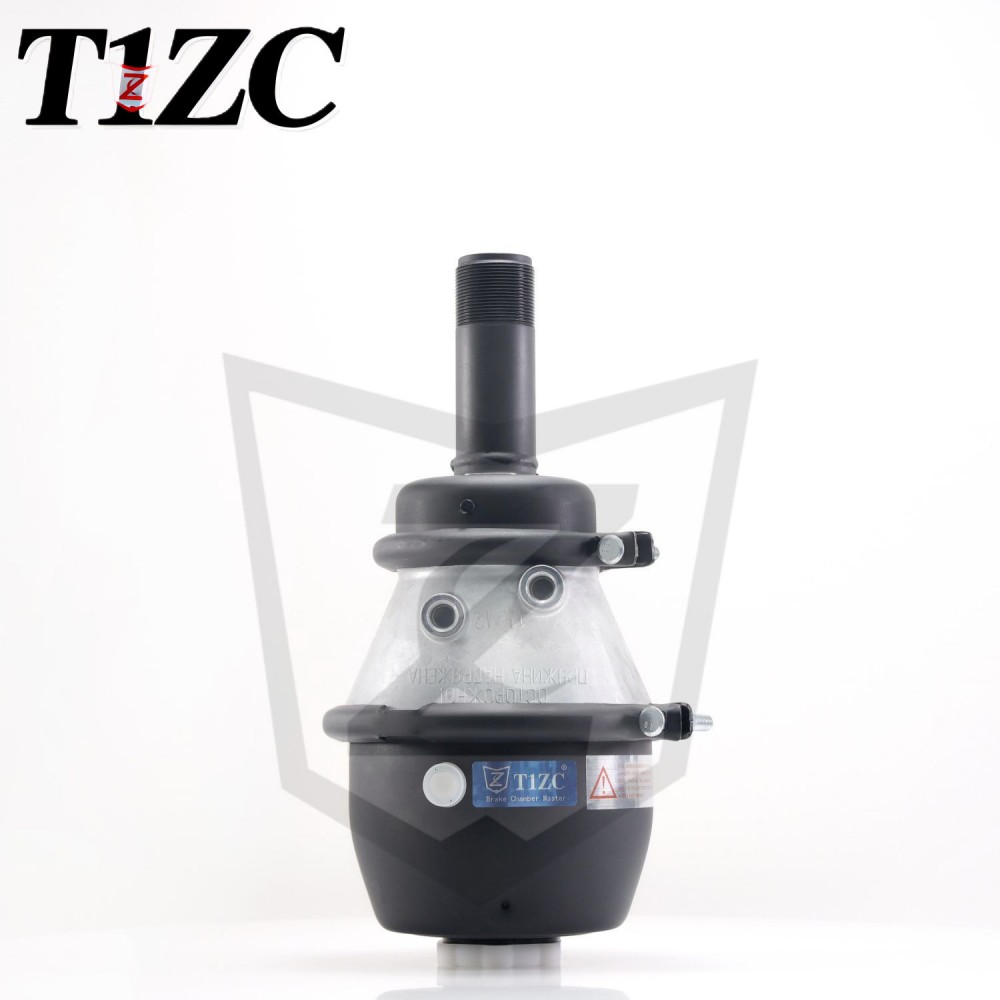
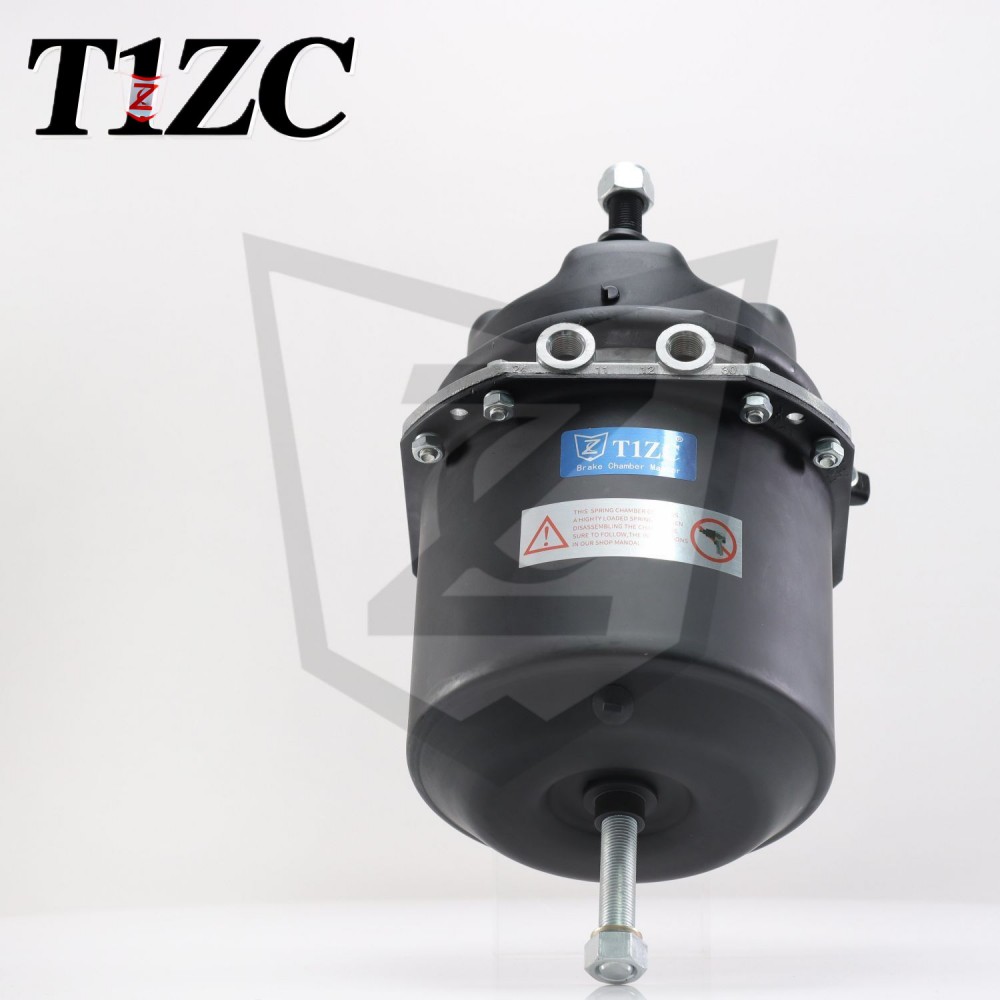
This brake chamber adopts a unique wedge-shaped design, combines advanced braking technology and high-quality materials, and is designed to provide stable, reliable and efficient braking performance t...
See Details -
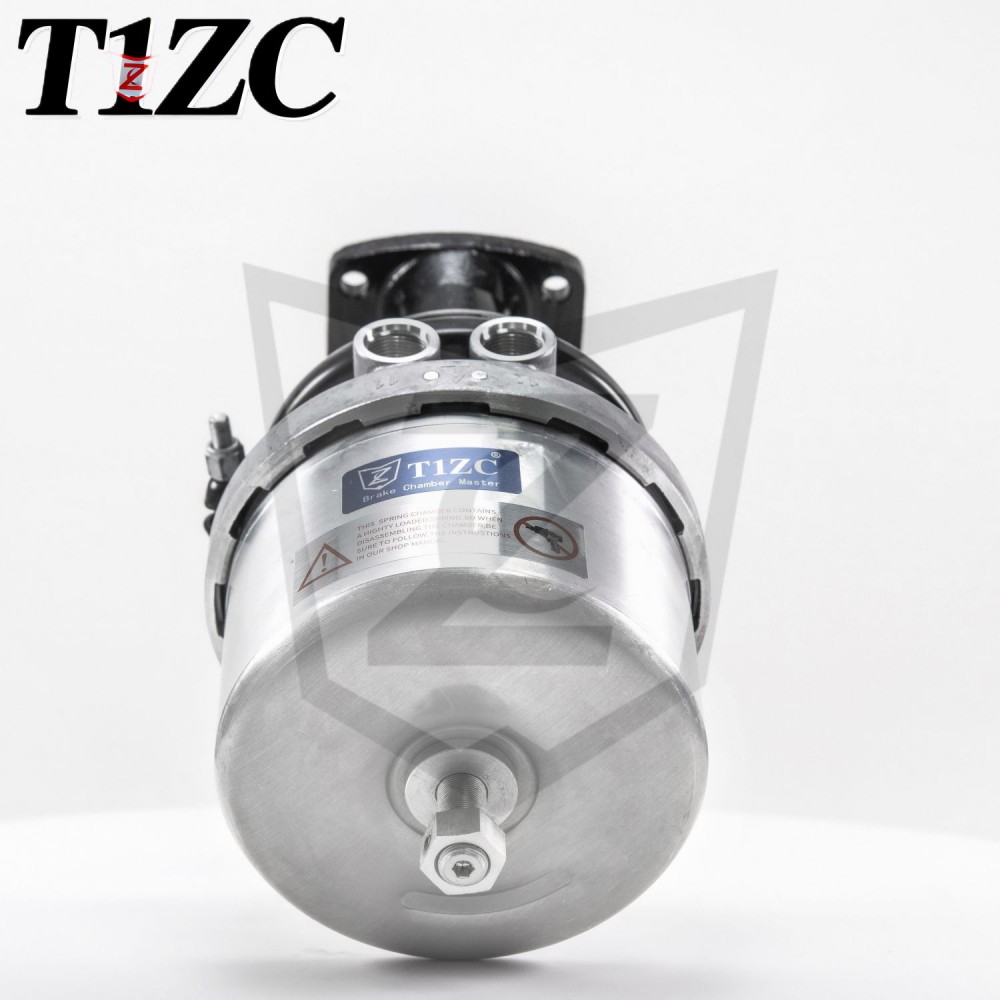
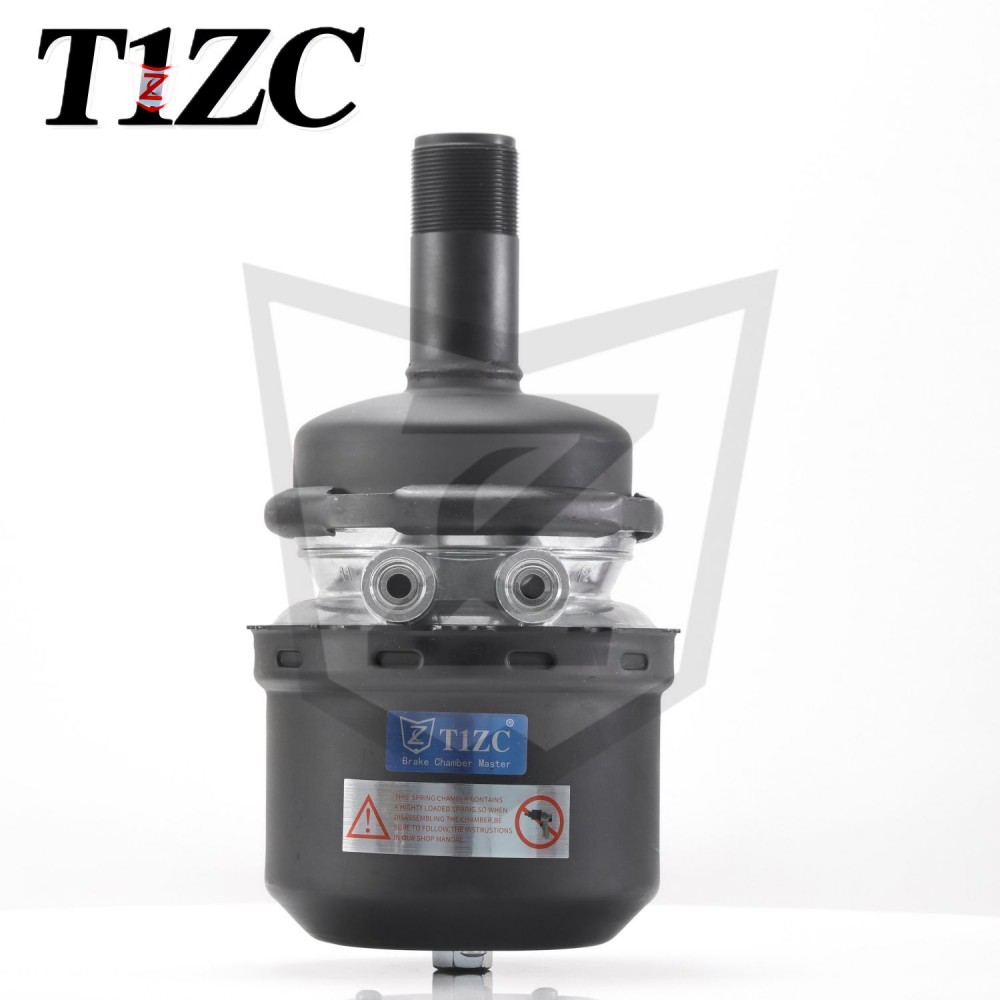
DP WEDGE BRAKE CHAMBER F-Series Regular Release This product is specially designed to meet the market's demand for efficient, stable and reliable braking systems. It uses advanced wedge braking techno...
See Details
CONTACT DETAILS
- Phone: +86-198 1775 0319
- TEL: +86-575 8909 8166
- E-mail: sale@t1zc.cn
- Office Address: 122-2 Busen West Road, Fengqiao Town, Zhuji, Zhejiang, China
If You Are Intrested
In Our Products,
Please Consult Us
Copyright © ZHUJI TEYI IMPORT&EXPORT CO.,LTD. All Rights Reserved.
China Brake Chamber Manufacturers
China Brake Chamber Supplier
