

 EN
EN  English
 Português
Application Industry
AGV

Automated robots
laser cutting

Logistics sorting

Photovoltaic power-station
Medical devices
Tractor Trailer Brake Chamber Guide | Types & Replacement
Content
- What Is a Tractor Trailer Brake Chamber and Why Does It Matter?
- How Does a Brake Chamber Convert Air Pressure into Braking Force?
- Single vs. Double Diaphragm vs. Spring Brake Chambers: What’s the Difference?
- S-Cam vs. Disc vs. Wedge Brake Chambers: Which Technology Fits Your Application?
- Common Signs of Brake Chamber Failure You Should Never Ignore
- Brake Chamber Replacement: What Technicians Need to Know
- How to Choose a Reliable Brake Chamber Supplier
What Is a Tractor Trailer Brake Chamber and Why Does It Matter?
When a loaded trailer pulls to one side under braking, or a driver hears a hiss of air every time the pedal is pressed, the tractor trailer brake chamber is usually the first suspect. In an air brake system, the brake chamber is the actuator that converts compressed air pressure into mechanical force. That force pushes the brake shoes against the drums — or the brake pads against the rotors — and it is the component that decides whether a heavy combination stops smoothly or not at all.
The brake chamber sits in the middle of a defined chain: air compressor, air reservoirs, foot valve, brake chamber, slack adjuster, camshaft, and brake shoes. Every brake application starts with air pressure and ends with friction at the wheel. If the chamber fails anywhere in that chain, braking force drops, stopping distance grows, and the vehicle becomes a safety risk for everyone around it.
How Does a Brake Chamber Convert Air Pressure into Braking Force?
Inside the chamber, a rubber diaphragm separates the air side from the atmospheric side. When the driver presses the brake pedal, compressed air enters through the inlet port and pushes against the diaphragm. The diaphragm flexes and drives a pushrod outward; the pushrod rotates the slack adjuster; the slack adjuster turns the camshaft (in an S-Cam system) or activates a disc or wedge mechanism; and the brake shoes or pads contact the friction surface. Releasing the pedal vents the air, and a return spring retracts the pushrod.
Two design details matter for reliable braking: response time and stroke length. Response time is how quickly air pressure builds enough force in the chamber to move the pushrod. Stroke length is the distance the pushrod travels. Both directly affect how promptly the brakes engage and how consistently they perform over the life of the lining.
The Role of the Pushrod and Stroke Length
Pushrod stroke is the distance the pushrod moves from its fully released position to full brake application. A stroke that is too short means the shoes barely reach the drum, so braking torque is insufficient. A stroke that is too long usually signals worn brake linings, a misadjusted slack adjuster, or an internal chamber failure. The correct stroke range is defined by the vehicle manufacturer, and checking it with a simple gauge during routine maintenance is one of the most effective ways to catch brake problems before they become failures.
Single vs. Double Diaphragm vs. Spring Brake Chambers: What’s the Difference?
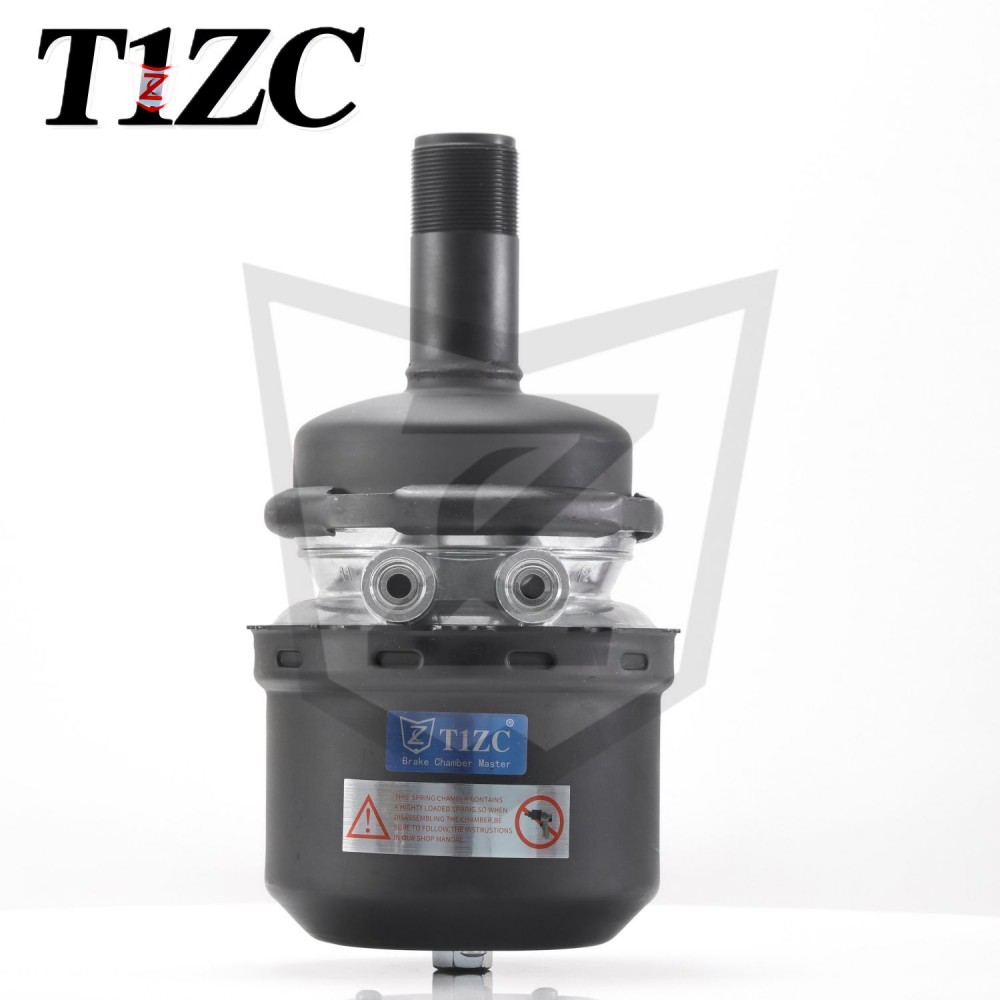
Product catalogs commonly list three chamber categories: Single, DD, and DP. A single-diaphragm chamber provides service braking only. A double-diaphragm (DD) chamber adds a spring-loaded parking and emergency section on top of the service function. A spring brake chamber (DP) uses an energy-storage spring to apply the parking brake mechanically whenever air pressure is released. The choice is not a matter of preference — it depends on which axles must hold the vehicle when parked.
| Chamber type | Service braking | Parking and emergency braking | Common mounting position |
|---|---|---|---|
| Single-diaphragm | Yes | No | Steering axles, lightly loaded trailer axles |
| DD (double diaphragm) | Yes | Yes | Drive axles, trailer axles |
| DP (spring brake) | Yes | Yes | Drive axles and axles with a parking requirement |
DD chambers are particularly valuable because they meet both regular and emergency braking demands in a single unit. During normal stops, the service diaphragm does the work. If the system suddenly loses air pressure, the spring section applies the brakes automatically, providing a controlled stop. That is why DD and DP chambers appear on drive axles and on many trailer axles, where a parked vehicle or an air-loss event requires a mechanical fail-safe.
When Is a Spring Brake Chamber (DP) Required?
Most jurisdictions require at least one axle on a truck or trailer to have a parking brake that can hold the vehicle on a grade even after the air system bleeds down. A spring brake chamber meets this requirement because the spring applies the brakes with no air pressure present. The driver releases the parking brake by building system air pressure, which compresses the spring. For maintenance, a caging bolt compresses the spring manually so the chamber can be removed safely. If you see a bolt protruding from the rear of the chamber, you are almost certainly looking at a spring brake chamber. Drive axles on tractors and the majority of trailer axles are specified this way; steering axles normally use single chambers because they do not need to hold the vehicle when parked.
S-Cam vs. Disc vs. Wedge Brake Chambers: Which Technology Fits Your Application?
S-Cam: An S-shaped camshaft rotates to spread the two brake shoes against the drum. This is the most widespread design for heavy trucks and trailers because it is predictable, robust, and inexpensive to service. For detailed specifications, explore the complete S-cam brake chamber product range.
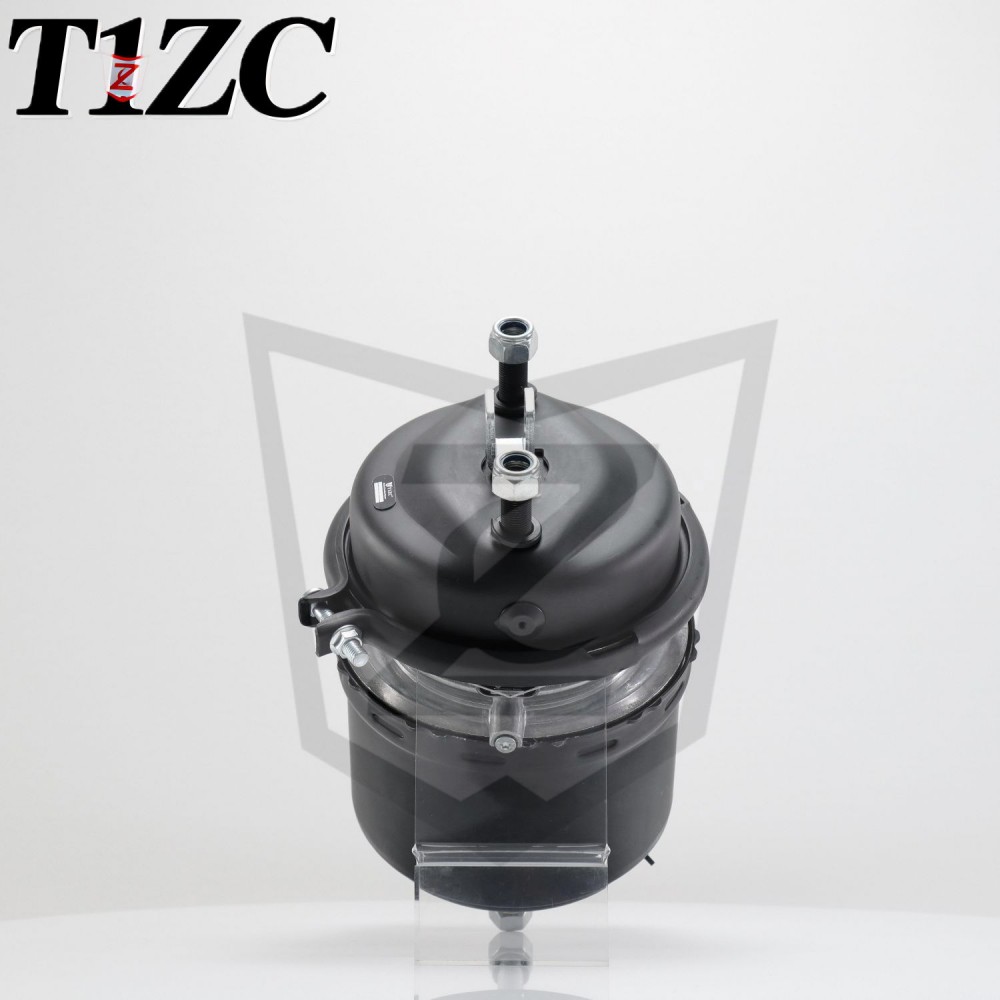 China S-Cam Brake Chamber Manufacturers, FactoryAs China S-Cam Brake Chamber manufacturers and wholesale S-Cam Brake Chamber factory, ZHUJI TEYI IMPORT&EXPORT CO.,LTD. supply ODM S-Ca...View Product →
Disc: A disc brake chamber pushes friction pads against both faces of a rotating rotor. Disc systems dissipate heat more effectively and recover performance faster after repeated stops, which matters on mountainous routes and high-torque applications. For heavy commercial vehicle needs, see the available disc brake chamber models.
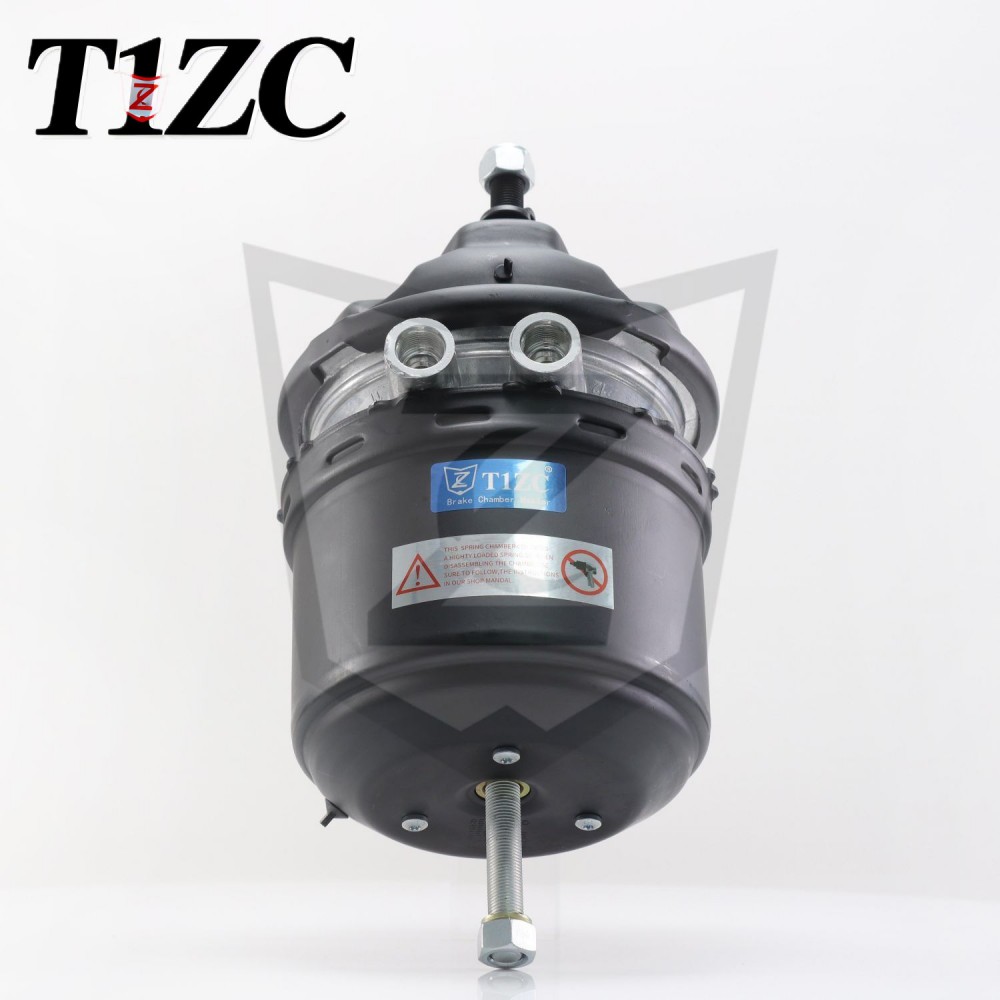 China Disc Brake Chamber Manufacturers, FactoryAs China Disc Brake Chamber manufacturers and wholesale Disc Brake Chamber factory, ZHUJI TEYI IMPORT&EXPORT CO.,LTD. supply ODM Disc B...View Product →
Wedge: A wedge-type chamber forces a wedge block between the ends of the brake shoes, spreading them apart inside the drum. The layout is compact and integrates with specific OEM platforms, particularly European and Japanese vehicles. Review the wedge brake chamber configurations designed for specific markets.
| Technology | Actuation method | Heat behavior | Typical fitment |
|---|---|---|---|
| S-Cam | Rotating cam spreads the shoes | Predictable drum temperatures | Most heavy trucks and trailers |
| Disc | Pneumatic chamber pushes pads against a rotor | Better heat dissipation | High-torque and mountainous routes |
| Wedge | Wedge block spreads the shoes apart | Compact design, sensitive to adjustment | Specific OEM platforms (for example Iveco, Mitsubishi) |
Matching Brake Chamber Type to Truck and Trailer Axles
There is no single chamber that fits every axle position. A typical configuration logic:
- Steering axle: single-diaphragm S-Cam or disc chamber, service braking only.
- Drive axles: DD or DP spring brake chambers so the truck can be parked and held on grades.
- Trailer axles: DD or DP chambers where emergency breakaway braking is required; single chambers may be used on lightly loaded trailer positions.
A manufacturer that builds application-specific chambers for vehicle platforms such as Hino, Kamaz, Iveco, and Mitsubishi makes fleet standardization simpler when you need to match the exact housing, port type, and mounting pattern.
Common Signs of Brake Chamber Failure You Should Never Ignore
Brake chambers rarely fail without warning. The most common signals that a tractor trailer brake chamber needs attention are:
- Audible air leak: a hissing sound near the chamber when the brakes are applied or released. Follow this step-by-step brake chamber air leak check to pinpoint the source.
- Pushrod not returning fully: the chamber should retract completely when the pedal is released; a lagging pushrod usually means a broken return spring or a binding diaphragm.
- Stroke length beyond the manufacturer’s specification: a growing stroke indicates worn linings, a misadjusted slack adjuster, or a failing chamber.
- Sudden loss of braking force: often a ruptured diaphragm. The vehicle may still respond at high pedal pressure, but stopping distance increases dramatically.
- Parking brake will not release: a sticking power spring or seized caging mechanism. Never force it; have the chamber inspected.
- Deformed or heavily corroded housing: physical damage compromises sealing and alignment and justifies immediate replacement.
Any one of these signs is enough to take a vehicle out of service for inspection. For deeper diagnostic steps, refer to this detailed brake chamber failure identification guide.
Brake Chamber Replacement: What Technicians Need to Know
The core rule for replacement is simple: install the same type, size, and mounting configuration as the original. A typical sequence:
- Chock the wheels and drain all air reservoirs.
- Disconnect the air lines and unbolt the chamber from its bracket.
- Clean the mounting face and inspect the pushrod, clevis, and slack adjuster for wear.
- Mount the new chamber, torque the fasteners to specification, and reconnect the air lines.
- Connect the pushrod to the slack adjuster and verify the angle and stroke.
- Pressurize the system and check for leaks at the ports and mounting surfaces.
- Test service braking, parking brake application, and emergency release before returning the vehicle to service.
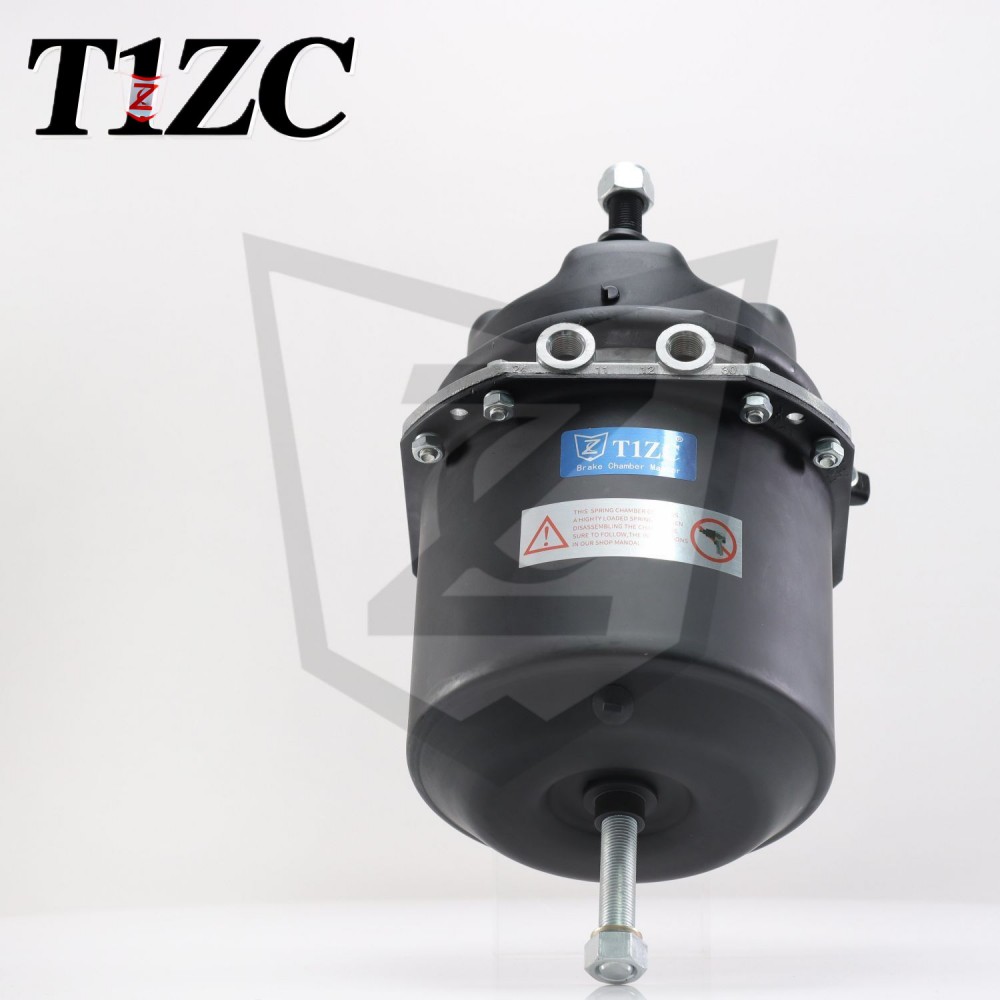
Chamber size codes such as T16, T24, and T30 refer to the effective diaphragm area and the resulting force output. A larger number means a larger effective area and a higher output force. A T16 rear brake chamber specifications sheet shows the exact stroke and force ratings, so confirm the code stamped on the old unit before ordering. Never choose by housing shape alone.
 Wholesale Regular Release T16 Rear Chamber Manufacturers, Factory - ZHUJI TEYI IZHUJI TEYI IMPORT&EXPORT CO.,LTD is China wholesale Regular Release T16 Rear Chamber manufacturers and OEM factory,The Regular Release T1...View Product →
How to Choose a Reliable Brake Chamber Supplier
Brake chambers are safety-critical parts, so supplier selection should be based on process control, not just price. Key criteria to evaluate:
- Manufacturing process completeness: a supplier that performs die-casting, stamping, assembly, and welding in-house can control quality at every step rather than relying on inconsistent external sources.
- Testing discipline: look for documented pressure testing, leak testing, and stroke verification. A supplier that tests each unit, not just samples, gives you traceable quality.
- Application range: a supplier with products for multiple OEM-style vehicle platforms demonstrates it can handle different mounting standards, port configurations, and stroke requirements.
- Capacity and responsiveness: the ability to support consistent volume, whether you need a few dozen units for fleet maintenance or container quantities for aftermarket distribution.
In practice, t1zc.cn operates four production bases with five independent production lines covering die-casting, stamping, assembly, and welding, and it serves the OEM aftermarket across Africa, Europe, and South America. These facts matter because they indicate a manufacturer that controls the entire production chain — and that chain determines whether a brake chamber performs the same on the tenth stop as on the first.
Before committing to a supplier, ask for the exact specifications you need, confirm how the units are tested, and request samples for fit and stroke validation. A supplier that treats those questions as routine is the one worth putting on your approved vendor list.
Related products
-
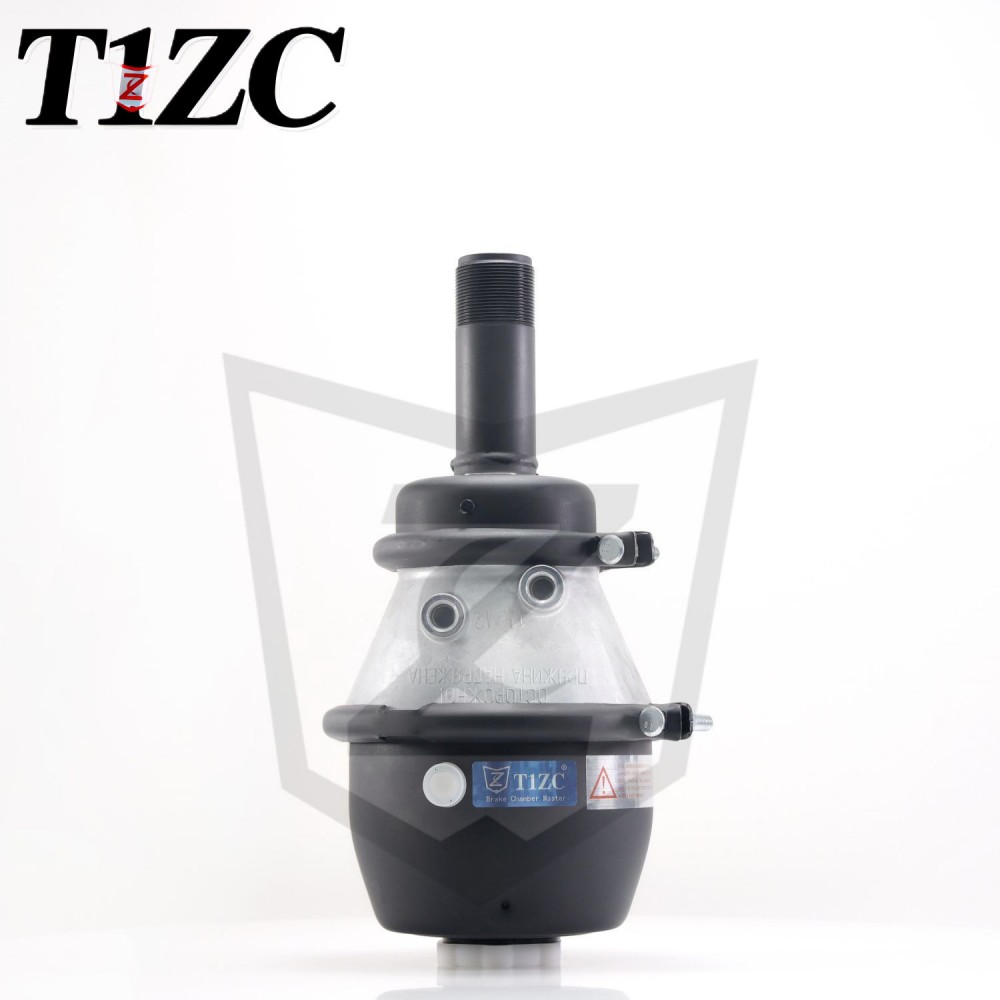
This brake chamber adopts a unique wedge-shaped design, combines advanced braking technology and high-quality materials, and is designed to provide stable, reliable and efficient braking performance t...
See Details -
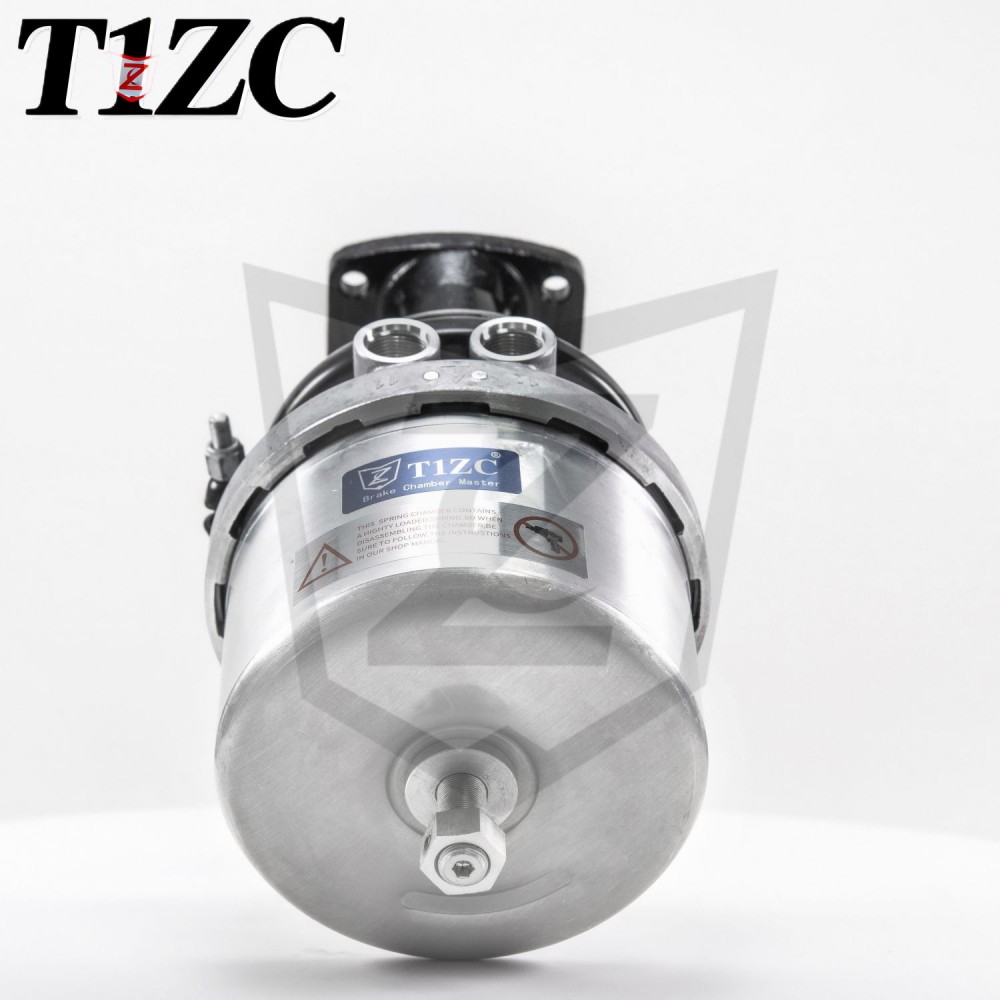
DP WEDGE BRAKE CHAMBER F-Series Regular Release This product is specially designed to meet the market's demand for efficient, stable and reliable braking systems. It uses advanced wedge braking techno...
See Details
CONTACT DETAILS
- Phone: +86-198 1775 0319
- TEL: +86-575 8909 8166
- E-mail: sale@t1zc.cn
- Office Address: 122-2 Busen West Road, Fengqiao Town, Zhuji, Zhejiang, China
If You Are Intrested
In Our Products,
Please Consult Us
Copyright © ZHUJI TEYI IMPORT&EXPORT CO.,LTD. All Rights Reserved.
China Brake Chamber Manufacturers
China Brake Chamber Supplier
