
 EN
EN  English
 Português





A brake chamber identification chart is a practical reference that matches the stamped type number on a chamber to its effective diaphragm area, clamp band diameter, and stroke class. The type number is the fastest and most reliable clue: it is printed or stamped on the body or on a metal tag, and it represents the effective diaphragm area in square inches. A Type 30 chamber, for example, has 30 square inches of effective diaphragm area. If the tag is missing, you can still identify the unit by measuring the clamp band and checking the port shape and housing profile.
Getting the identification right matters for safety and compliance. Brake adjustment limits, including the maximum pushrod stroke allowed during a roadside inspection, are defined by chamber type and stroke class. Inspectors compare the measured pushrod stroke against a chart of allowable limits, so the chamber itself must be identifiable on sight. A mismatched replacement can push a brake out of the legal adjustment range even when the slack adjuster is new. When you are ready to source a replacement, work with a specialized brake chamber manufacturer that can match the exact type, stroke, and mounting configuration for your vehicle.
Roadside inspectors and fleet technicians use the same logic every day: read the stamp, measure the clamp, check the port, and confirm the stroke class. This guide covers that sequence step by step and includes a reference chart you can keep next to the workbench.
Content
- Brake Chamber Identification Chart at a Glance
- How to Identify a Brake Chamber in Five Steps
- Understanding the Size Code: Type 16, Type 24, and Type 30
- Standard-Stroke vs Long-Stroke Chambers
- Service Chambers vs Spring Brake Chambers
- Common Mistakes When Identifying Brake Chambers
- Frequently Asked Questions
- Final Recommendations
Brake Chamber Identification Chart at a Glance
The chart below lists the five most common chamber types with the data that identifies each one. Type numbers refer to the effective diaphragm area in square inches. Clamp band diameter is measured across the outside of the clamp ring, not across the housing. Keep a caliper and a flashlight with the chart; the stamp can be hidden under grime or paint, and the clamp measurement is the backup method.
| Type | Effective Area (sq in) | Clamp Band Diameter (in) | Standard Max Stroke (in) | Typical Position |
|---|---|---|---|---|
| Type 16 | 16 | 4.50 | 1.375 | Light steer axle |
| Type 20 | 20 | 5.25 | 1.375 | Steer axle |
| Type 24 | 24 | 5.25 | 1.375 | Drive axle and trailer |
| Type 30 | 30 | 6.21 | 1.375 | Heavy drive axle |
| Type 36 | 36 | 7.25 | 1.375 | Severe-duty trailer |
Two points deserve attention. First, Types 20 and 24 share the same 5.25 inch clamp band, so measuring the clamp alone will not separate them; the stamped code is the deciding factor. Second, these stroke values apply to standard-stroke chambers. Long-stroke variants carry different limits and look different at the port and housing. For heavy-duty commercial vehicles, the most common replacement units are Type 24 and Type 30, and mixed fleets should record the type per axle to simplify ordering.
How to Identify a Brake Chamber in Five Steps
Five steps are enough to identify any unknown chamber, even when no documentation is available.
- Read the type stamp or data tag. Look on the outer body, near the mounting flange, or on a riveted metal tag. The number directly tells you the effective area. Common values are 16, 20, 24, 30, and 36.
- Measure the clamp band diameter. Place a caliper across the outside of the clamp ring and record the value. Compare it with the chart above to narrow down the candidate types.
- Check the stroke class. A square air inlet port, a deeper or longer body, and a larger pushrod boot usually indicate a long-stroke chamber. Standard-stroke units use a round port and a shallower profile.
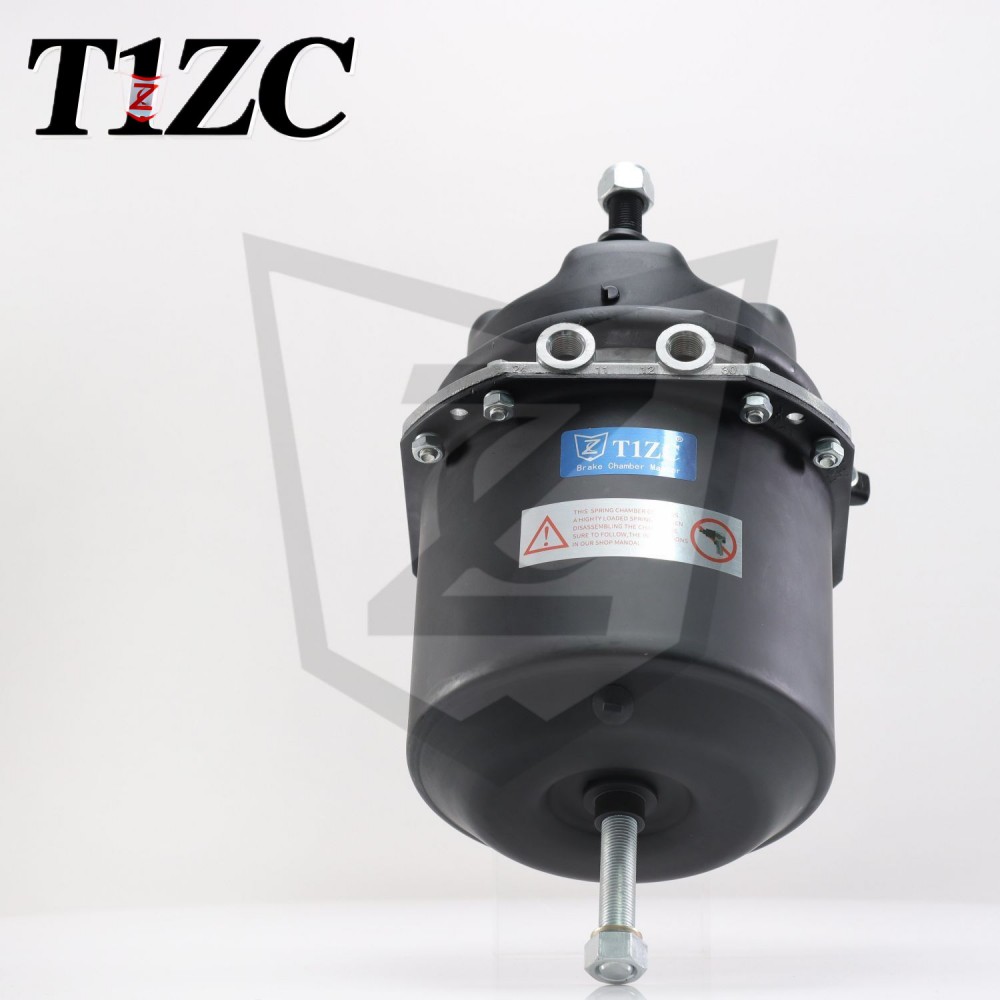
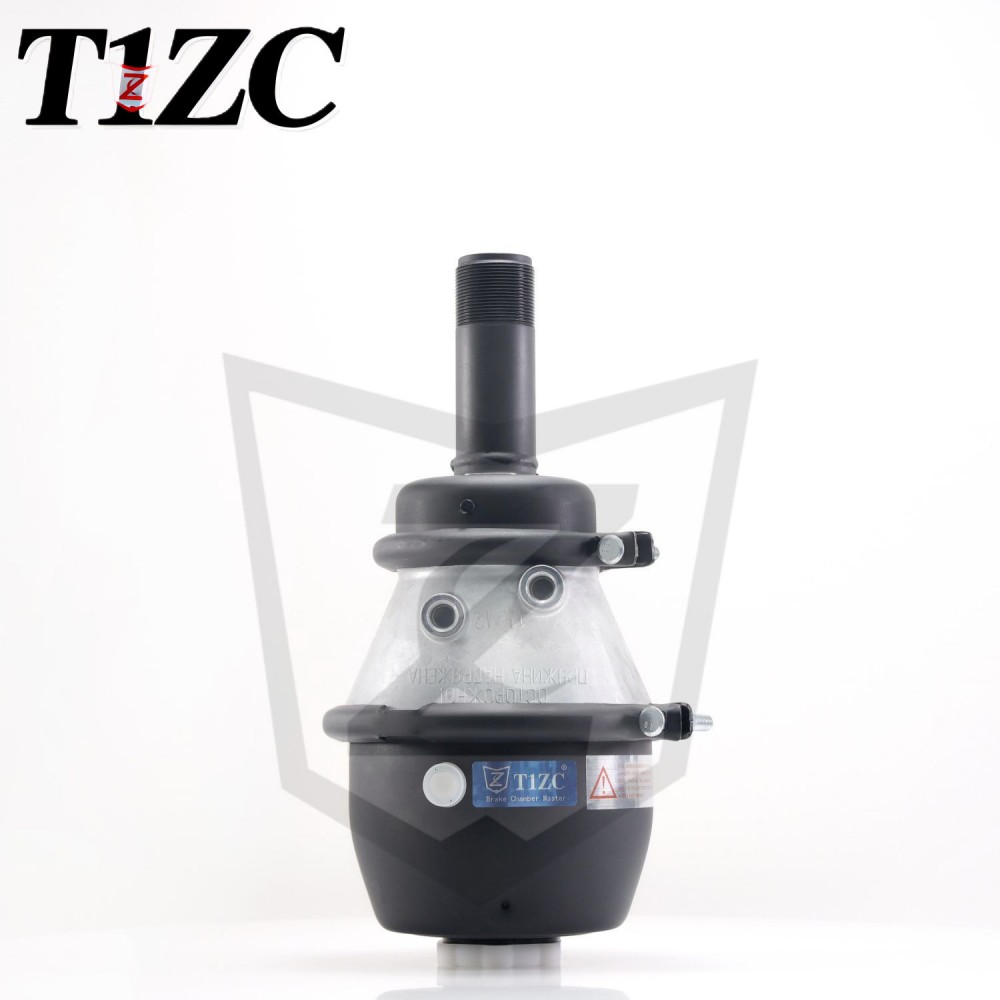
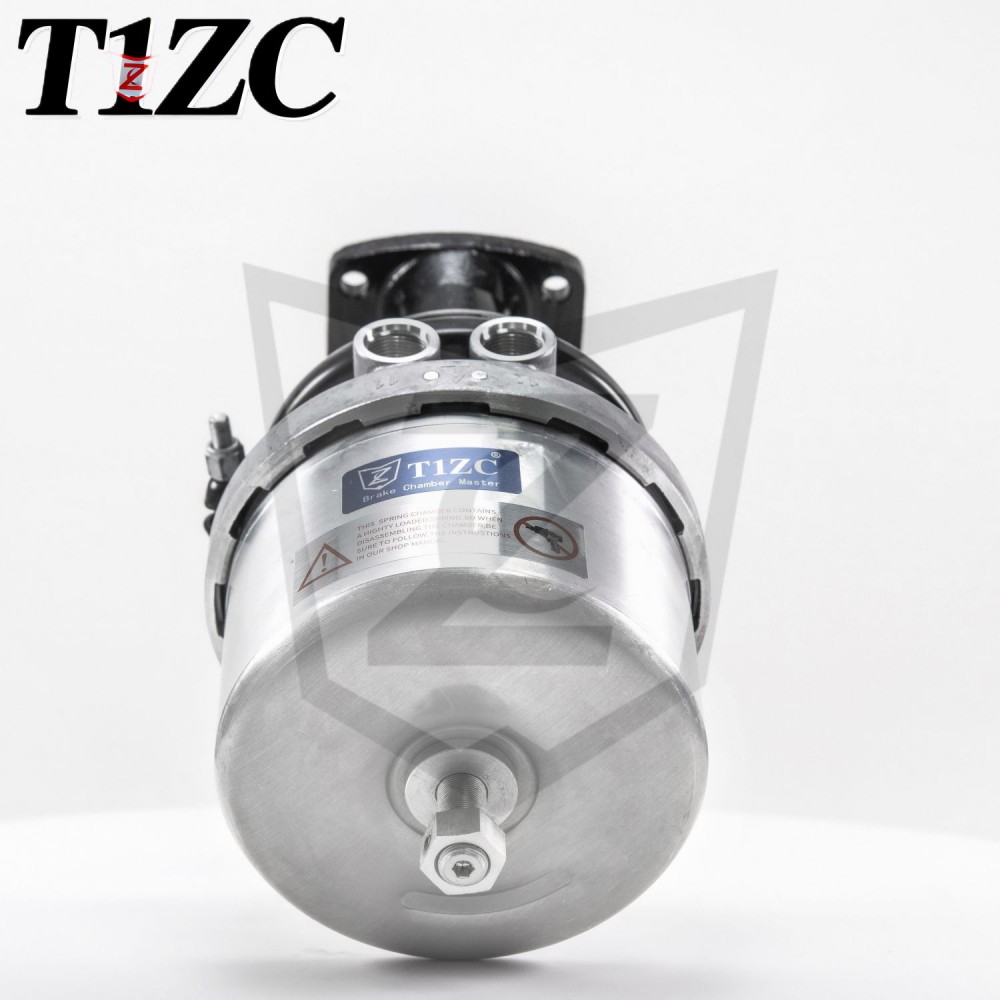
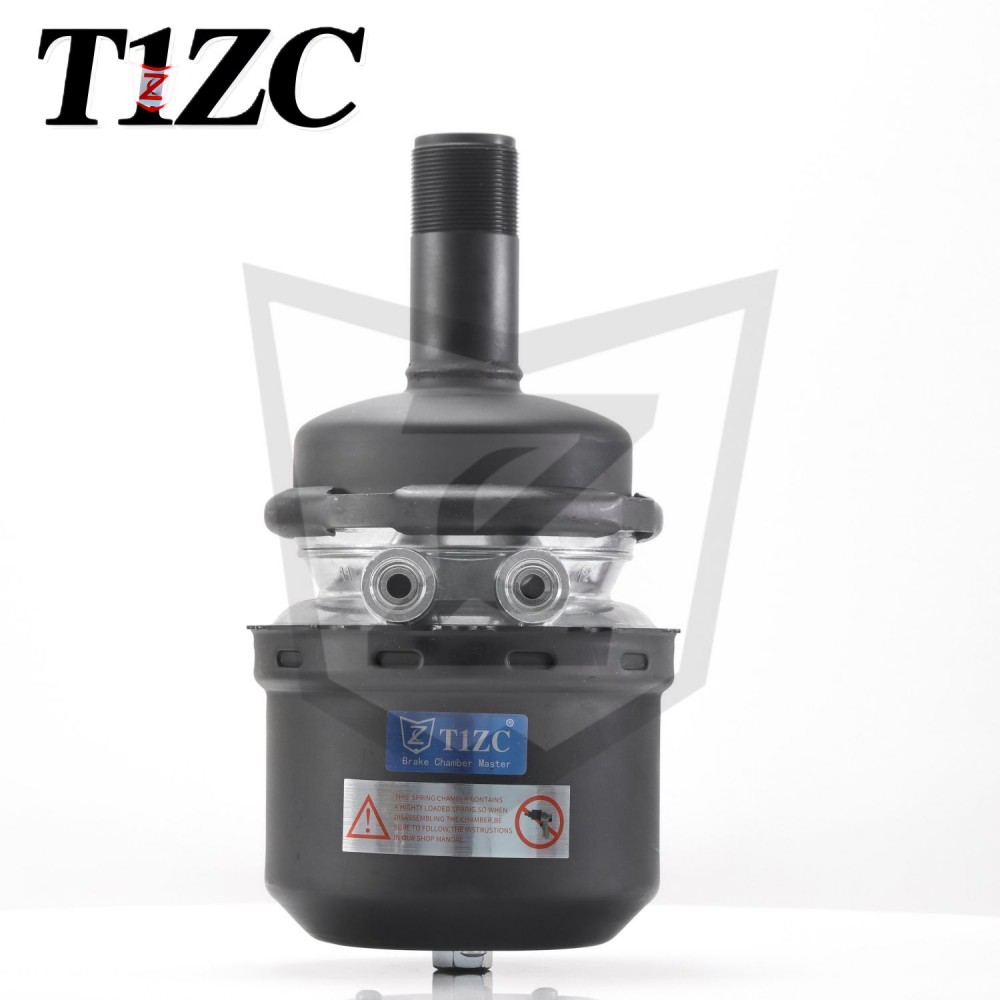
- Confirm service chamber versus spring brake chamber. A spring brake chamber has a large rear spring housing, four tie bolts, and a mechanical release bolt in the center. A service chamber has neither.
- Record the mounting style. S-cam, disc, and wedge chambers use different yokes, brackets, and port orientations. Two chambers with the same type number are not interchangeable if the mounting style differs.
Understanding the Size Code: Type 16, Type 24, and Type 30
The type number is not a random model code. It equals the effective diaphragm area in square inches, which is the area that receives air pressure to generate pushrod force. At the same air pressure, a Type 30 chamber delivers about 25 percent more force than a Type 24. This is why understanding how brake chamber size affects braking efficiency is the first question in a replacement decision.
Axle position offers a general hint but never replaces the stamp. On a typical tractor, steer axles use Type 20 or Type 24 chambers, drive axles use Type 24 or Type 30, and trailers often use Type 30. Original vehicle specifications always take precedence, and the replacement must match the original type and stroke class. The same logic applies to disc and wedge brake chambers: the type number still reflects diaphragm area, but the mounting, port position, and actuation mechanism follow the brake foundation design.
In the regular-release family, manufacturers build the same mounting footprint in multiple outputs. For example, a Type 16 rear chamber works for lighter axles, a Type 24 rear chamber covers typical drive and trailer positions, and a Type 30 rear chamber handles heavier loads. The type number, not the diameter alone, determines which one you need.
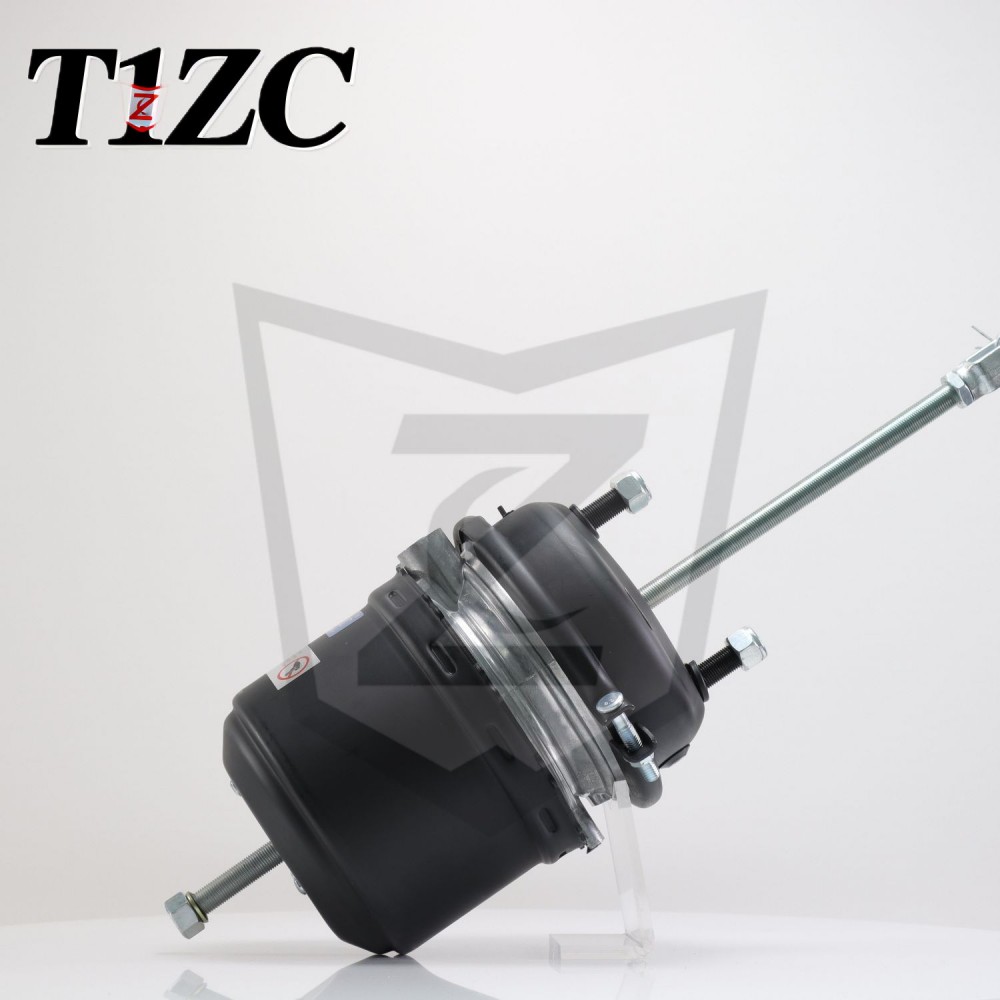 Wholesale Regulr Release T30 Rear Chamber Manufacturers, Factory - ZHUJI TEYI IMZHUJI TEYI IMPORT&EXPORT CO.,LTD is China wholesale Regulr Release T30 Rear Chamber manufacturers and OEM factory,The Regular Release T30...View Product →
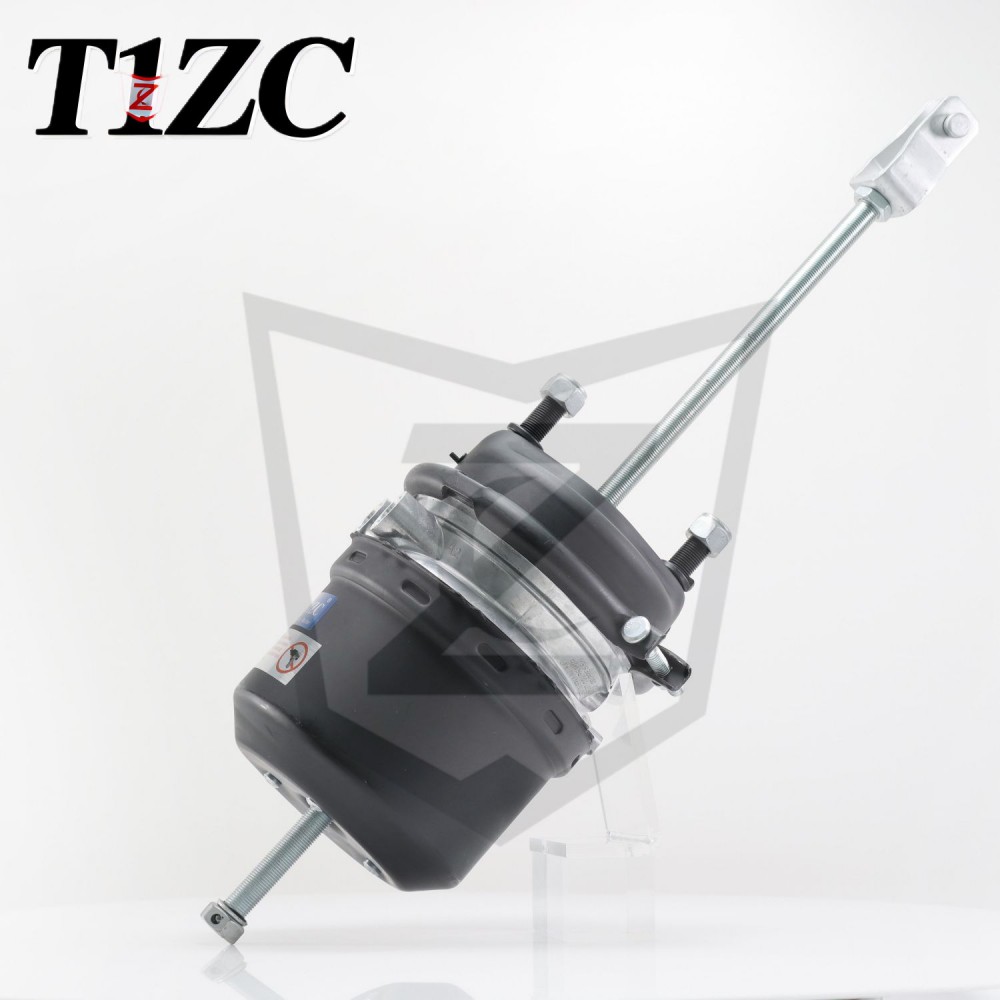 Wholesale Regular Release T24 Rear Chamber Manufacturers, Factory - ZHUJI TEYI IZHUJI TEYI IMPORT&EXPORT CO.,LTD is China wholesale Regular Release T24 Rear Chamber manufacturers and OEM factory,The Regular Release T2...View Product →
 Wholesale Regular Release T16 Rear Chamber Manufacturers, Factory - ZHUJI TEYI IZHUJI TEYI IMPORT&EXPORT CO.,LTD is China wholesale Regular Release T16 Rear Chamber manufacturers and OEM factory,The Regular Release T1...View Product →
Standard-Stroke vs Long-Stroke Chambers
Long-stroke chambers exist to provide more usable pushrod stroke before the diaphragm bottoms out, helping brakes stay within adjustment as linings wear. You can identify them by three visible characteristics: a square air inlet port, a longer or deeper body, and often a label or cast marking that says "long stroke."
Never substitute a standard-stroke chamber for a long-stroke unit, or vice versa. The maximum allowable pushrod stroke is different for each class. A brake that passes inspection with a long-stroke chamber might fail with a standard-stroke chamber fitted in the same position, even when the overall adjustment looks identical.
Service Chambers vs Spring Brake Chambers
Service chambers, also called single-diaphragm chambers, have one diaphragm and no parking brake function. Spring brake chambers, often called piggyback or double-diaphragm chambers, combine a service diaphragm with a powerful parking and emergency spring in a rear canister.
The visual test is simple. If the chamber has a large rear spring housing, four bolts joining the two halves, and a mechanical release bolt, it is a spring brake chamber. If it has a shallow profile and no release bolt, it is a service chamber. Mixing the two can disable the parking brake function on an axle.
Common Mistakes When Identifying Brake Chambers
Most identification errors come from relying on the clamp band diameter alone, so check every other feature before you order a replacement.
- Measuring only the clamp band. Types 20 and 24 share a 5.25 inch clamp, so you must also read the stamp or check the effective area code.
- Ignoring the stroke class. Standard-stroke and long-stroke chambers of the same type are not interchangeable, and they have different adjustment limits.
- Ordering by axle position alone. Axle position is a hint, not a specification. The original chamber type and stroke class still govern the replacement.
- Choosing a larger chamber for extra braking power. Oversizing can create excessive pedal travel, brake imbalance across an axle, or mounting interference.
- Forgetting the mounting style. S-cam, disc, and wedge chambers are different products even when the type number appears similar.
Frequently Asked Questions
Here are the questions technicians ask most often when they use a brake chamber identification chart.
- What does the number on a brake chamber mean? It is the effective diaphragm area in square inches. A Type 30 chamber has 30 square inches of effective diaphragm area, which determines the force it can produce at a given air pressure.
- Can I identify a chamber using the clamp band diameter alone? No. Types 20 and 24 share the same 5.25 inch clamp band diameter, so the stamped type number is still required for a positive identification.
- What is the difference between standard-stroke and long-stroke chambers? A long-stroke chamber allows a longer pushrod stroke before the diaphragm bottoms out. It has a square air inlet port, a deeper body, and different adjustment limits.
- Are brake chambers with the same type number interchangeable between manufacturers? If the type, stroke class, and mounting style all match, chambers from different manufacturers are generally interchangeable. Always verify bolt spacing, port position, and release mechanism before fitting.
- How can I tell whether a chamber has a parking brake function? Look for a large rear spring housing with four tie bolts and a mechanical release bolt. If those are present, the chamber is a spring brake chamber.
Final Recommendations
Write down three facts before you order: the type number, the stroke class, and the mounting style. Keep a record of the chamber types fitted to each axle position in your fleet, and re-check the stamp whenever a part number has been repainted or covered by dirt.
If you are unsure about a chamber, remove it and compare the clamp band diameter, port shape, and housing depth against the chart. A correctly identified chamber keeps the brakes within adjustment limits, simplifies inventory, and eliminates most replacement errors.